Car Door and Side Window Glass Replacement: A Practical Guide
Essential Answer
Fixing a broken or non-functioning side window on a car almost always involves replacing the glass pane itself, or repairing the regulator mechanism that moves it. For a shattered or cracked pane, replacement glass is required; there is no reliable structural repair for laminated or tempered side glass. For a window that will not roll up or down but whose glass is intact, the fault is usually in the window regulator, motor, switch, or wiring rather than the glass. The specific replacement procedure and part availability vary by vehicle model, so identifying the exact year and configuration of your car is the first step.
What Could Explain the Symptom?
If the glass is visibly broken, cracked, or shattered, the glass itself is the failed component and must be replaced. If the window is intact but stuck, silent, grinding, or slow, perform these observable checks before buying parts. First, listen for motor noise when operating the switch. A humming or clicking sound with no glass movement typically indicates a failed regulator cable or gear, not a dead motor. No sound at all may point to a blown fuse, faulty switch, broken wiring in the door hinge area, or a failed motor. Second, try operating the window from both the driver master switch and the individual door switch if equipped. If the window works from one switch but not the other, the switch is the likely cause. Third, check for physical obstruction or a tilted, off-track glass by gently pressing the glass inward and outward; excessive movement suggests a detached regulator guide or broken clips.
A window that falls into the door or will not stay up indicates a broken regulator cable or detached glass mounting tabs. In this condition, stop operating the switch to avoid motor or wiring damage. Temporarily secure the glass in the closed position using heavy-duty suction cups, wooden wedges placed carefully between the glass and inner door panel, or packing tape applied diagonally from the glass to the door frame. Do not drive with a shattered or unsecured side window because tempered glass fragments can enter the cabin and the window provides structural support during a crash.
Replacement Approach by Vehicle Model
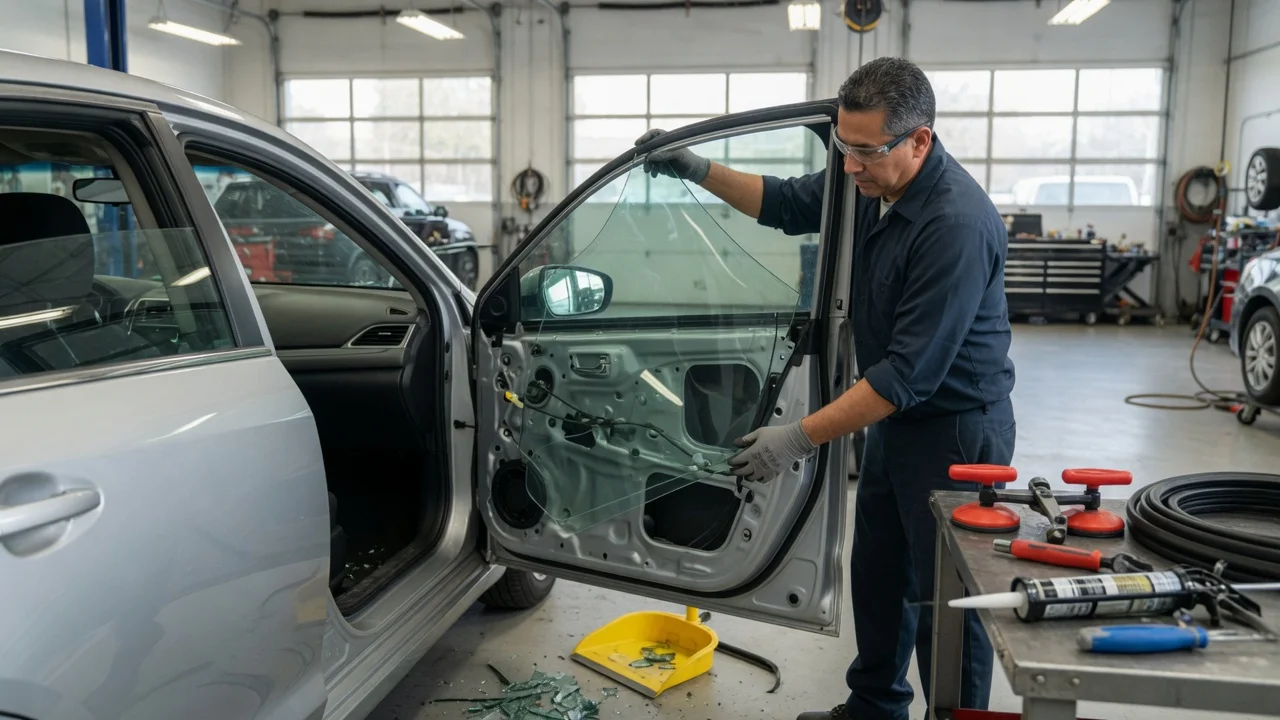
Side window glass replacement generally requires removing the inner door trim panel, peeling back the moisture barrier, disconnecting electrical connectors, removing the old glass and regulator, and installing new components in reverse order. The exact steps and fasteners differ by vehicle. The following notes apply to specific models but should be verified against the exact year, trim, and body style of your vehicle.
Model | Typical window setup | Replacement notes; Chevrolet Spark | Fixed rear side glass and roll-down front door glass on most model years | Front door glass is bonded to a regulator cradle; replacement often means removing the regulator assembly with the glass. Rear side glass may be fixed and requires adhesive or gasket sealing, not a regulator. Dodge Durango | Power front and rear door glass on most trims | Door panel clips are fragile and often require replacement. The regulator motor may be riveted in place, requiring drilling out rivets and using bolts or rivets for reinstallation. Ford van (E-Series and Transit) | Large sliding or roll-down side glass depending on conversion and body style | Van side glass may be part of a bonded window assembly or a sliding door panel. For roll-down front door glass, the regulator is heavy-duty and the glass is larger, making a second person useful for alignment. Hyundai Sonata | Power front and rear door glass on most trims | The door glass is typically secured by two bolts or clips to the regulator. Removing the inner panel requires a trim tool and care around the door handle cable and latch rod.
Model-Specific Caveats
For the Chevrolet Spark, model years before a mid-cycle refresh may use a different glass thickness or curvature than later years. Confirm the part number against the vehicle identification number. For the Dodge Durango, the window regulator motor and cable assembly are often sold as a unit; do not assume a failing motor alone can be replaced without the cable if the cable has frayed. For Ford vans, conversions and cutaway chassis bodies introduce wide variation; a door glass specified for a cargo van may not fit a passenger wagon or an aftermarket conversion. For the Hyundai Sonata, the regulator may have a one-touch up feature that requires re-initialization after battery disconnection. Follow the reset procedure in the owner's manual if the auto-up function stops working after repair.
When to Seek Professional Diagnosis
If the window fault involves side curtain airbags, a door that will not open, or evidence of water intrusion into the door causing electrical corrosion, stop use and have the vehicle inspected by a qualified technician. A diagnostic trouble code for a window motor or body control module is evidence to investigate, not proof that a specific part has failed. Wiring resistance checks and motor current draw tests are needed before concluding a module is defective. If you lack the tools to safely remove a door panel without damaging clips or airbag connectors, professional replacement may be the safer choice.
Material and Safety Considerations
Side windows are typically made of tempered glass, which shatters into small cubes, or laminated glass, which cracks but holds together. Replacement glass must match the original type for safety and noise isolation. Wear cut-resistant gloves and safety glasses when handling broken tempered glass. Vacuum the door cavity thoroughly to remove glass fragments that can jam the new regulator or rattle. Do not use household window glass or acrylic sheet as a substitute; neither meets automotive impact standards.