Car door seal noise: diagnosis and reduction
What is the essential answer to my question?
Car door seal noise is typically a high-pitched whistling, fluttering or rushing sound that appears or changes with road speed, crosswinds or blower fan setting. The noise usually means the flexible rubber weatherstrip around a door is not making continuous contact with the body or glass frame, allowing air to enter or escape through a small gap. The sound can come from the primary door opening seal, the secondary seal, the window channel, the mirror mounting area or a damaged trim piece. Because seals age, compress and lose compliance, the exact location matters more than the age of the car. A vehicle with visibly intact seals can still have wind noise if a seal has been folded, incorrectly seated, contaminated or if the door, hinge or latch adjustment is slightly out of specification.
What could explain this symptom, and what should I check next?
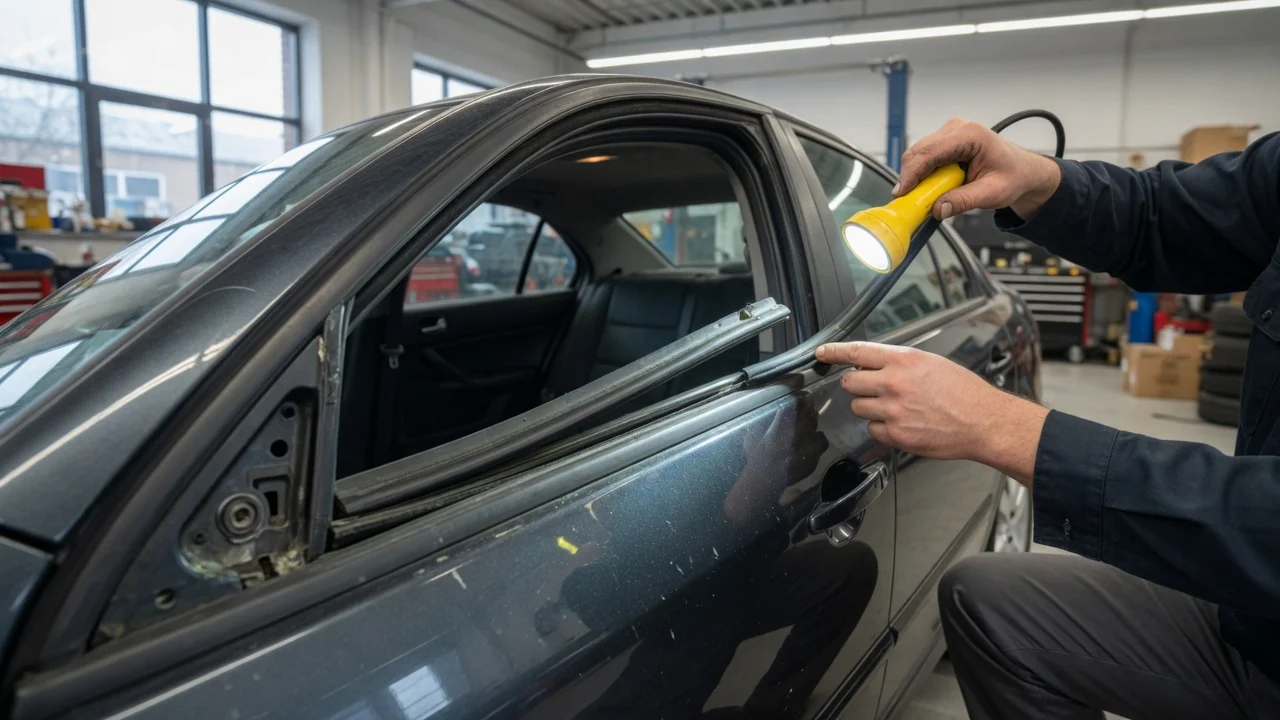
Wind noise from a door seal has several plausible causes. Observable checks can help separate seal damage from alignment or airflow issues. A seal that is torn, flattened, kinked, hardened, or no longer springs back when pressed is a likely source. A visible gap between the seal and the body when the door is closed, or light passing through the shut line from inside a darkened garage, indicates incomplete contact. Chalk or a thin strip of paper can be used as a non-damaging check: close the door on the paper at intervals around the opening and pull gently. Resistance should feel consistent. An area where the paper slides out with little or no resistance indicates weak seal compression. This is diagnostic information, not proof that the seal alone has failed.
Door alignment and latch condition should also be checked. Wind noise that changes when pressing the door outward or inward at speed can suggest a hinge, striker or latch adjustment problem rather than a bad seal. If the door drops slightly when opened, or the shut line is uneven compared with the adjacent panel, the door may not be closing squarely against the seal. In these cases the correct repair may be hinge or striker adjustment, not seal replacement. A door that requires unusual force to close fully can also point to a misaligned striker or an over-compressed seal.
Mirror and trim airflow can mimic door seal noise. A damaged mirror housing, missing mirror gasket, loose exterior trim or an improperly seated glass run channel can create a whistle that sounds as though it is coming from the door seal. Lowering the window slightly while driving can change the tone. If the noise remains with the window lowered, the source may be the mirror base, A-pillar trim or roof ditch moulding rather than the primary door opening seal. If the noise disappears when the window is lowered, the glass run channel or the upper door frame seal is more likely involved.
Conditions requiring professional diagnosis include water ingress into the cabin, visible rust at the door opening flange, airbag warning lights after seal inspection, or a door that cannot be closed without excessive force. A persistent wind noise that worsens after collision repair or hinge work should be assessed by a body shop. A fault code is not typically generated by door seal wind noise, so diagnostic data from a scan tool will not identify the leak. Treat a wind noise symptom as evidence to investigate through physical checks rather than proof that a specific part is defective.
Reduction and repair approaches
Before replacing a seal, clean the contact surfaces. Dirt, wax residue, tree sap or dried polish can prevent the rubber from seating evenly. A mild soap solution on the seal and the painted door opening, followed by thorough drying, can sometimes remove a flutter caused by a contaminated surface. Applying a rubber protectant or silicone-free rubber dressing can restore some suppleness to an otherwise intact seal, but it will not repair a tear or permanent compression set.
A compressed seal may respond temporarily to being carefully reshaped. In some vehicles, a length of foam cord or surgical tubing can be inserted inside a hollow seal section to restore its profile. This can be useful as a diagnostic step or a short-term improvement, but sizing varies by vehicle. If the seal is solid rather than hollow, this approach is not possible. Check the seal cross-section before choosing this method.
Damaged or permanently deformed seals should be replaced. The replacement part should match the body style, door count and model year because seal profiles and corner mouldings vary between generations and markets. Adhesive-backed seals must be applied to a clean, dry flange at the correct temperature range. Butyl or tape residue should be removed without gouging the paint. A replacement seal will not fix wind noise caused by a bent door, worn hinges or a misadjusted striker, so alignment should be confirmed first.
After any adjustment, road testing under consistent conditions helps confirm the result. A repeat test at the same speed, on the same road and with the climate fan off reduces variables. Crosswinds can make the noise appear or disappear, so noise that is only present in strong side winds may indicate a small gap that is difficult to reproduce. In those cases, a water leak test or a smoke test performed by a workshop can locate an opening that is not visible by eye.