How to Choose and Apply a Car Door Rubber Seal Conditioner
Essential answer
A car door rubber seal conditioner is a liquid, gel or spray product that cleans, softens and protects the flexible weatherstripping around door openings. Its main job is to restore suppleness and prevent the rubber from drying, cracking, sticking or tearing. Conditioning helps the seal keep out water, wind and road noise. The direct answer is that most car door rubber seals should be cleaned and conditioned once or twice a year, and more often in very hot, very cold, dusty or coastal conditions. The scope covers door aperture seals, boot and bonnet seals, and similar EPDM or synthetic rubber weatherstripping. Silicone-based conditioners are commonly suitable, but some conditioners may be too greasy or may attract dirt on certain rubber compounds, so product compatibility and a clean surface materially affect the result.
What a rubber seal conditioner does
Rubber door seals are exposed to ultraviolet light, ozone, temperature swings, road salt and repeated compression. Over time, the surface oxidizes and the rubber can lose elasticity. A conditioner adds a thin protective layer that reduces friction and helps prevent the seal from bonding to painted door frames in heat or freezing shut in cold weather. It also restores a darker, cleaner appearance to faded weatherstripping. A conditioner is not a repair product for torn or heavily cracked seals; it can slow deterioration but cannot reverse structural damage.
Conditioner, lubricant, protectant and restorer
These terms overlap in automotive use. A rubber seal lubricant is usually a silicone or synthetic lubricant applied to reduce squeaks, sticking and friction. A rubber seal protectant is formulated to shield against UV, ozone and moisture. A rubber seal restorer is marketed for older, stiffer or faded seals and may contain more aggressive softening agents. A rubber seal spray is simply a conditioner or protectant in aerosol or trigger-spray form. A dedicated rubber seal cleaner is a mild detergent or rubber-safe solvent used before conditioning. In practice, many quality conditioners combine cleaning, softening and protection in one step, but heavily soiled seals still benefit from a separate cleaning pass.
Types of car door rubber seal conditioners
Silicone-based conditioner: common, low-odor, water-repellent and generally safe for modern EPDM rubber; can leave a slick film. Water-based conditioner: lower residue, less likely to attract dust, but may need more frequent reapplication. Solvent-based conditioner or restorer: can soften older rubber more aggressively, but may swell or degrade certain rubber types if used excessively. Spray conditioner: fast to apply, but overspray can reach paint and glass; wipe excess immediately. Gel or cream conditioner: easier to control on narrow seals and less likely to run onto adjacent panels. Rubber cleaner and conditioner combos: remove grime and leave a protective finish, but a separate cleaner may still be needed for heavy contamination.
How to choose a conditioner
Choose a product labeled for automotive weatherstripping, door seals or EPDM rubber. Avoid general-purpose tire dressings or interior vinyl dressings unless the label specifically states they are safe for exterior rubber seals. Some tire shines contain petroleum distillates that can swell or damage door seal rubber. If the car is frequently parked outdoors in strong sun, a UV-protectant conditioner is preferable. If freezing winters are the main concern, a silicone-based lubricant or conditioner that reduces moisture retention is useful. For older vehicles with hardened seals, a restorer may give better short-term flexibility, but it should be applied sparingly and tested on a small hidden area first.
Before conditioning: cleaning
Conditioning over dirt, road film or old silicone buildup prevents the product from reaching the rubber. Open each door and inspect the full perimeter of the seal, including the bottom edge where grit collects. Use a soft brush, a damp microfiber cloth and a mild automotive rubber cleaner or soapy water. Wipe away all residue and let the seal dry completely. If there is mold or mildew in damp climates, use a diluted rubber-safe cleaner and dry the seal with a clean cloth before applying conditioner.
Application method
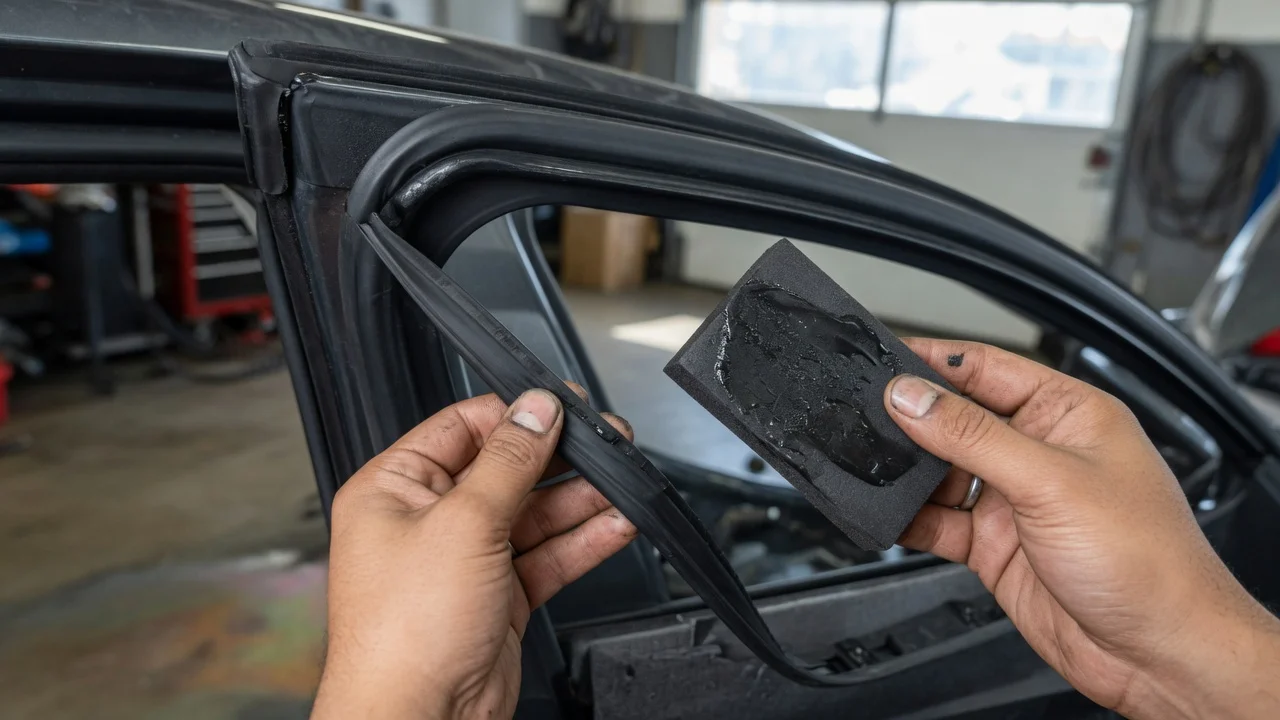
1) Park in shade and let the rubber cool to ambient temperature. 2) Clean and dry the seal thoroughly. 3) Apply a small amount of conditioner to a foam applicator or microfiber cloth. 4) Work the product into the seal with light pressure, covering the entire surface. 5) Let it sit for the time stated on the product, usually a few minutes. 6) Wipe off excess with a clean dry cloth so the seal is not sticky or wet. 7) Leave doors open until the seal is dry to the touch.
How often to apply
For most vehicles, cleaning and conditioning every six months is enough. In desert heat, prolonged sun exposure or very cold winters, every three to four months may be appropriate. If the seal begins to look chalky, feels stiff or makes a creaking noise when the door closes, that is a sign it needs conditioning soon. The exact interval varies by rubber compound, vehicle age and storage conditions, so visual and tactile inspection is more reliable than a fixed mileage schedule.
Signs of a failing seal
Conditioner cannot fix every problem. Look for deep cracks that extend through the rubber, flattened sections that no longer spring back, tears at corners, or seals that have separated from the door frame. Water stains inside the cabin, wind noise at highway speed, or a door that rattles over bumps can indicate a failed seal. If the rubber is torn or compressed beyond recovery, replacement is the correct repair. A conditioner may temporarily soften the surrounding area but will not restore a proper water or noise barrier.
Paint and trim precautions
Many rubber conditioners are safe on cured automotive paint when removed promptly, but they should not be left to dry on painted surfaces. Spray products in particular can drift onto glass and body panels. Use a cloth or foam applicator for precise application, and wipe any overspray or drips immediately with a clean microfiber towel. Avoid getting conditioner on brake pedal rubbers or interior carpet, where a slick film could be a safety or cleanliness issue.
Limitations and uncertainty
The exact compatibility of a given conditioner with a specific model-year rubber compound is not always published. Most modern door seals are made from EPDM, which is generally resistant to silicone and mild water-based products, but older cars may use different compounds. If the owner's manual lists a recommended seal treatment, follow that guidance first. When using a new product, test a small hidden section of the seal and check after several hours for swelling, softening beyond normal or discoloration.