Car Door Pops or Creaks When Opening: Causes and Fixes
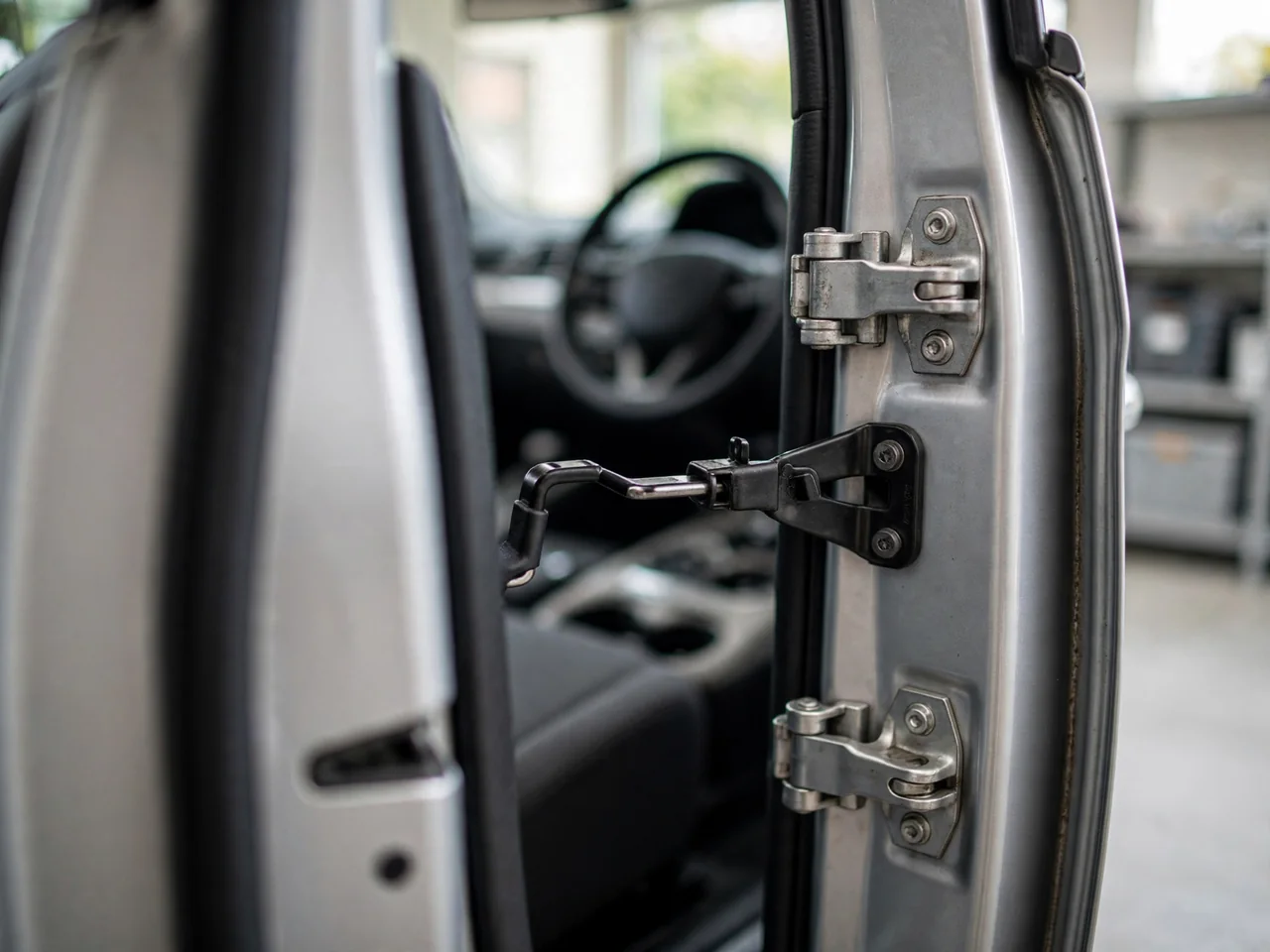
A car door that makes a popping noise when opening often points to a worn or dry component in the hinge or check strap system. The sound typically happens at a specific point in the door’s travel rather than throughout the entire swing. Understanding the likely sources helps you inspect the right parts first. Door popping noises are usually caused by dry hinges, worn check straps, or misaligned strikers, and most can be addressed with cleaning or lubrication.
Why a Car Door Makes a Popping Noise When Opening
A pop or clunk that occurs at a set point in the door’s arc usually comes from the door check strap moving between its detent positions. The check strap is designed to hold the door at intermediate openings, and as it passes over a roller or cam inside the assembly, it can snap past a worn edge. A hinge that binds and then releases under pressure can also produce a similar sudden noise.
A popping noise differs from a steady creak or squeak because it is abrupt and tied to a specific moment in the swing. A creak that continues through the whole range of motion points more to a dry hinge pivot or worn bushing. Pinpointing the difference helps you decide whether to focus on the check strap or the hinge itself before any parts are replaced.
Finding Where the Door Noise Comes From
Begin by opening and closing the door slowly by hand while listening closely near the hinge area. Watch the check strap as it enters the door and pay attention to whether the noise happens at the first opening stage, at the intermediate stops, or only when the door reaches its fully open position. The timing of the sound is a strong clue because the check strap is active only at certain points, while a hinge moves throughout the entire swing.
To check for door sag, gently lift the trailing edge of the open door and feel for vertical play in the hinges. Also compare the gaps around the door panels to the opposite side and see if the latch lines up with the striker without being forced. Dry weatherstripping or a dry latch and striker can click on closing and are easily confused with hinge noise. Keep fingers clear of the hinge gap and check strap while moving the door.
Dry or Dirty Door Hinges
Road grime, frequent washing, and simple age can strip away the original lubricant from hinge pivots, leaving metal parts rubbing together. When the lubricant is gone, the hinge develops a steady creak or groan that continues through the entire swing. The movement may also feel stiffer than normal, and you might see dark grit or light surface rust around the pivot area.
Cleaning away old dirt before adding new lubricant helps prevent the noise from returning quickly, because fresh grease applied over grit simply traps abrasive particles. A dry hinge that is left alone for a long time can speed up wear on the pin and bushing, because the unlubricated metal surfaces grind against each other with every door cycle.
Worn Door Check Straps and Detents
The door check strap, sometimes called a door check or detent arm, holds the door at set open positions and prevents it from swinging too far and hitting the body. Inside the door, the strap runs over a roller or cam that engages notches in the strap. When those notches or the roller wear down, the door can slam past the stop with a loud pop or clunk, or it may no longer stay open on a slope.
Lubricating a worn check strap may quiet it temporarily, but it cannot restore worn detents or rollers because the metal surfaces are already deformed. A rough, notchy feeling as the door moves through its intended stops is another sign of internal wear. If replacement is needed, confirm the correct part for your exact vehicle, trim, and model year with a dealer or reliable parts source.
How to Lubricate Door Hinges and Check Straps Correctly
A penetrating spray is useful for cleaning and loosening old grease and rust, but it does not provide lasting lubrication on its own. After cleaning, apply a durable lubricant such as white lithium grease or a suitable spray grease that stays on the pivot. Work the door through its full range several times to distribute the lubricant into the hinge pin and bushing contact surfaces.
When lubricating, avoid overspraying onto painted surfaces, interior trim, seatbelts, or door wiring harnesses, and wipe off any excess that runs down. Check the owner’s manual for any lubricant the manufacturer specifies for hinge points, because some vehicles recommend specific products. For rubber weatherstrips, use a silicone-safe conditioner rather than grease, which can degrade the rubber over time.
When a Worn Hinge Pin or Bushing Needs Replacing
If the door has noticeable up-and-down play, sags when opened, or must be lifted to latch, lubrication will not solve the problem. These are signs that the hinge pin or its bushings are worn, allowing the door to drop out of alignment. A noise that returns soon after lubricating the hinge is another clue that the wear is beyond what grease can correct.
Hinge pins and bushings are the cylindrical components that allow the hinge to pivot while supporting the door’s weight. When the pin or bushing wears, the clearance increases and the door can shift. Replacing them usually means supporting a heavy door and realigning it afterward, so this job is best left to a professional or experienced technician. Some hinges are welded, others bolted, so repair options depend on the vehicle’s design.
When to Get the Door Checked by a Professional
A professional inspection is needed if the door will not latch securely, opens on its own, drags on the body, or shows visible cracks or damage around the hinge mounts. Door noise that appears after a collision or after the door has been forced against its stop can indicate bent hinges or mounting damage that is not visible from the outside.
Do not force a binding door, and never drive with a door that does not latch fully because it can open unexpectedly. When you take the vehicle to a technician, describe when the noise happens—at the first movement, at the intermediate stops, or at full open—and mention any lubrication or adjustments you already tried. That information helps narrow the diagnosis and avoids unnecessary parts replacement.