Car Door Hinge Types: How They Work and What Goes Wrong
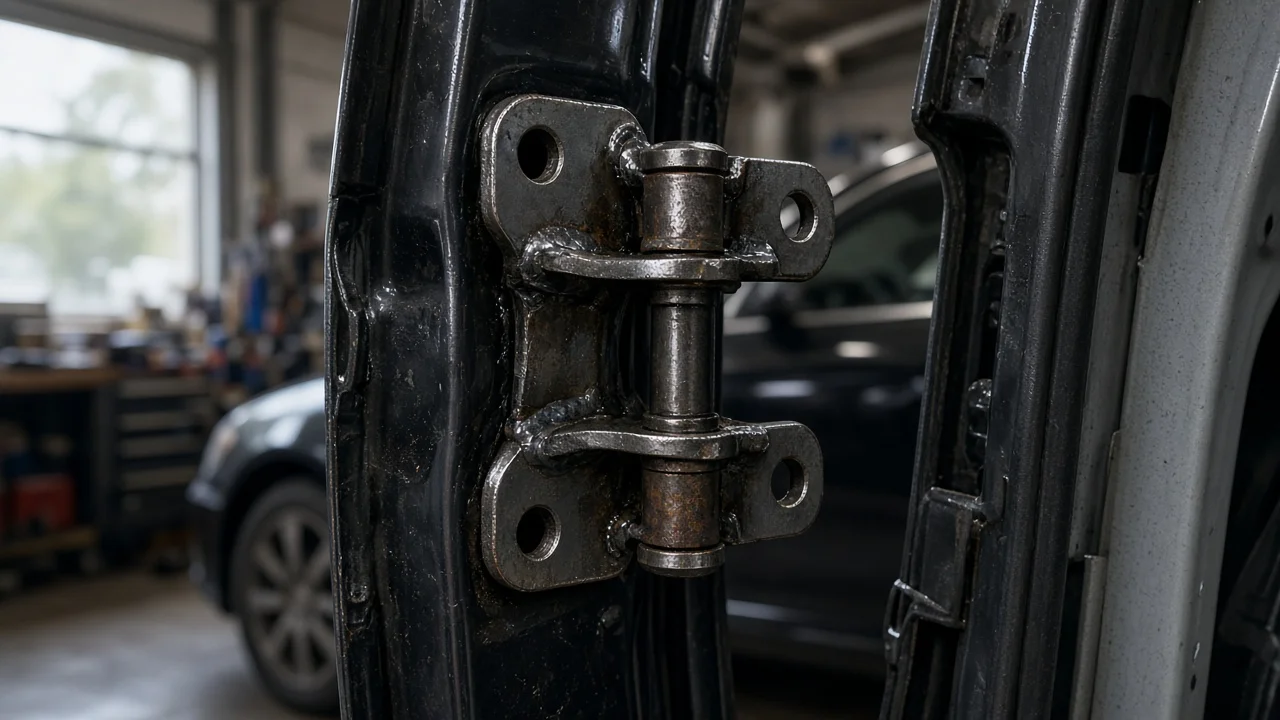
Most car door hinges look alike at a glance, but how a hinge is built and mounted decides whether a sagging door can be adjusted, rebuilt or must be replaced. This guide explains the common types of car door hinges, how they carry the door, what changes from one vehicle to another, and how to tell a worn or misaligned hinge from an electrical lock fault that only feels like a door problem.
The main types of car door hinges
Passenger cars and light trucks use a small number of hinge designs. The most common is the bolt-on hinge: two steel leaves joined by a pivot pin, with one leaf bolted to the body pillar and the other to the door shell. Slotted or oversized holes let the door be moved up, down, in and out during alignment. Many vehicles instead use weld-on hinges, where one or both leaves are welded to the body or door at the factory. These hold their position well but leave little adjustment, so correcting sag usually means rebuilding the pivot or using a specialized bending tool rather than shifting bolts.
Hinges are also grouped by how they are made and serviced. Stamped steel hinges are light and inexpensive, while forged or cast hinges are stiffer and common on heavier doors and trucks. Some designs use a removable pin with replaceable bushings, so wear can be repaired without replacing the whole hinge; others are serviced only as a complete assembly. Beyond conventional front-hinged doors, there are rear-hinged doors, external strap hinges on some off-road and vintage vehicles, and specialty arrangements such as scissor, butterfly and gullwing doors, which rely on multi-axis hinges and gas struts. Sliding van doors run on rollers and tracks rather than conventional hinges.
How a door hinge carries the door
A front door usually hangs on an upper and a lower hinge mounted to the A-pillar. The door's weight acts like a lever: the upper hinge is pulled away from the pillar, the lower hinge is pushed against it, and both share the vertical load. Every opening rotates the pin inside its bushing or bore, so wear concentrates there. Once clearance opens up, the free end of the door drops slightly and the latch begins to meet the striker low. That is why a worn hinge often shows up first as a door that must be lifted or slammed to close.
Separate from the hinges, a door check, also called a check arm or check link, limits how far the door swings and gives it detent stops. On some vehicles the detent is built into the hinge itself with a spring and roller. Wiring for power locks, windows, mirrors and speakers crosses the hinge area inside a rubber boot, while the latch and its electric actuator sit at the rear edge of the door. The hinge only positions the door; whether it locks and releases depends on the latch, the actuator and their linkages.
Strap hinges and door check straps
The term car door strap hinges is used in two different ways. In custom, restoration and off-road work, it usually means an exposed hinge with a long flat leaf mounted on the outside of the door, as on many older vehicles and some removable-door off-roaders. These hinges are easy to inspect and are often designed so the door lifts off the pins. In everyday repair talk, a door strap more often means the check strap that limits opening. A broken check strap lets the door swing too far and can damage the fender or hinges, but it does not carry the door's weight.
When comparing photos or diagrams of hinges for a car door, look for a few telling details: whether the leaves are bolted or welded, whether the pin can be driven out, whether the hinge hides behind the fender or mounts outside, and whether a separate check arm sits between the hinges.
What changes the answer for your vehicle
Door weight and length matter. Long two-door coupe doors and heavy truck doors load their hinges harder, and some vehicles use dual-pivot or multi-link hinges so the door clears the body opening. The mounting method decides how much adjustment is possible. Frameless windows add another layer, because the glass must index against the weather seal and often depends on the window module dropping the glass slightly when the door opens.
Vehicle fitment is strict. Hinges differ left to right, upper to lower, and sometimes between trim levels, model years or body styles of the same nameplate. Rear doors on sedans and crew cabs hang from the B-pillar and use different parts than the front doors. Doors supported by gas struts, such as gullwing or scissor designs, add stored-energy components that change both diagnosis and safe handling. Use also matters: a driver's door opened many times a day typically wears faster than a rarely used rear door.
Hinge wear or an electrical actuator fault?
Mechanical hinge and alignment problems produce physical symptoms. The door drops when opened, its rear edge sits below the body line, the latch hits the striker hard or late, paint is rubbed off near the striker or around the opening, the door creaks or pops, or wind noise and water leaks appear because the weather seal no longer compresses evenly. These symptoms change with how you push, lift or close the door.
Electrical faults behave differently. A failing door lock actuator may buzz, click weakly, work intermittently, or respond only to the mechanical key. If the door closes and lines up well but will not lock, unlock or release from the handles, the latch, actuator, rods or cables are more likely causes than the hinge. The one place the two overlap is the wiring boot between the pillar and the door: broken wires there can mimic actuator failure, and problems that come and go as the door swings point to that harness.
What an owner can check and do
With the door open, grip the bottom of the rear edge and gently lift. Watch the hinge pins: visible up-and-down movement at the pin or bushing points to wear rather than simple misalignment. Close the door slowly and see whether it rises as the latch meets the striker. Compare the gaps around the door with the opposite side, look for fresh rub marks, and confirm the check arm moves smoothly with its bolts tight.
Cleaning and lubricating the hinge pins and check arm with a product suited to the vehicle can stop squeaks and slow wear, but it will not restore a worn bushing. If the hinges are bolted on and the pins are tight, an alignment adjustment may help; mark or tape around each hinge before loosening anything so the original position can be recovered. Minor closing issues can sometimes be corrected at the striker alone. Support the door with a helper or a padded jack, since it can drop or twist once bolts are loose. When ordering parts, confirm fitment by VIN or the manufacturer's part number rather than year and model alone.
Limits and when to follow the service manual
Hinge construction, adjustment order and fastener specifications vary by manufacturer, so the service procedure for your exact vehicle should guide any work beyond inspection and lubrication. Some hinge bolts are single-use or require a specific torque, some are reachable only after removing trim, a fender or the door itself, and weld-on hinges may need special tools. Many doors also contain side airbag sensors and wiring, which affects how the battery and connectors must be handled during removal.
Get professional help if the door was involved in a collision, if the pillar or door shell around a hinge is cracked or distorted, if gas struts or powered door mechanisms are involved, or if the door will not latch securely. A door that might open while driving is a safety problem, not a cosmetic one. A body shop is the right choice for structural or alignment work, while a technician with diagnostic tools is better suited to actuator and wiring faults.