Car Coolant Costs: Budgeting for Scheduled Coolant Service
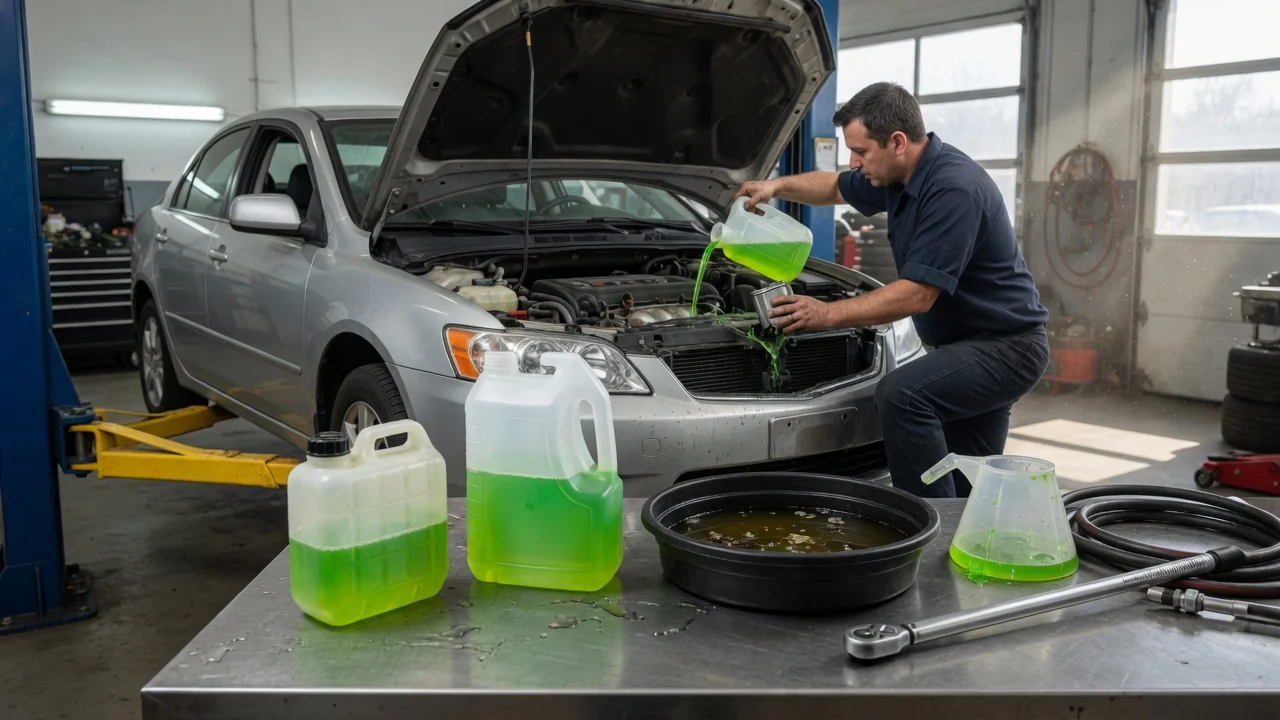
What the service actually covers
Scheduled coolant service generally includes draining the old fluid, flushing the system when specified, refilling with the correct coolant type, and bleeding trapped air so the engine reaches and holds normal operating temperature. Some services also include replacement of the radiator cap or a pressure test, but shops do not all include the same extras. Because the scope varies, the first step in budgeting is to treat a coolant service as a defined service line item rather than assuming every quote covers the same work.
A realistic cost range
For most cars and light trucks, a scheduled drain-and-refill service typically costs from roughly one hundred to two hundred dollars at an independent shop, and commonly more at a dealership. A premium or extended-life coolant, a larger cooling system, or a flush procedure that requires specialized equipment can move the price toward the upper end or beyond it. The lowest prices usually reflect a basic drain and refill with conventional coolant and no additional testing.
Materials, labor, and why prices vary
Three factors account for most of the difference between quotes. First, coolant type: older vehicles may accept a conventional green coolant, while many newer vehicles specify an extended-life or manufacturer-specific formula that costs more per gallon. Second, cooling system capacity: a large engine or a vehicle with rear heating can require more fluid, and the service may use several gallons. Third, labor time: some cooling systems are easy to drain and refill, while others require a vacuum fill tool, an electric water pump procedure, or extra steps to bleed air from high points. None of these differences are visible in a basic price alone.
Coolant type matters more than many owners expect
Coolants are not all interchangeable, and choosing the wrong chemistry can harm seals or reduce corrosion protection. The owner manual is the most reliable reference for the required specification. Quoting the correct specification when requesting a price helps prevent a shop from substituting a cheaper fluid and also prevents a quote based on the wrong product. If the vehicle requires a long-life coolant, that specification is part of the service, not an optional upgrade.
Flush versus drain-and-refill
A drain-and-refill removes most of the old fluid, but some old coolant remains inside the engine block and heater core. A flush circulates fluid or cleaner through the system and can remove more of the old mixture and deposits. A flush is usually priced higher because it uses more fluid or a machine and takes more time. For routine maintenance on a well-maintained cooling system, a drain-and-refill is often sufficient; a flush may be justified after neglect, contamination, or when switching between incompatible coolant chemistries. A service recommendation should state which method is being proposed, since the work and price are different.
What a quote should include
A useful quote identifies the vehicle and engine, the coolant specification, how much fluid is included, whether the work is a drain-and-refill or a flush, and whether it covers a pressure test, cap inspection, or disposal fee. Disposal or hazardous-waste fees are legitimate but inconsistent between shops, so asking whether they are included prevents a surprise at checkout. A quote that lists only a flat price gives no way to compare the actual service.
How to budget without overpaying
Plan for the service at the interval listed in the owner manual rather than waiting for coolant to show faults. Set aside the upper part of the typical range if the vehicle requires a manufacturer-specific coolant or has a cooling system that is difficult to bleed. If a shop proposes work beyond the scheduled coolant exchange, such as a water pump or hose replacement, ask for the evidence behind the recommendation and a separate line-item price. Those repairs may be valid, but they should be budgeted as separate decisions rather than silently added to a coolant service.
Signs that the service may be due sooner
The schedule is the primary reference, but visible signs can move the work forward. Coolant that appears rusty, cloudy, or contaminated, a low level without an obvious leak, a sweet smell near the engine bay, or repeated overheating all call for inspection. These conditions can indicate a leak or a failed component rather than simply old fluid, so a diagnosis may be needed before the coolant exchange. A service that only replaces the fluid will not fix an underlying leak.
The practical takeaway
Budget for the correct coolant and the specified method for the vehicle, not for the cheapest available drain-and-refill. A realistic maintenance budget should treat the upper half of the usual independent-shop range as the planning figure, with the dealership servicing route carrying a premium. Confirming the coolant specification, method, and included fees before approving the work turns a variable expense into a predictable maintenance item.