Car Cleaning Sprays and Wipes: Safe Uses for Interior and Exterior
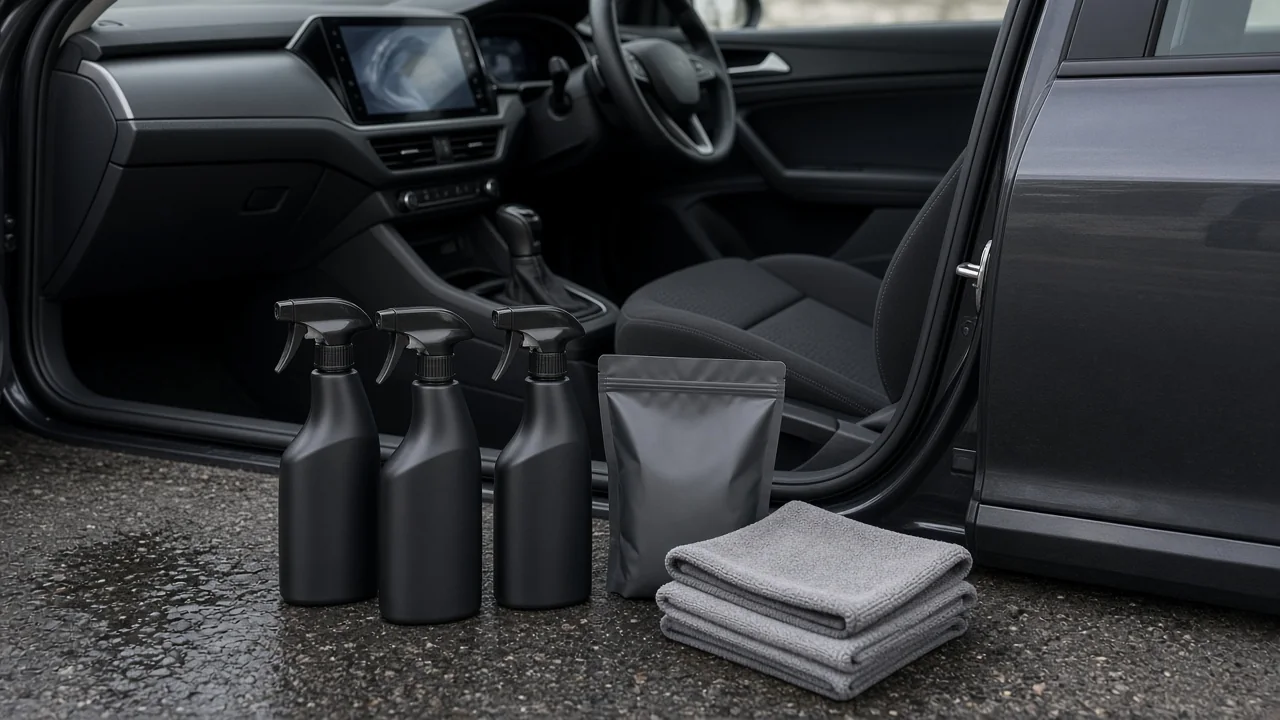
Car cleaning wipes and car cleaning sprays are not one-size-fits-all. Interior cleaning wipes, automotive glass cleaner, leather products, and a quick detailer each target different finishes, and using the wrong one can leave residue, streaking, or coating damage. Matching the product to the surface, reading the label, and confirming surface compatibility before you wipe or spray is the practical way to keep interiors, screens, and paint looking as intended.
Identify the Surface Before Choosing a Spray or Wipe
A car cleaning spray meant for dashboards is not an automotive glass cleaner, a leather formula, a quick detailer, or a waterless wash. Interior cleaners target listed cabin plastics, glass formulas keep optical surfaces clear, leather products address coated leather or named hides, quick detailers handle light exterior dust and finishing, and waterless wash products address limited soil when a hose is not used. Confirm the label and the vehicle’s care guidance for that specific surface and finish before you apply anything.
Cleaning, dressing, conditioning, and disinfecting are different jobs, and a wipe or spray that claims one of them does not automatically deliver the others. A product that lifts fingerprints may still leave a slippery film, and a disinfectant claim says nothing about leather conditioners or paint-safe finishing. After you select an approved product, do a spot test on a small, inconspicuous area. Let it dry, then look for discoloration, residue, or a change in sheen before you treat a larger, more visible panel.
Use Interior Wipes for Suitable Trim and Small Messes
Automotive interior cleaning wipes can handle fingerprints, light dust, and small fresh spills on plastics, vinyl, or other cabin materials named on the pack. They are cleaning wipes for car interiors, not a stand-in for extraction. Lift loose grit first so particles are not ground into the grain, then wipe with light pressure and replace a wipe once it is dirty or dry. Household cleaning wipes should not be assumed safe for automotive finishes, adhesives, or coatings, even if they resemble car cleaning wipes.
Keep slippery cleaning or dressing residue off pedals, the steering wheel, and other grip surfaces, and honor any product restriction that names those controls. Reseal the pack after you take a sheet so remaining interior cleaning wipes keep their moisture. A dried car cleaning wipe should not be revived with an improvised chemical mixture; that mix has no labeled surface compatibility and can stain or haze trim that the original formula never claimed to treat. If a wipe arrives dry, discard it rather than soaking it in glass cleaner, all-purpose spray, or household disinfectant.
Protect Touchscreens, Displays, and Glossy Interior Panels
Follow the vehicle manufacturer’s cleaning guidance for touchscreens, instrument lenses, and coated displays before any car cleaning spray or wipe touches those parts. An "interior-safe" claim on cleaning wipes for car cabins does not establish compatibility with a touchscreen coating or with high-gloss piano-black plastic. Those finishes often have thin optical or anti-fingerprint layers that household ammonia, alcohol-heavy formulas, or abrasive sheets can dull. If the owner’s information names a method or forbids certain chemistries, that instruction overrides a generic interior product.
Use a clean, soft cloth—typically a dedicated microfiber towel—and only the amount of approved cleaner the label allows. Do not spray car cleaning sprays directly into seams, speaker grilles, or switchgear, where liquid can migrate behind a display or into a control. Grit trapped in a dirty wipe, heavy pressure, and unsuitable chemicals can leave scratches, haze, or coating damage that polishing will not reverse. Stop if a panel turns cloudy, tacky, or discolored, and seek qualified advice rather than stacking more products.
Check Leather, Synthetic Upholstery, and Fabric Requirements
Leather, coated leather, synthetic upholstery, suede-like inserts, and fabric can look similar in a cabin yet need different care. Confirm the material and the vehicle’s care guidance before you apply a car cleaning wipe, a dedicated cleaner, or a conditioner. A formula written for coated leather may darken unfinished hide or leave residue on suede-like inserts, while fabric products can over-wet vinyl. Apply only as directed and avoid saturating stitching, perforations, and seat-control openings, where liquid can wick into foam or electronics.
Surface wipes have limits. They can lift light contact soil from listed leather or vinyl, but they do not pull embedded fabric dirt or fully extract an absorbed spill from foam. Persistent stains, dye transfer, or odors may need professional detailing rather than more aggressive wiping. Leather conditioning is also not automatic for every leather finish; some coated surfaces are not meant to take oils, and extra conditioner can attract dust or feel greasy. Follow the applicable care guidance instead of assuming a conditioner is part of every cleaning pass.
Clean Automotive Glass Without Residue or Overspray
Before using an automotive glass cleaner, verify that it is compatible with aftermarket tint film and with any specialty glass coating the vehicle may have. Some films and hydrophobic layers are sensitive to ammonia or to solvents that are routine in older glass formulas. Interior dressing residue on the inside of the windshield, a dirty microfiber towel, excess product, and hot glass all contribute to streaking. Those smears are more than cosmetic; they scatter light at night and in low sun.
Where the label directs it, apply the approved cleaner to a clean towel rather than flooding the glass, then work the surface and protect adjacent trim from overspray that can stain or gloss dashboards. Finish according to the product instructions, using a second dry, clean face if the label calls for a buff. Inspect the dry glass from several angles, including against the sky and with the wipers parked, and confirm clear visibility before driving. Do not treat remaining haze by spraying more product onto a dirty towel.
Use Exterior Quick Detailers Within Their Cleaning Limits
A quick detailer is a light-duty car cleaning spray for removing fresh dust, fingerprints, and water spots and for finishing paint after a wash, subject to its label and the finish’s care requirements. It is not a substitute for washing when the panel has visible grit, mud, or substantial road soil; wiping that contamination can drag particles across clearcoat and leave swirl marks. Matte paint, vinyl wraps, protective films, and other specialty finishes need explicit compatibility. If the bottle does not name that surface, do not assume a gloss-oriented formula is safe.
Work on a cool panel out of direct sun when directed, because heat can flash solvents and leave streaks. Use clean microfiber towel faces and wipe without scrubbing, folding often so a loaded section is not reused. Persistent bonded contamination or etched marks need assessment and suitable treatment, not repeated wiping or a stronger improvised mixture. If the mark remains after a proper wash and a labeled quick detailer, stop and have the finish evaluated rather than compounding the damage.