Car Battery Connection Issues: Causes, Symptoms and What to Do
The short answer
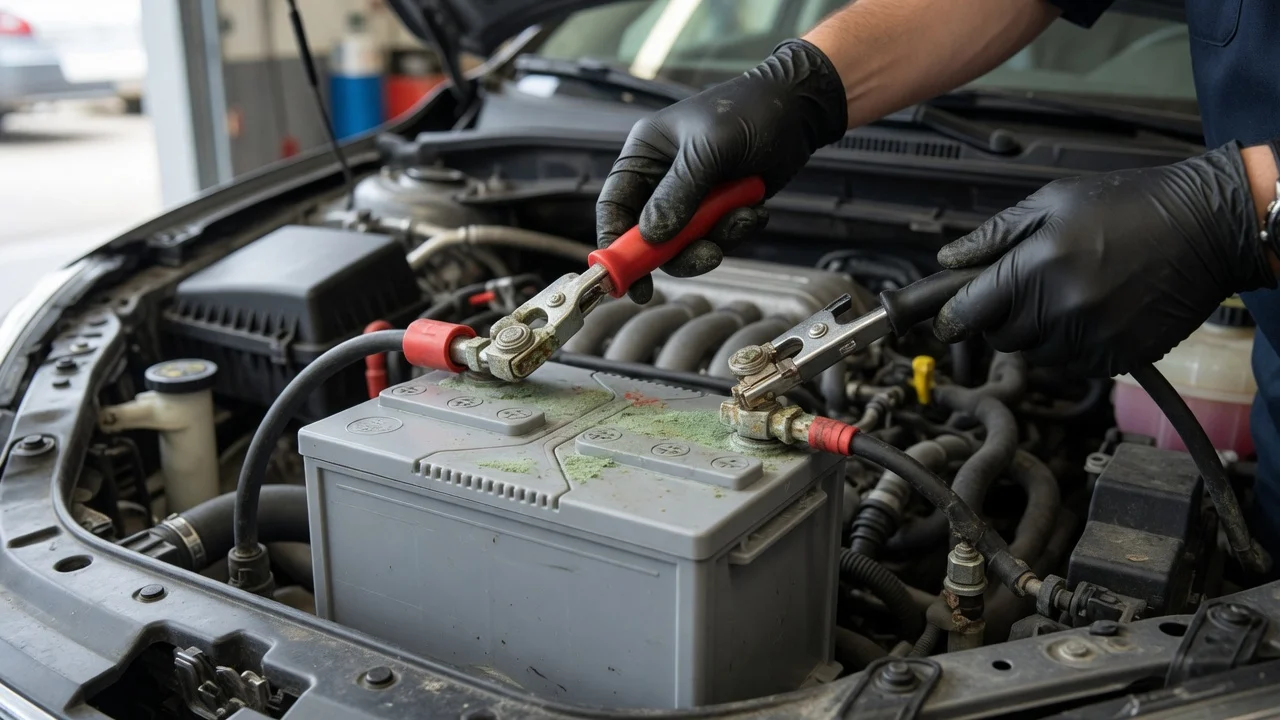
Many problems that look like a failing battery come from the connection between the battery and the car. A terminal clamp that has worked loose, corrosion on the posts or clamps, or a damaged cable can stop current from flowing properly even when the battery holds a good charge. Before replacing a battery, check that its connections are clean, tight and undamaged. Cleaning and tightening often fixes the fault. If it does not, the battery, cables, charging system or another electrical component may be responsible.
This guide covers the conventional 12-volt battery that powers the starter and accessories in most cars. Hybrids and electric vehicles also have a 12-volt battery, but their high-voltage traction battery is a separate system. Owners should not attempt to inspect or service the high-voltage system.
Common causes of a poor battery connection
Loose terminal clamps: vibration and repeated servicing can loosen the clamp, so it no longer grips the battery post firmly. Corrosion: a white, green or bluish crusty deposit on the posts or clamps adds electrical resistance. Damaged or worn cables: fraying, cracked insulation, or corrosion that has spread under the insulation can restrict current. Poor ground connection: the negative cable's attachment to the engine or body can loosen or corrode, with effects similar to a bad terminal. Incorrect or worn hardware: stretched clamps, mismatched replacement terminals, or missing hold-down parts can stop a secure connection forming.
Symptoms to look for
The engine cranks slowly, or you hear only a click when turning the key or pressing the start button. The car does not respond at all, then starts after the cable is moved or tapped. Lights, the dashboard or the infotainment system flicker, dim or reset. The car starts after a jump but has problems again later. You can see corrosion, or a clamp moves by hand on the battery post.
Several other faults cause the same symptoms, including a discharged or aging battery, a faulty starter, and a charging-system problem. Inspecting the connections is a sensible first step, but a good result does not rule these out.
How to check and address the connections safely
Switch off the ignition and all accessories, and wear eye protection and gloves. Battery corrosion and electrolyte can irritate skin and eyes. Look for corrosion, cracked cables and loose clamps without disconnecting anything first. If you need to disconnect the battery, remove the negative cable first. When reconnecting, attach the positive cable first and the negative last. This lowers the risk of a short circuit if a tool touches the car's body. Clean corroded posts and clamps with a battery terminal brush. A baking soda and water solution is widely used to neutralize the deposits. Keep debris away from painted surfaces and rinse carefully. Refit the clamps so they sit fully on the posts and are snug. Overtightening can damage the clamps or posts. Check that the battery hold-down is secure, since a battery that can move puts strain on the connections.
Some vehicles may lose radio presets, clock settings or learned idle and window settings when the battery is disconnected. Some models need specific procedures after reconnection. The owner's manual or a model-specific service source is the right reference. This is especially important for cars with start-stop systems, battery monitoring sensors on the negative terminal, or batteries mounted under a seat or in the trunk.
When to get professional help
Have a professional inspect the car if the symptoms continue after the connections are clean and tight. The same applies if a cable is visibly damaged, corrosion keeps coming back quickly, or the battery case is swollen, cracked or leaking. A shop can test the battery, starter and charging system and say whether the cables or the battery need replacing.
Gaps in this guidance
No model-specific specifications were available for this article. Terminal torque values, battery type (flooded, AGM or other), battery location, and any reset or registration steps after disconnection vary by make, model year, powertrain and market. Check those details in the vehicle's documentation before doing any work.