Car Axle Leaking Grease: Torn CV Boots and What to Do
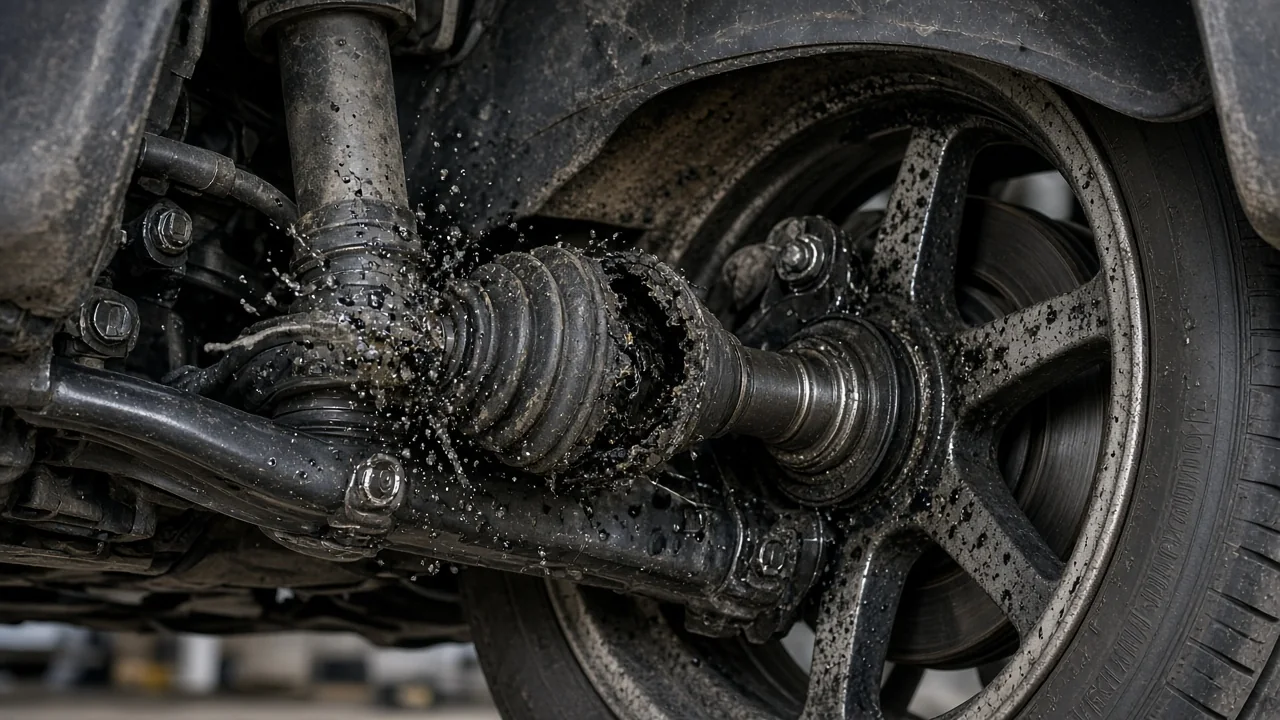
Grease around your car’s axle or wheel usually points to a torn CV boot. The axle boots protect constant velocity joints that transfer power from the transmission to the wheels. When a boot splits, the thick grease inside flings out while dirt and water get in. If you’ve spotted dark grease splattered inside the wheel, on suspension parts, or along the tire sidewall, it’s important to understand what’s happening. This article explains the causes, signs, and practical next steps so you can decide when to seek professional help.
What Grease Around a Car Axle or Wheel Usually Means
A CV axle, often called a half shaft or drive axle, connects the transmission or differential to each driven wheel. Front-wheel-drive, all-wheel-drive, and independent-rear-suspension vehicles use them because the axle must allow the wheel to move up and down with the suspension while still transmitting torque. Inside each end of the axle is a constant velocity joint packed with special grease. The inner joint usually connects near the transmission, while the outer joint sits behind the wheel hub. This design keeps power flowing smoothly even when the wheels turn and the suspension travels.
When a CV boot leaks, the thick, dark grease typically appears in a distinctive pattern. You might see a heavy spray or streak inside the wheel rim, on the tire sidewall, or across the brake splash shield, lower control arm, or inner fender. Because the axle spins rapidly, centrifugal force flings the grease outward in a radial line. It can travel surprisingly far from the actual tear. If you notice a thinner, oily fluid near the axle instead of thick grease, it may be from a transmission or axle seal rather than the boot, and that requires different professional attention.
How a Torn CV Boot Lets Axle Grease Escape
CV boots are flexible rubber or plastic covers that seal grease inside the constant velocity joint. They protect the joint’s precision-machined bearings and races from contamination. Common reasons a boot fails include age-related cracking as the material hardens, exposure to heat from the brakes and engine, damage from road debris or a puncture, and clamps that become loose or damaged. Even a small split in a boot fold can allow grease to escape. The boot may look intact at a glance, so a close inspection of each fold and clamp is necessary.
When the axle spins, the grease inside the CV joint is pushed outward by centrifugal force. Once a boot tears, that force slings grease out of the opening. A tiny tear can create a dramatic mess because the joint holds a significant amount of lubricant. The location of the leak depends on which boot is damaged. An inner boot sits near the transmission or differential, and its grease can coat the engine bay or exhaust, where it may burn and smell. An outer boot near the wheel throws grease onto the wheel, tire, and brake components, which is often the most visible.
Signs of a Leaking or Torn Boot on Your Car
Visual signs of a damaged boot include splits, cracks, or holes in the rubber folds. A missing, loose, or broken boot clamp can also allow grease to escape even if the boot itself looks fine. Fresh grease marks on nearby parts—such as the strut, control arm, brake hose, or wheel housing—are strong indicators. Compare the two sides of the car; one side may be dry and clean while the other shows a dark, sticky coating. The leaked grease is usually tacky and dense, not runny like oil or brake fluid.
Audible and physical signs can accompany a boot leak. You may hear a clicking or popping noise when making tight turns, especially at low speed, which often indicates wear in the outer CV joint. A vibration or shudder when accelerating could point to the inner joint. These signs suggest the joint itself may already be damaged from lost grease and contamination. However, a boot can be torn for some time before the joint gets noisy. A visual leak alone is enough reason to have the axle inspected, even if the car still drives quietly.
Safe Checks You Can Make Before Visiting a Shop
Before taking your car to a shop, you can safely gather useful information. Park on level ground, set the parking brake, turn off the engine, and let the components cool. Use a flashlight to look through the wheel spokes and behind the front wheels. Turning the steering wheel fully to one side can expose the outer boot and clamp. Kneel beside the car rather than crawling underneath. Never reach into rotating or hot areas, and never work under a vehicle supported only by a jack. The goal is a visual check, not disassembly.
Take clear photos of the boot, the grease splatter pattern, and the surrounding wheel area. These images help the technician see exactly what you observed, especially if the leak is intermittent or the boot tear is hidden. Also note when any noise or vibration occurs—whether it happens when turning, accelerating, braking, or at highway speed. Write down the side of the vehicle and any recent work or impacts. This information can focus the inspection and save diagnostic time. If you are unsure about safety, it is better to skip the home check and let a professional look.
Why a Prompt Repair Helps Prevent CV Joint Failure
A torn boot causes a slow failure inside the constant velocity joint. The grease that lubricates the ball bearings and races is flung out, and without it, metal parts grind together. Dirt, water, and road salt enter through the same opening and accelerate wear. As the joint loses lubrication, friction and heat increase. Pitting and scoring develop on the balls and grooves, which creates play. Once the joint has play, it can make noise and eventually bind or break. The longer a torn boot is left unrepaired, the more likely the joint will need replacement.
Repairing the boot early can prevent the need for a new axle. If the joint is still tight and quiet, a technician may be able to clean the joint, repack it with fresh grease, and install a new boot. This is a more involved job than it sounds because the axle must be removed, but it costs less than a full axle assembly. If the joint is already noisy or has excessive play, replacing the entire CV axle is often the more reliable repair. Waiting until the joint fails can leave you stranded and potentially damage other components.
What a Technician Will Inspect and Typical Repair Paths
During a professional inspection, the technician will raise the vehicle and rotate the wheels to check for boot damage, joint play, and noise under load. They will look for grease on the brake caliper, rotor, and pads because contamination there can affect braking. The inspection should also determine whether the leak is from a boot or from an axle seal at the transmission or differential. A torn boot is not the only source of grease near an axle; a leaking seal can also push fluid outward, and the repair is different.
If the boot alone is damaged and the joint is still sound, the shop may replace just the boot and clamps. This involves removing the axle, cleaning the joint, repacking it with the correct grease, and installing a new boot. If the joint shows wear—such as pitting, roughness, or play—replacing the whole axle assembly is usually the better option. Ask the shop to confirm whether the joint is still serviceable and whether grease reached the brakes. Always have the shop verify the correct part for your specific make and model rather than relying on guesswork.
When to Stop Driving and Get Professional Help
Certain symptoms mean you should stop driving and seek professional help immediately. A loud clunking or banging when turning, strong vibration that worsens with speed, a change in steering feel, or a grinding noise from the wheel area can indicate a failing CV joint. Ignoring these signs may lead to a broken axle, which can cause a sudden loss of power to that wheel and a dangerous loss of control. If the noise is severe or the vibration shakes the steering wheel, do not continue driving. Have the vehicle towed to a repair shop.
Grease on brake parts is another reason to act quickly. CV boot grease can coat the brake rotor, pads, or caliper, reducing friction and causing uneven braking or pulling to one side. If you see grease near the brake components, a professional should clean and inspect the braking system. Even if the car still drives, a soaked brake pad cannot be trusted. Home observations cannot confirm the condition of the joint inside the boot. A technician can perform a proper inspection, measure joint play, and recommend the correct repair before the problem worsens.