Car audio amplifier subsonic filter
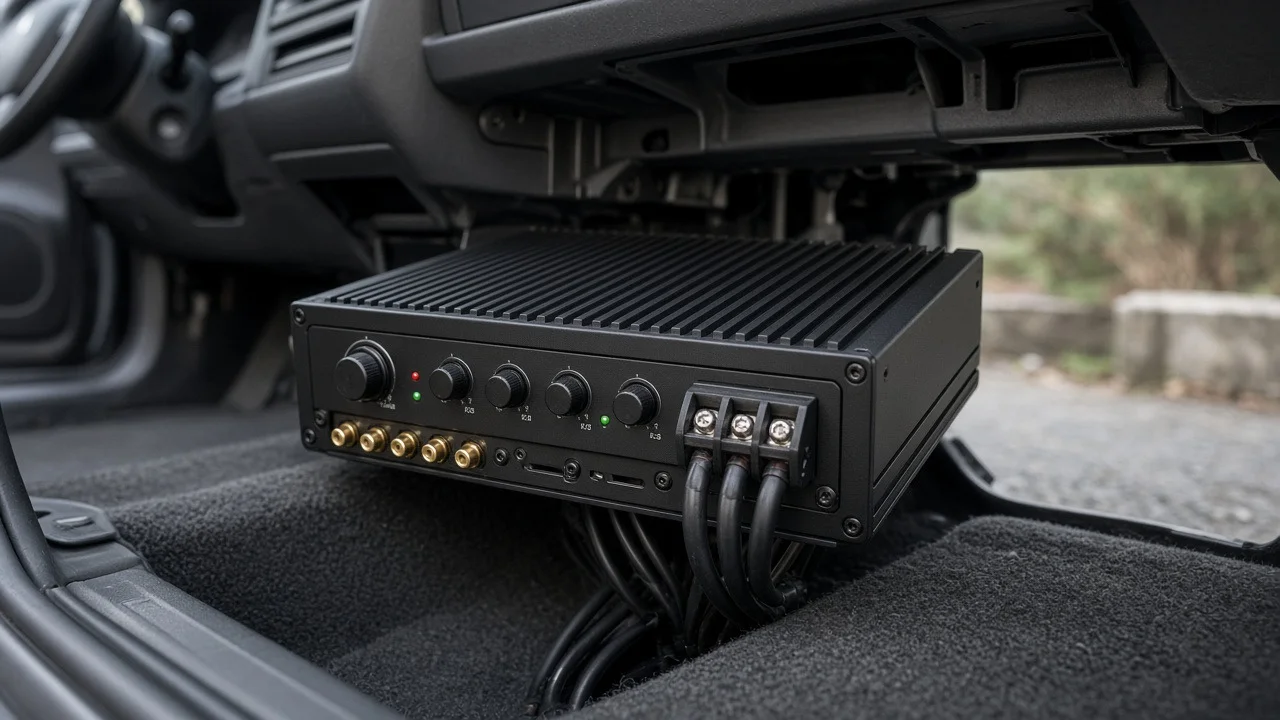
A subsonic filter on a car audio amplifier is a high-pass crossover designed to block very low frequencies before they reach a subwoofer. This control matters most in ported or vented enclosures, where the speaker loses acoustic loading below the tuning frequency and can be damaged by excessive cone excursion. It is not a bass boost, and it does not improve deep musical extension. Instead, it protects the driver from inaudible low-frequency energy while preserving the amplifier's useful output for audible bass.
Essential answer
The subsonic filter is a high-pass circuit that attenuates signals below a set frequency, typically in the region where musical content fades but turntable rumble, suspension movement, or warped media may still produce electrical output. In a moving-coil subwoofer, those very low signals can force the cone to travel farther than the suspension and spider are designed to allow, especially when the enclosure no longer provides restoring pressure. Engaging the filter reduces that excursion without affecting the mid-bass notes most listeners perceive as impact.
The setting works alongside the low-pass crossover rather than replacing it. The low-pass network determines how high the subwoofer plays, while the subsonic network determines how low it is permitted to play. Common practice is to set the subsonic point near or slightly below the port tuning of a vented box. Below that region, the port output drops rapidly and the driver behaves more like it is in free air. The exact frequency depends on the enclosure design and should be verified for the specific installation.