Car Alarm Goes Off After Battery Replacement: Causes and What to Check
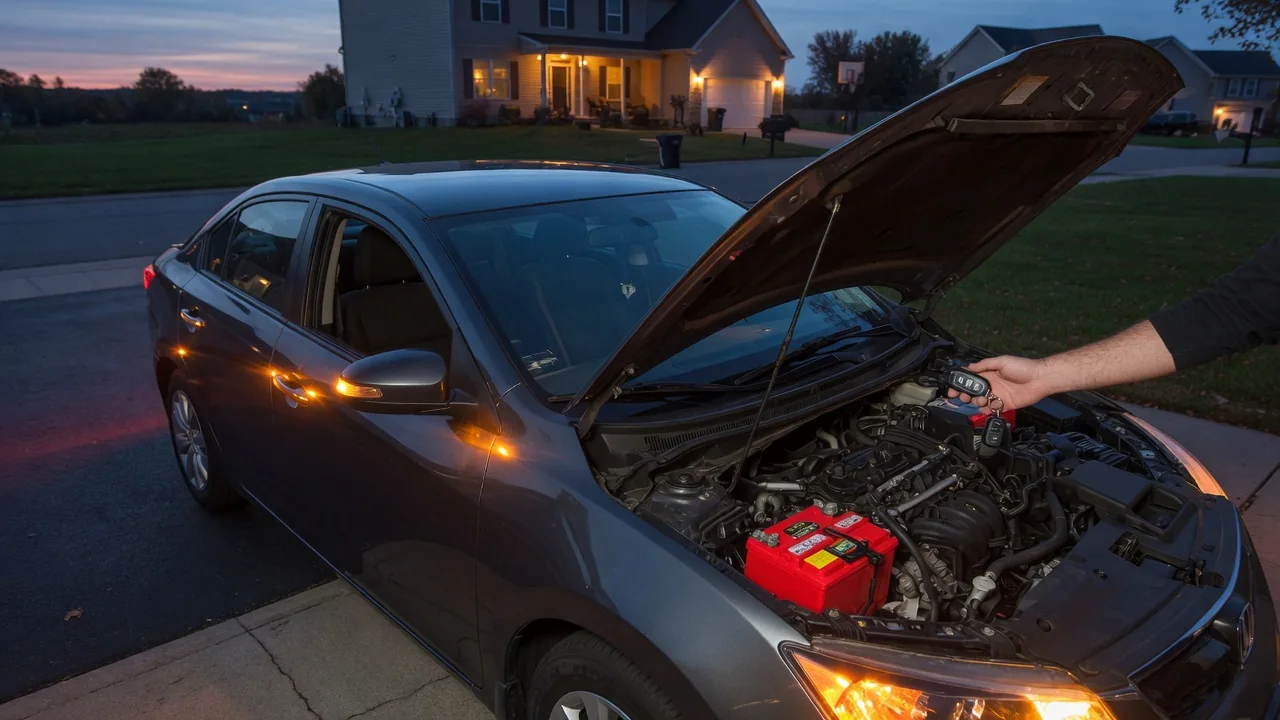
A car alarm that keeps going off after a battery change is frustrating, but it is often the security system reacting to a power interruption rather than a sign that something is broken. The same thing can happen when a battery is dead or failing. Understanding why the alarm reacts, what to check, and when to hand the problem to a professional makes it easier to deal with.
Why a Car Alarm Can Trigger Right After a Battery Change
Many factory anti-theft systems are designed to treat a sudden loss and return of power as possible tampering, because disconnecting the battery is one way a thief might try to silence a siren. When the new battery is connected, the security module wakes up, sees that power was interrupted, and may sound the horn or flash the lights. On those vehicles the noise after battery replacement is expected behavior. Whether it happens can depend on whether the system was armed or disarmed when power was removed, and that logic differs from one manufacturer to another.
Some vehicles will not settle until they have confirmation that the owner is present, which may mean pressing a button on the key fob, turning a key in the door lock, or switching the ignition on. A different cause is a battery terminal that is loose or not fully seated on its post. Each brief break in contact looks like another power loss, so the alarm re-triggers repeatedly. Because these behaviors are vehicle-specific, the owner's manual is a better guide than assuming one procedure works across all makes, models, and years.
Dead or Weak Battery and an Alarm That Keeps Sounding
A car battery that is dead or nearly dead, with the alarm going off at the same time, is a common pairing. Security modules, sensors, and door or hood switches are designed to work within a normal voltage range. When voltage is low or unstable, a module may reset, misread a switch input, or interpret the drop itself as tampering, and a false alarm follows. Slow cranking, dim lights, or warning messages on the dash often appear alongside this, although those signs point toward low voltage in general and do not confirm any single cause.
The two problems can also feed each other. A siren and flashing lights draw current, so an alarm that sounds repeatedly pulls an already weak battery down further, which makes the voltage even less stable. A dead battery with the car alarm going off does not prove the security system is either healthy or faulty, and the problem may continue after charging or replacement if something else is involved, such as a parasitic drain or a bad switch. Having the battery and charging system tested is a sensible first step when alarms come with other low-voltage symptoms.
Reducing the Chance of an Alarm During Battery Replacement
Anyone wondering how to replace a car battery without the alarm going off should start with the manufacturer's guidance in the owner's manual, since there is no universal method. Some vehicles stay quiet if the system is disarmed before the battery is disconnected, while others sound regardless. Keeping a working key fob and the physical key within reach means the alarm can be disarmed immediately if it sounds when power returns. It also helps to note whether the vehicle was locked or unlocked, armed or disarmed, so its behavior on reconnection is less of a surprise.
Losing power can affect more than the alarm. Depending on the vehicle, the radio may ask for a code, the clock may need setting, power windows may need their automatic function relearned, and other systems may need time or a specific step to readapt. The manual or a dealer is the right source for those details. Battery work also involves high available current and, on some vehicles, awkward access or registration requirements, so anyone unsure about doing it should have a qualified technician or a battery service handle the replacement.
Simple, Safe Ways to Try Silencing the Alarm
The usual first steps are simple. Pressing unlock or lock on the key fob disarms many systems, as does unlocking the driver's door with the physical key or turning the ignition on with the correct key so the immobilizer can recognize it. Results vary by vehicle, and some systems need one particular action. If the fob seems unresponsive, its own small battery may be weak, which can prevent the disarm signal from reaching the car. In that case, the mechanical key or a spare fob is worth trying.
It is also worth walking around the vehicle and confirming that every door, the hood, and the trunk or liftgate is fully closed. The alarm monitors these openings through switches, and a hood that is resting on its safety catch after battery work can keep triggering it. If the alarm still will not settle, the owner's manual may describe an alarm reset or security relearn method specific to that vehicle. That is safer than following generic instructions written for a different system, which may do nothing or may complicate matters.
Other Possible Causes That Show Up After Battery Work
Battery work means leaning into the engine bay and opening and closing the hood, and that can coincide with a hood latch switch showing a problem. Where the system monitors the hood, a switch that is dirty, misaligned, or has a disturbed connector may report the hood as open intermittently. Aftermarket alarm and remote start systems are a separate case. They may react to power loss differently from factory equipment, and they often have their own reset procedure, which comes from the product documentation or the installer.
Corroded or loose battery terminals and cables can cause short power drops that look like random alarm events, sometimes hours after the job was finished. Ground connections matter as much as the positive side here. A replacement battery of the wrong type or specification for the vehicle may also cause electrical issues, particularly on vehicles with battery monitoring or start-stop systems, so the correct battery is worth confirming with the manual or a parts professional. All of these are possibilities to investigate rather than confirmed diagnoses, and more than one may be present.
When to Get Professional Diagnosis
Professional diagnosis is the next step if the alarm keeps sounding once the battery has tested good, the terminals are secure, and the owner-level disarming steps have failed. A technician can scan the body control module and security system for stored codes, watch switch inputs live, and test wiring. Any codes found are evidence to interpret with vehicle-specific information, because many are manufacturer-dependent and a code pointing at a circuit does not prove a particular part has failed. Help is also needed if the vehicle will not start, a security light or immobilizer warning stays on, or the key is no longer recognized.
Who to contact depends on the system fitted. A dealer or a shop with the right diagnostic equipment is the appropriate choice for a factory system, especially where keys or modules may need programming, while an aftermarket alarm is usually best handled by an installer familiar with that brand. Cutting wires, pulling components, or bypassing security parts to stop the noise is a bad idea. It can damage other circuits, leave the vehicle unable to start, or leave it unprotected, and it usually makes the eventual repair harder.