Car AC Water Leaks: Condensation, Wet Floors, and Drain Cleaning
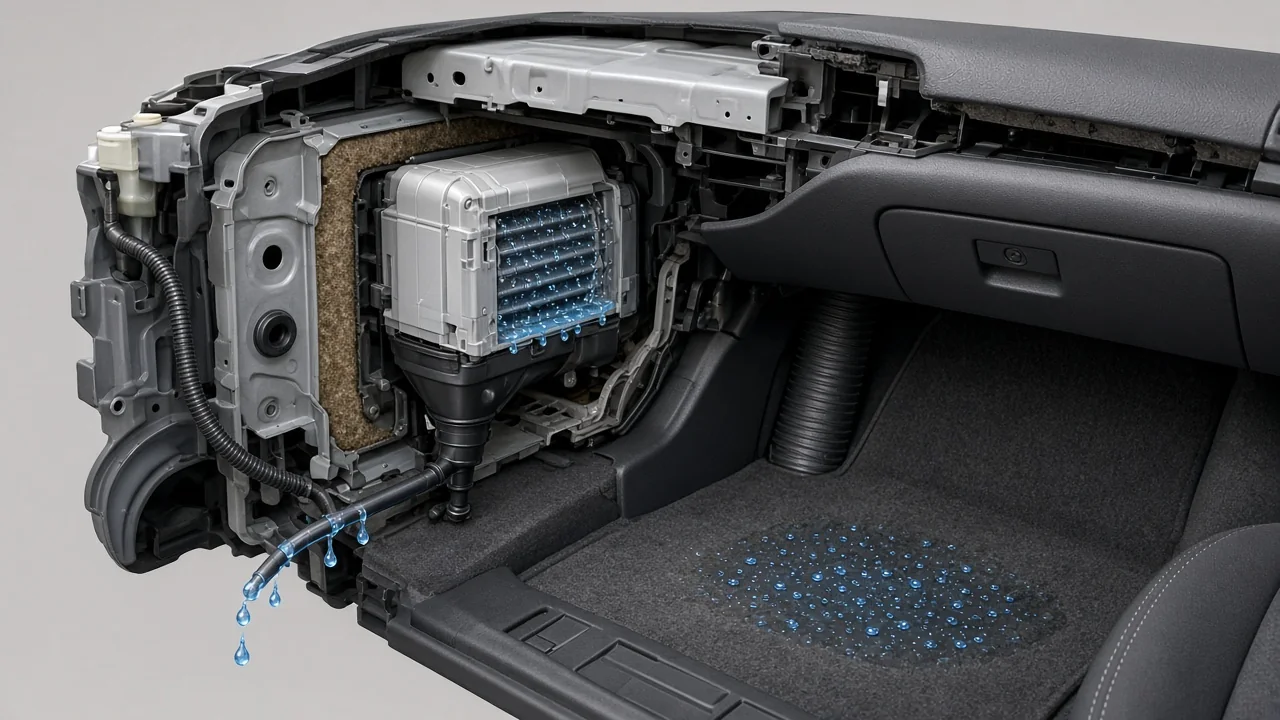
When a car air conditioner is running, moisture in cabin air condenses on the cold evaporator and usually leaves the HVAC housing through a drain outlet. Clear dripping under the vehicle is often condensate, not a cabin leak. Water on the passenger floor, wet carpet, or a musty odor is a different problem, frequently tied to a restricted evaporator drain. Those paths decide whether to watch a puddle, inspect the cabin, or request drain cleaning.
Why the AC Leaves Water Under the Car
Automotive air conditioning dehumidifies as it cools. Warm, humid cabin air contacts the evaporator, water vapor becomes liquid condensate, and that liquid is meant to leave through the evaporator drain rather than stay in the HVAC housing. You may see the car leaking water when the AC is on, dripping from the drain area, or still wetting the pavement after the system has been running. Humidity, long cooling cycles, and how hard the system is working change how much water appears; a larger puddle on a muggy day does not by itself prove a fault.
Clear water beneath the drain area during or shortly after AC use can be expected condensation from the car AC. Where that drain outlet sits, and therefore where condensation under the car shows up, varies by vehicle, so the drip may appear near a front wheel, along a rocker, or closer to the firewall. Condensation on AC lines can also wet nearby surfaces without being cabin leakage. An absent puddle does not establish a blocked drain; some designs leave little dripping, and dry weather or brief cooling can leave no condensation from the car AC.
Check Whether the Liquid Is AC Condensate
Identify the liquid by looking, not by tasting it or touching unknown fluids. Note where it collects, whether it is clear, and whether the car starts leaking water from the AC after cooling begins. A puddle that appears while the air conditioner is on, or condensation dripping under the car near a likely drain outlet, supports a condensate explanation, especially if the vehicle is leaking water when the air conditioner is on and not when it is off. Timing still does not confirm the source; coolant, washer fluid, or rain runoff can coincidentally wet the same ground.
Oily residue, unusual color, or a noticeable sweet odor are reasons to investigate another fluid, not to assume the air conditioner leaking water under the car is the whole story. Engine coolant can look watery yet carry dye or a sweet smell; transmission or power-steering leaks tend to look oily. A water puddle does not establish a refrigerant leak. Refrigerant is not the same as condensate, and suspected refrigerant loss needs professional testing rather than a guess from ground moisture. Condensation on car AC lines can look alarming while remaining ordinary moisture on cold tubing.
What Water on the Passenger Floor Can Mean
Water leaking from the AC inside the car is a different path from a puddle on the ground. If the evaporator drain is restricted, condensate can accumulate in the HVAC housing and overflow into the cabin, often showing up as an AC leak inside the car on the passenger side. A disconnected or damaged drain connection can dump water onto the passenger footwell even when the outlet itself is not clogged. Housing seams and gaskets can also leak. Those possibilities require inspection; wet carpet after cooling is a clue, not proof of one failure.
Damp carpet, a musty odor, and water appearing after AC use help explain why the air conditioner is leaking inside the car, yet none of those symptoms standing alone proves the drain is blocked. Rainwater can enter around seals or cowl drains and soak the same passenger footwell. A heater-core leak can wet carpet and may bring a sweet smell or fogging that does not track only with air conditioning. Compare timing: moisture after cooling points toward condensate; moisture after rain or washing points elsewhere; mixed clues mean both paths still need checking.
Safe Checks Before Requesting Drain Cleaning
Before asking for car AC drain cleaning, record whether moisture follows AC operation, rainfall, or washing, and where the carpet first becomes wet. If the car is leaking water inside when the AC is on, and the passenger carpet is the first area soaked, that pattern is useful to a technician. Park safely, engine off, and inspect accessible carpet and removable mats. Carpet padding can retain hidden moisture after the surface looks merely damp, so a wet feel under the mat matters even when the top fibers seem dry. Do not taste fluids or pull unknown hoses.
Locating the evaporator drain takes vehicle-specific information; not every drain outlet is visible from a standing position, and some sit behind covers or high in the engine bay. Limit exterior checks to areas you can see without crawling beneath the vehicle, reaching near hot or moving components, or removing dashboard parts. If you can see a confirmed outlet dripping while cooling, that supports normal condensate leaving the housing. If the cabin is wet and no drip is visible from a safe vantage, still do not assume blockage until the correct outlet is identified.
How a Blocked Evaporator Drain Is Cleared Safely
How to address an air conditioner leaking water inside the car depends on outlet design, access, and the vehicle's service procedure. Owner action, if any, should stop at removing loose surface debris from a confirmed, safely accessible drain outlet with the vehicle off and cool. Do not insert tools, wires, or probes, force compressed air, apply chemicals or a drain cleaner into the tube, drill, disturb fittings, or open the refrigerant system. Those methods can damage the drain, the HVAC housing, or the sealed cooling circuit. Persistent restriction needs professional cleaning.
If the outlet is inaccessible, the restriction returns, or water keeps leaking from the AC unit in the car, a shop should inspect the drain connection and housing rather than treat the symptom as a simple clog. After appropriate cleaning, verification is practical: under suitable operating conditions, drainage should resume at the outlet, and fresh water should not return to the passenger footwell. A car leaking a lot of water on the ground after humid cooling can still be ordinary condensate; cabin dryness plus an exterior drip is the useful combination, not puddle size.
Dry the Cabin and Address Recurring Water
Remove standing water and dry removable mats promptly so a musty odor and moisture damage have less time to develop in carpet padding. Surface drying is not always enough; soaked underlay can stay wet after the nap feels dry and can keep feeding odor into the HVAC housing. Professional extraction and drying may be needed when padding remains saturated. If water returns after the drain issue appears addressed, or cooling deteriorates, or the musty smell persists, further diagnosis is warranted rather than repeating the same surface wipe.
Water around electrical components, electrical faults, persistent visibility problems, or overheating are reasons to stop using the vehicle and arrange appropriate assistance instead of driving with a wet passenger footwell. Condensate dripping under the car in winter can still occur when the heater and AC are both used for defogging; that does not by itself explain wet feet. Recurring cabin water after confirmed drain service can point to housing damage, a misrouted tube, or a non-AC source. Treat those as separate inspections, not as proof the first cleaning failed.