Car AC Vacuum Pumps and Service Machines: Why Evacuation Matters
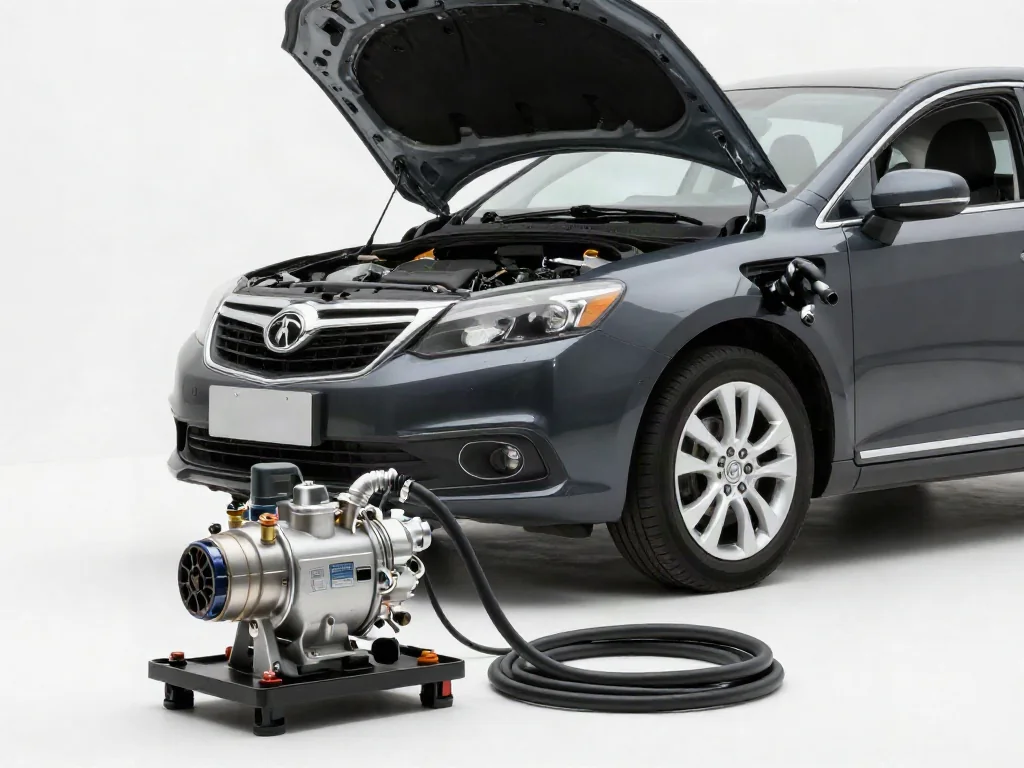
A car AC vacuum pump and a full car AC machine are often mentioned together, but they do different jobs. The pump removes air and moisture from an empty refrigerant circuit. An AC machine for car service may also recover, recycle, and charge refrigerant. Knowing why evacuation matters helps owners judge repair quotes, avoid unnecessary work, and decide whether buying DIY equipment makes sense.
What a Vacuum Pump Does During Car AC Service
During AC system evacuation, a vacuum pump for car AC work lowers the pressure inside a refrigerant circuit that has already been emptied through proper recovery. At that reduced pressure, air is drawn out and water can boil off as vapor at ordinary temperatures. It leaves the system instead of staying trapped in hoses, the condenser, or the evaporator. Evacuation is commonly needed after the circuit has been opened for a repair, such as replacing a compressor, condenser, hose, or expansion device, because opening the system lets outside air and humidity in.
It helps to be clear about what the pump does not do. A vacuum pump does not recover refrigerant, find or seal leaks, or add the refrigerant charge. Those tasks require other equipment and proper diagnosis. For the same reason, weak cooling by itself does not prove that a car needs evacuation. A sticking blend door, a failed cooling fan, a clogged cabin filter, or a low charge caused by a leak can all reduce comfort, and each one calls for a different fix.
What an Automotive AC Service Machine Handles
The car AC machines used in shops typically combine several separate functions: refrigerant recovery, recycling, evacuation, and charging. Not every unit performs all four, and capabilities vary by design and by the refrigerant the unit was built for, so the machine's labeling and documentation matter. Recovery comes first whenever the circuit will be opened, because the refrigerant must be captured in suitable equipment rather than vented. Recycling filters recovered refrigerant for reuse where that is permitted. Evacuation often uses a built-in pump that does the same job as a standalone car AC vacuum pump.
Before connecting any car AC machine, a technician should confirm the vehicle's refrigerant specification and verify that the equipment is approved for that refrigerant. Vehicles use different refrigerants, and mixing types can contaminate both the car and the machine. Refrigerant identification equipment helps catch unknown or blended contents. For charging, the system needs the specified refrigerant charge by mass, not a guess based on gauge readings. Automation can weigh and dispense refrigerant accurately, but it cannot work out why the system lost refrigerant or whether a component is failing.
Why Trapped Air and Moisture Need to Be Removed
Whenever a line is disconnected or a part is replaced, the refrigerant circuit is exposed to outside air, which carries humidity. Under some conditions, leaks can also let contamination in, for example when part of the system drops below atmospheric pressure or after a system has sat empty. Air left in the system after charging acts as a noncondensable gas: it does not change state in the condenser the way refrigerant does. It takes up space, interferes with heat transfer, and can push operating pressures higher than expected, which reduces cooling capacity.
Moisture causes a separate set of problems. Water combined with refrigerant and lubricant can contribute to corrosion of internal metal parts and degrade the compressor oil. Under suitable conditions, it can also freeze at the expansion device and cause an intermittent restriction. The desiccant in the receiver drier or accumulator can absorb only a limited amount of water. Still, poor cooling and unusual pressures have many possible causes, including an incorrect charge, airflow problems, and restrictions, so a reading alone does not prove moisture contamination.
What Must Be Resolved Before Evacuation
Professional service follows a general order: identify the refrigerant, recover it with approved equipment, diagnose and repair the fault, evacuate the circuit, and then charge to specification. Skipping the repair step undermines everything after it. If a known leak or a damaged condenser, hose, or seal is left in place, evacuation and charging may restore cooling only briefly before the new refrigerant escapes again. Leak testing and component inspection belong before the vacuum stage, not after the owner notices warm air returning.
Contamination can also expand the job. The vehicle manufacturer's procedures may call for replacing the receiver drier or accumulator desiccant when the system has been left open, exposed to moisture, or contaminated with debris from a failed compressor. Flushing certain components, replacing an orifice tube, or correcting the oil quantity may also be required. These decisions depend on the vehicle and the failure, which is why owners should never improvise adapters, open service valves, or use shortcuts that release refrigerant.
What Vacuum Readings Can and Cannot Confirm
A common misconception is that running a vacuum pump for a set number of minutes guarantees a dry system. Elapsed time alone cannot confirm adequate evacuation, because pump condition, oil quality, hose size, ambient temperature, and the amount of moisture present all affect how quickly pressure drops. Suitable vacuum measurement, usually with an accurate gauge designed for deep vacuum, shows the technician what the system actually reached. Target readings and hold times should come from the applicable service procedures for the vehicle and the equipment.
After the pump is isolated, a rising reading tells the technician that something is happening, but not exactly what. It can reflect a leak, moisture that is still boiling off, or a problem in the hoses and service connections themselves, and interpreting the pattern takes experience. Holding vacuum also has limits. A system that stays steady under vacuum has only been tested below atmospheric pressure, but it operates well above atmospheric pressure in normal use. A separate professional leak test may be needed to confirm the circuit is tight.
Deciding Whether DIY Evacuation Is Practical
Buying an AC vacuum pump for a car is only one part of doing the job properly. Correct service also requires refrigerant identification, approved recovery equipment, reliable vacuum measurement, a way to charge by mass, and knowledge of the vehicle's procedures. Owners can still make safe observations without opening the circuit. Note when cooling weakens and under what conditions, check whether cabin airflow is strong and whether the cabin filter is clogged, and read the refrigerant label if an accessible one is present.
Refrigerant is stored and circulated under pressure and can cause cold burns to skin and eyes. Some types are flammable, and handling rules vary by refrigerant and by location. Choose qualified service when refrigerant is still in the system, its identity is uncertain, a leak is suspected, or the right equipment is unavailable. Useful questions to ask a shop include what fault was diagnosed, which refrigerant and charge amount the car requires, how the evacuation was verified, and what performance checks were done afterward.