Car AC Compressor Replacement: Process and Cost Factors
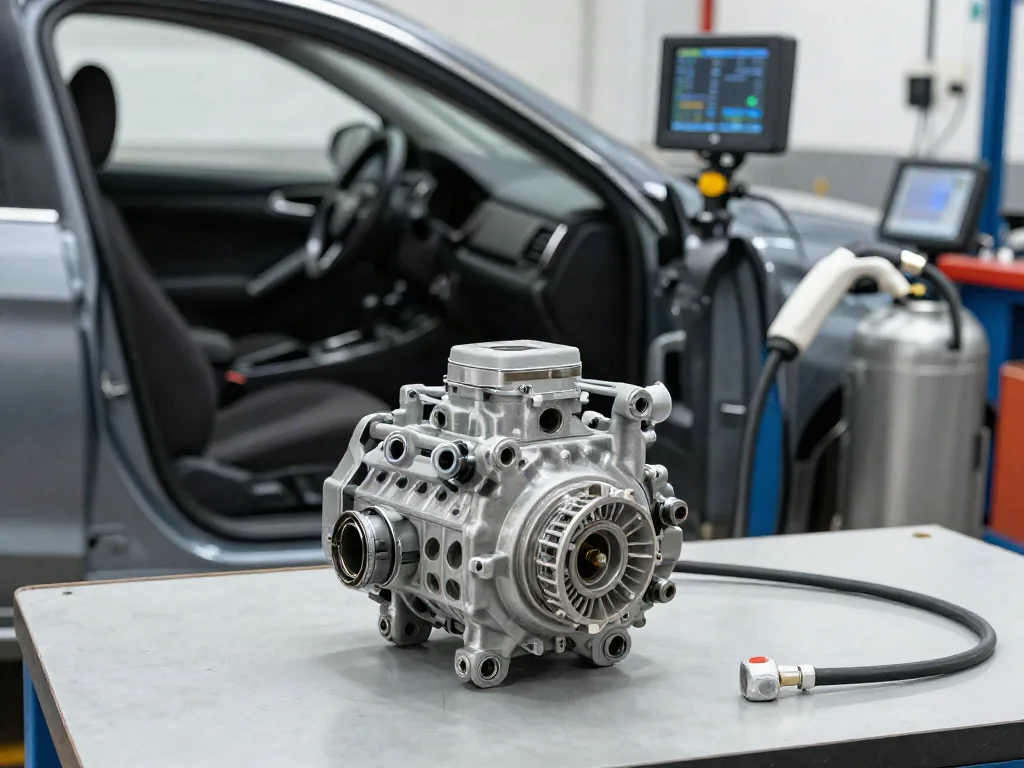
A failed air conditioning compressor is one of the more involved climate system repairs, because the compressor sits at the center of a sealed refrigerant loop. Replacing it affects the refrigerant, the lubricating oil, and often the moisture-control parts around it. Knowing how the diagnosis works, what the service includes, and what drives the final bill makes it easier to read an estimate with confidence.
Confirming the Compressor Needs Replacement
Warm air from the vents, a grinding or rattling sound when the AC engages, or cooling that comes and goes are good reasons to get a diagnosis. None of them proves the compressor has failed. Low refrigerant, a faulty pressure sensor, a failed relay, or a stuck blend door can cause similar complaints. You can help without touching moving or hot parts. Note whether cooling fades slowly or stops suddenly, whether air keeps flowing after it turns warm, and whether a noise stops when the AC is switched off.
A technician makes the case for replacement by checking refrigerant charge and pressures, looking for leaks, testing the electrical controls and the clutch or control signal, and confirming whether the compressor actually pumps when commanded. A stored fault code is a clue to interpret, not proof of a bad part. The estimate should name the specific failure found. It should also list any underlying cause, such as a leak, a blocked condenser, or an electrical fault, that could damage a new compressor if it isn't fixed.
What the Compressor Replacement Service Includes
The job starts with recovering the remaining refrigerant with certified equipment, because it can't be legally or safely vented. The technician removes the old compressor, installs the new unit with fresh sealing rings, and adjusts the oil so the system holds the correct total amount. Once the system is sealed, a vacuum pump pulls out air and moisture. The system is then checked for leaks and recharged by weight to the specified amount, and the technician confirms that it cools properly.
Each step follows vehicle-specific requirements for the compressor, refrigerant type, oil type and quantity, and charge amount. Hybrids and electric vehicles commonly use electrically driven compressors on high-voltage circuits, and these may need a specific insulating oil, so that work belongs with a trained technician. Access also varies widely. On some engines the compressor can be reached after removing the drive belt. Others require moving the alternator, intake parts, or splash shields, or even lowering a subframe, and that extra work adds directly to the labor time.
Why the Drier and Contamination Checks Matter
Depending on the design, the system has either a receiver-drier, typically paired with an expansion valve, or an accumulator, typically paired with an orifice tube. Both contain a desiccant that absorbs moisture, and it can absorb only so much once the system has been opened or exposed to humid air. Many service procedures call for replacing the drier or accumulator during compressor work. Some compressor warranties make it a condition of coverage, but the exact requirement depends on the vehicle and on how the original part failed.
When a compressor fails internally, metal particles and degraded oil can travel through the lines, the condenser, and the metering device. That debris can quickly destroy a new compressor, so the shop should inspect the old oil, the screens, and the orifice tube or expansion valve before deciding what the job includes. Flushing can clean some lines and components where the vehicle guidance allows it, but not every part. Some condenser designs and hoses may need replacement instead. The added parts and labor should be justified by documented contamination, not a blanket policy.
What Determines the Compressor Part Cost
The compressor price depends mainly on the vehicle it fits. Design matters too. A conventional belt-driven unit with a clutch, an electronically controlled variable-displacement unit, and a high-voltage electric compressor in a hybrid or EV are very different assemblies. The specified replacement may come as a bare compressor or as an assembly that includes the clutch, pulley, or control valve. That changes both the part charge and how closely the new unit matches the original, so the estimate should say exactly what the quoted part includes.
Ask the shop whether the part is new from the vehicle maker, new aftermarket, or remanufactured, and what its warranty covers. Each option trades price against coverage differently, and none is right for every car. Check whether a refundable core charge applies and when the old unit has to be returned. Keep in mind that a compressor-only price leaves out installation labor, refrigerant recovery and recharge, oil, seals, and any drier, valve, or cleanup work the diagnosis supports.
How Labor and Supporting Services Shape the Total
The installed total usually combines several parts: the diagnostic charge, the compressor, supporting parts such as seals, oil, and a drier or accumulator, and the labor to remove and install the compressor. Refrigerant recovery, evacuation, and recharge come next, along with shop fees and taxes. Labor is typically billed from a published time estimate for the specific vehicle, multiplied by the shop's hourly rate. A tightly packed engine bay or a higher local labor rate raises the figure, and no single job duration applies to every car.
The scope can change once the system is open. Newer, lower-impact refrigerants generally cost more than older types, and the required charge varies by vehicle. Heavy contamination may add flushing, a condenser, or a metering device, and the technician may find a leaking hose or failed sensor that needs its own repair. Some shops bundle recovery, evacuation, and recharge into one operation, so a missing line item isn't necessarily an omission. Because these variables differ so much, an itemized estimate for your exact vehicle is more useful than any national average.
What to Confirm Before Approving the Repair
Before you approve the repair, ask which failure was confirmed and how, which compressor and supporting parts will be installed, how many labor hours will be billed, and what refrigerant service is included. If the estimate adds a drier, flush, condenser, or valve, ask what finding justifies each one. Confirm whether the total includes diagnosis, taxes, shop fees, and any core charge, and whether that charge is refunded once the old unit is returned. Agree in writing on how the shop will get your approval if contamination or another fault expands the job.
Read the warranty terms just as closely. Ask how long parts and labor are covered, whether coverage depends on the recommended drier replacement or flush, and what is excluded, such as unresolved leaks or other system faults. When the job is done, the repair order should record a leak check, the amount of refrigerant charged, and vent temperature or pressure readings taken under stated conditions. If noise comes back, cooling weakens, or the air turns warm again, report it right away so it can be checked under warranty.