Car AC Blower Motor Problems: Weak Airflow, Resistor Faults and Repair
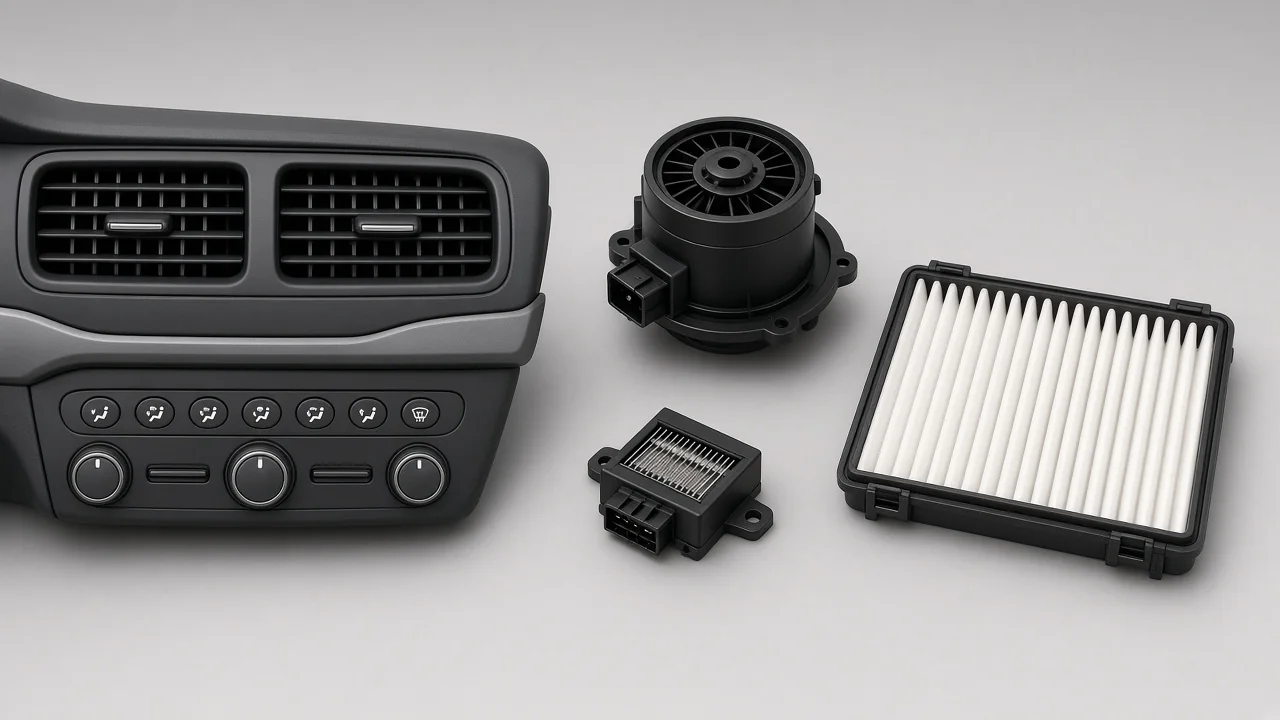
When a car heater fan or AC fan stops pushing air, the cause may be a clogged cabin air filter, a failed blower resistor, a blown fuse, or a worn blower motor. Car AC fan repair starts with careful observation. It then moves to proper electrical testing, so the confirmed fault gets fixed instead of parts being replaced on a guess.
How the Cabin Blower Supplies Air for AC and Heat
The cabin blower is the fan behind the dashboard that pushes air through the ventilation system. It is also called the heater blower or the AC blower motor. The same car heater fan motor handles heating, air conditioning, and windshield defogging, so a single failure can stop both the heater and the AC from blowing. This fan is separate from the engine cooling fans near the radiator. Those fans keep the engine from overheating and are not part of blower repair, even though people often call both of them the car fan.
The airflow you feel depends on several controls working together. Fan speed control sets how fast the blower motor spins. Vent selection uses internal doors to send air to the face, floor, or defrost outlets. Recirculation decides whether air comes from outside or from inside the cabin. Strong airflow does not mean the system is making air at the right temperature. A car's fan can blow hard while the air stays cold. That points to a separate heating or refrigerant problem, not a blower fault.
What to Observe When the Blower Stops or Airflow Fades
When the heater fan in a car is not working, park somewhere safe and well ventilated and make some observations. Go through each fan setting and note which speeds work. Then change the vent selection to see whether every outlet delivers air or only some of them. Note whether the fan cuts in and out, for example over bumps or once things warm up. Sounds can help describe the fault. Silence, scraping, squealing, or vibration may point to debris in the blower wheel or worn motor bearings, but none of them proves the motor has failed.
Note whether the heater stops blowing only in certain modes, such as heat, air conditioning, or defrost. Also note whether airflow starts only after a delay following startup. These details help a technician narrow down the problem in the blower circuit. If smoke or a burning smell comes from the vents, turn the blower off and leave it off, because overheated wiring or a seized motor can cause more damage. If you cannot keep the windshield clear of fog or frost, don't drive until defrost airflow is working again or you have another safe way to travel.
Cabin Filter Blockage and Restricted Vent Airflow
A cabin air filter clogged with dust, leaves, or pollen can badly restrict airflow even when you can clearly hear the blower motor running. The same symptom shows up when the fresh-air intake, often located near the base of the windshield, is packed with debris. With the vehicle off, it is reasonable to check the vent openings you can reach for obstructions. You can also look at the visible exterior intake area for leaves or snow. Never reach into the blower opening or anywhere moving parts could start unexpectedly.
Not every vehicle has a cabin air filter, and where it sits and how you reach it vary widely. Check the owner's manual to confirm whether your car has one, where it is, and whether owners are allowed to inspect it. If airflow stays weak after you clear a blockage or deal with a clogged filter, the problem is likely deeper in the system. A technician may need to check the blower wheel for damage or debris and make sure no ductwork has come loose. They should also confirm that the air distribution doors move to the positions the controls request.
Why the Fan May Work Only on High
On many vehicles, a blower resistor assembly sets the lower fan speeds by reducing the current that reaches the motor. The highest setting often sends full power straight to the motor. Other vehicles use a blower control module that varies motor speed electronically. That design explains a common symptom: the car AC fan works only on high. Because high speed may skip the speed-control path entirely, a fan that runs only on its top setting strongly suggests a fault in the speed-control circuit. It still does not prove that the car heater blower resistor has failed.
When checking this symptom, a technician may look at the resistor or control module, the wiring harness, and the electrical connectors. They may also check the fan switch or climate control panel and the blower motor itself. A worn motor that draws too much current can overheat the speed-control part and make it fail again. That means replacing a car AC blower resistor without testing the motor may only fix the problem for a while. Melted or discolored connector terminals are another sign of heat damage. Find and fix these problems before installing a new speed-control part.
Blower Fuses and Electrical Faults That Need Testing
A fuse labeled for the heater or climate control does not always protect the whole blower circuit. Some vehicles use separate fuses for the blower motor, the controls, and related relays, so the vehicle's fuse chart is the reliable way to tell which circuits matter. A blown car heater fuse means something drew too much current. Possible causes include a motor that is binding, a wire with worn-through insulation, or a shorted connector. The blown fuse shows that a fault happened, but it does not tell you what caused it.
Never bypass a fuse or replace it with a higher rating. The fuse is there to stop the wiring from overheating, which could start a fire. If a replacement fuse blows again, the car needs professional diagnosis. A technician will typically check that power reaches the blower and that the ground connections are good. They will also test any relays the system uses, inspect connectors for corrosion or heat damage, and confirm the signals coming from the climate controls. These checks need proper tools and wiring information for the specific vehicle, not improvised testing.
How Blower Motor Diagnosis and Replacement Are Confirmed
Technicians confirm a faulty blower with service information and wiring diagrams for the specific vehicle. They also take circuit measurements and check whether the motor draws the expected amount of current. On vehicles with electronic climate control, diagnostic data and any stored fault codes can add useful clues. A code is evidence to weigh alongside those measurements, not proof that a part has failed. Car heater blower motor repair or replacement makes sense only after testing points to the motor, resistor, control module, or wiring.
Replacement generally means getting access to the faulty part, removing it, and installing the new one. While it is open, the technician should check nearby connectors and the blower housing for heat damage, debris, or moisture. How the part is reached and which part is correct depend on the vehicle and its climate-control equipment, so no single procedure or part fits every car. Afterward, the technician should confirm that every fan speed works, that air comes from each outlet, that there is no unusual noise, and that defrost works properly. A clear estimate lists diagnosis time, parts, and access labor separately.