Choosing and Installing a 10-Inch Car Subwoofer
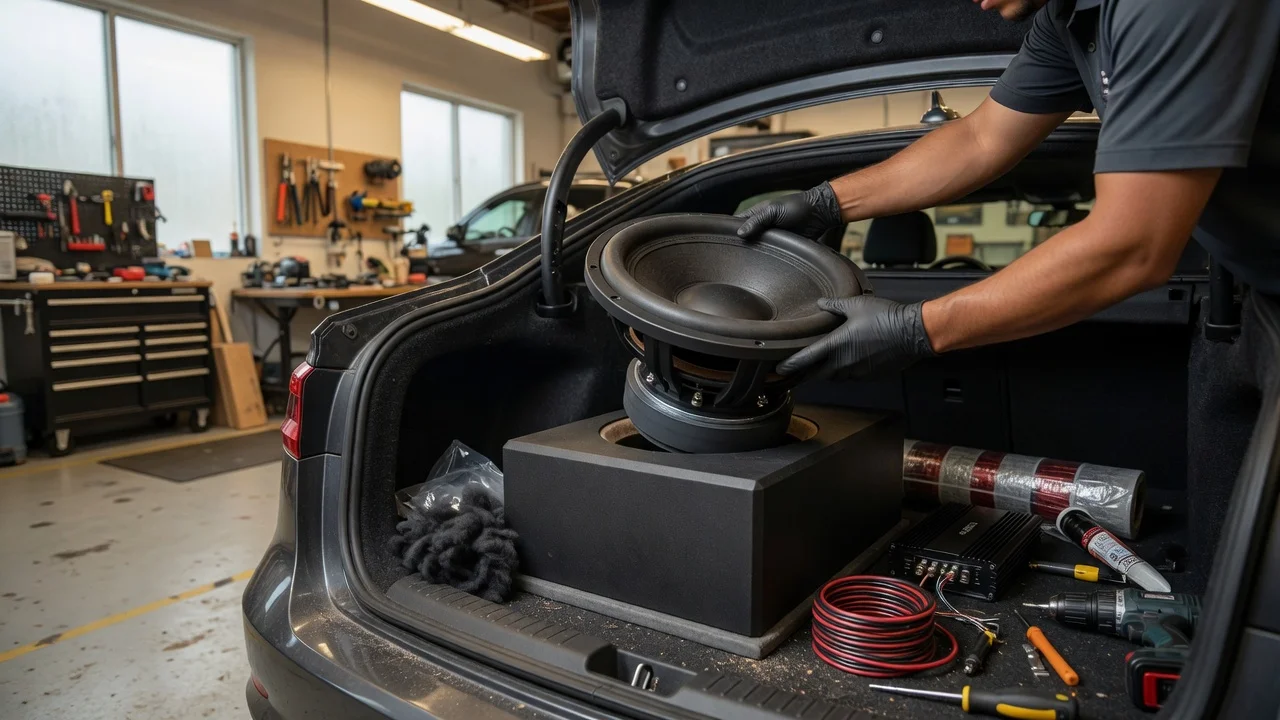
What a 10-inch subwoofer gives you
A 10-inch car subwoofer is a mid-size driver intended to reproduce low bass frequencies that most door or dash speakers cannot handle cleanly. Compared with a larger 12- or 15-inch sub, a 10-inch model usually delivers tighter, more controlled bass in a smaller enclosure, which suits many cabins where space is limited and the listener wants punch rather than maximum low-frequency output. The tradeoff is reduced output at the very bottom of the bass range, but for most music this size balances clarity, footprint, and power needs well.
Immediate answer
If the question is whether a 10-inch subwoofer is a good choice for a typical car audio upgrade, the answer is yes for most listeners. It is only a less suitable choice when you want maximum deep-bass output for very low, sustained notes, or when the available amplifier power is low and the sub has low sensitivity. Confirm that the sub's mounting depth, enclosure volume, and impedance match your vehicle and amplifier before buying.
Key specifications to read
Power handling is shown as RMS, not peak. RMS is the continuous power the sub can handle; peak figures are less useful for matching an amplifier. Sensitivity indicates how much sound the sub produces per watt, but this number is less critical in a subwoofer than in a full-range speaker because bass output also depends heavily on the enclosure. Impedance, commonly 2 or 4 ohms, must match the amplifier's rated load. A dual voice coil sub can be wired to different final impedances, which gives more flexibility.
Enclosure type changes the sound
A sealed enclosure is smaller and easier to predict. It usually produces tighter, more accurate bass and works well for rock, jazz, and acoustic music. A ported or vented enclosure is larger and more efficient, producing more output around its tuning frequency, but it can sound boomier and requires more careful design. The same 10-inch sub will sound different in each box, so check the manufacturer's recommended enclosure volume and port dimensions rather than assuming any box will work.
Vehicle fit and installation considerations
Check the mounting depth against the space behind the chosen location. In a trunk, a standard box is often practical; in a truck cab or under-seat area, a shallow-mount 10-inch sub may be required. Make sure the final enclosure does not block spare tire access, battery vents, or folding seat operation if those features matter. Wiring should be run separately from signal cables to reduce noise, and the amplifier gain should be set to match the head unit's output without forcing distortion.
Common setup mistakes
Using a peak power rating to choose an amplifier; Mounting the sub in a box with the wrong air volume; Setting the amplifier gain too high to compensate for a weak signal; Wiring a dual voice coil sub to an impedance below the amplifier's minimum; Placing the sub where it rattles trim or panel clips instead of fixing the source
When a different size may serve better
If the goal is maximum impact for bass-heavy music and there is room for a larger box, a 12-inch sub may provide more low-frequency energy. If space is extremely tight or the system will use modest power, a compact powered 8-inch sub or an under-seat unit could be a simpler path. A 10-inch sub remains the middle-ground option that suits most cabins without demanding a very large enclosure.