Can You Wash or Reuse a Cabin Air Filter?
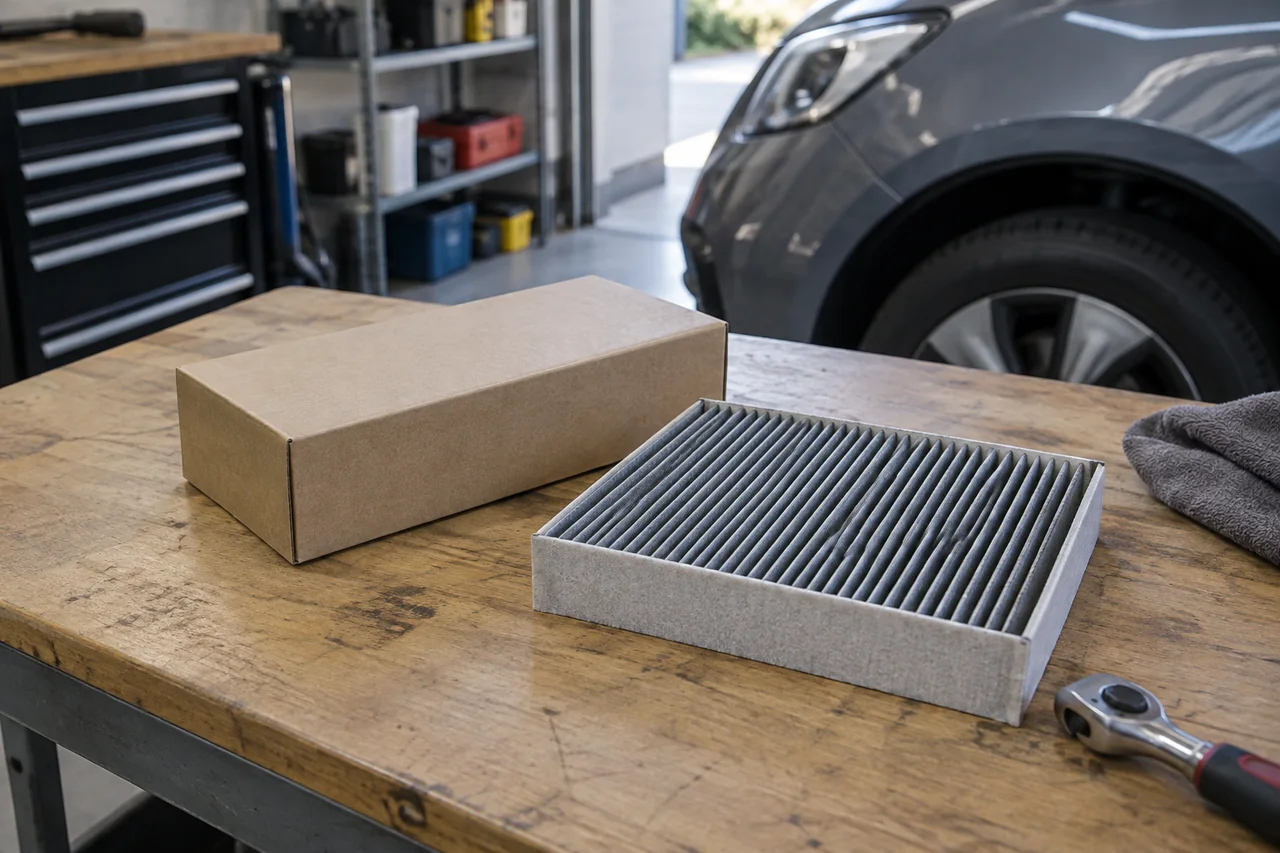
A cabin air filter sits in the HVAC housing and traps dust, pollen, and other debris before air reaches the vents. Whether you can wash a cabin air filter depends on the media, not on how dirty it looks. Standard pleated paper and activated-carbon designs are disposable. A washable cabin filter or other reusable cabin air filter is only reusable when the maker says so. Confirm that before rinsing, vacuuming, or reinstalling.
Can Your Cabin Air Filter Be Washed?
Standard replacement cabin filters use disposable pleated paper filter media, sometimes with an activated carbon layer for odor control. Those are not meant to be rinsed, soaked, or sprayed with household cleaners. Water can swell paper fibers, weaken adhesives that hold the pleats, and leave the element misshapen even when it still looks intact. Cleaning products can strip coatings or leave residue in the HVAC airflow path. Unless the filter maker explicitly approves washing and reuse, treat the element as single-use.
A cleaner-looking surface is not proof that filtration or odor control has been restored. Particles lodge inside the media, and an activated carbon layer loses adsorption capacity as it becomes loaded; rinsing does not reliably reset that chemistry. Structural damage from washing may not be obvious until the filter is back in the housing and airflow is restricted or unfiltered air bypasses the element. Read the product instructions on the filter, box, or maker documentation before applying any cleaning method. If those instructions do not authorize washing, install a new filter instead.
How to Identify a Filter Designed for Reuse
Whether a cabin air filter is reusable is identified by the label, packaging, part documentation, or manufacturer instructions, not by appearance. Dark media, a charcoal stripe, stiff pleats, or a mesh facing can appear on disposable filters as well as on washable ones. Color and construction clues are marketing or structural features, not a license to rinse. If the installed filter has no marking that states it is a reusable cabin air filter, assume it is disposable and leave it dry.
Purpose-built reusable filters use media and frames designed for a specified cleaning process, and that process varies by product. Some call for a gentle rinse, others for a particular cleaner, and none of those steps should be borrowed from a different brand. If you cannot identify the filter in the housing, do not wash it. Confirm the correct replacement cabin filter for the vehicle from the vehicle or filter maker's application data, then install that part rather than guessing at washability.
Why Brushing or Vacuuming Does Not Renew a Disposable Filter
Loose leaves, fibers, and dust on the face of a disposable filter are not the same as the fine particles trapped deeper in the media. Vacuuming or tapping may lift surface debris, but it does not empty the pleats. Brushing, vigorous tapping, compressed air, and vacuum contact can tear delicate paper, flatten pleats, or disturb the foam or plastic seals that keep air from bypassing the element. Those mechanical insults can leave the filter looking cleaner while reducing its ability to seal in the housing.
Household cleaning also does not restore an activated carbon layer. Adsorption sites fill as odors and gases pass through; brushing or vacuuming cannot reopen them. After surface dirt is removed, the remaining media may still be loaded, damp, or collapsed enough to restrict HVAC airflow. A filter that looks better should not be treated as renewed. For a disposable pleated paper filter, replacement is the method that restores both particle capture and, where carbon is used, odor control.
What Caring for a Reusable Cabin Filter Involves
If the maker has designated a washable cabin filter, follow that manufacturer's cleaning method, approved products, and handling instructions exactly. Cleaner choice, rinsing, filter drying, and any post-clean treatment are product-specific. Do not assume engine-style filter oil, scented sprays, or household degreasers belong on cabin media. Using the wrong chemistry can clog pores, leave residue in the HVAC airflow, or damage the frame. Skip improvised additives unless the filter documentation calls for them.
Dry the filter completely as directed before it goes back into the filter housing. Do not speed drying with a hair dryer, heat gun, oven, or other aggressive heat, and do not scrub harder than the instructions allow. Even a reusable cabin air filter needs inspection after cleaning: look for torn or stretched media, a distorted frame, and seals that no longer sit flat. Confirm the part is the correct application for the vehicle and reinstall it in the marked airflow direction so the cover closes fully and the element cannot shift.
When Replacement Is the Sensible Choice
Replace the filter when the media is torn, pleats have collapsed, edges are crushed, or the frame is warped. Those defects let unfiltered air around the element or choke the blower. A disposable filter that has become wet or heavily contaminated should be replaced rather than washed and reinstalled; paper and carbon media are not designed to recover from saturation or heavy loading. Moisture can also promote musty odor in the housing even after the face looks dry.
Do not shake, brush, or wash a filter if mold or animal contamination is suspected. That handling can spread debris into the cabin or the HVAC case. Professional handling is the safer path when contamination is obvious or unknown. A reusable filter should also be replaced when damage or soiling falls outside the manufacturer's approved care instructions. Base the decision on the vehicle and filter makers' maintenance guidance plus the condition you can see, not on a universal mileage or calendar interval that does not apply to every application.
What Persistent Odor or Weak Airflow Can Tell You
Weak vent airflow and a musty smell are reasons to inspect the cabin filter, not proof that the filter is the only problem. A mis-seated element, a cover that is not fully closed, or a filter installed against the airflow-direction marking can starve the vents even when the media is new. Check those accessible points using the vehicle's service information. Recurring dampness on the filter points to a moisture source such as a clogged evaporator drain, a leaking housing seal, or water entering the intake, and that source needs investigation rather than repeated washing.
If a suitable filter is correctly installed and odor or weak HVAC airflow continues, have the system inspected professionally. The blower, evaporator, ducts, and intake path can hold debris or microbial growth that a cabin filter cannot fix. Persistent symptoms after a proper replacement cabin filter is in place mean the diagnosis should widen beyond the element. Treat the filter as one serviceable part of the HVAC path, not as a complete explanation for every smell or airflow complaint.