Can You Vinyl Wrap a Car That Has Rust?
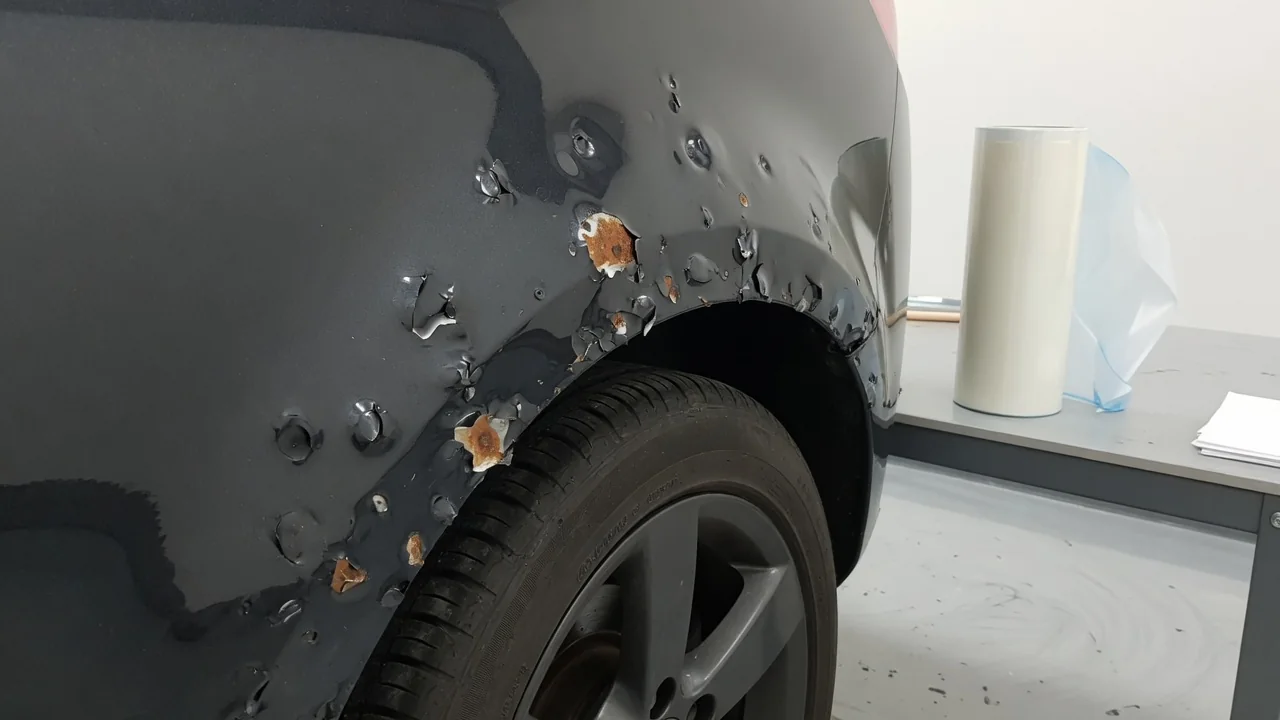
A rust car wrap can hide discoloration for a short time, but vinyl does not repair surface corrosion. Drivers often hope rust car wraps will skip bodywork and still look new. Active rust, bubbling paint, and failing coatings undermine vinyl adhesion. Trying to rust wrap a car without first repairing damaged metal leaves the film on an unstable surface that cannot hold a durable finish.
Can Vinyl Wrap Go Over Existing Rust?
Vinyl film can physically cover a rusty patch, so a rust car vinyl wrap may look acceptable in photos taken the same day. That covering is still a poor foundation for a durable wrap. Active surface corrosion keeps expanding, and paint around the stain is often weakly bonded. Film sticks to the coating, not to sound metal. When the coating is already compromised, the wrap follows that failure instead of isolating the panel from further trouble.
Vinyl is a cosmetic skin. It does not dissolve rust, convert oxides, or restore missing metal. Rust under a car wrap remains a body repair issue even after the film is stretched over the stain. The affected area needs assessment so loose scale, failed primer, and weakened paint can be identified. Only after that damage is repaired does the panel present a sound wrapping surface that can hold film under heat, tension, and weather.
Why Rust Causes Adhesion and Appearance Problems
Reliable vinyl adhesion depends on a clean, intact coating. Loose rust, flaking enamel, and road-film contamination leave little for the adhesive to grip. Scale and chalked paint shear away under installation tension, so the film bonds to debris rather than the panel. Oil, silicone, and rust dust also interfere. Even careful squeegee work cannot create a lasting bond on a surface that is already shedding material.
Thin wrap film follows the topography of the panel. Pits, raised edges of bubbling paint, and rough filler repairs telegraph through as texture and distortion, especially in gloss finishes and raking light. Paint delamination is worse than texture. When the coating moves or separates from the metal, the vinyl lifts with it, forming bubbles and wrinkled edges. A wrap cannot restabilize paint that is already peeling. The film only documents that separation as premature wrap failure.
How Corrosion Can Continue Beneath Vinyl
Covering existing rust does not halt the corrosion process while moisture and oxygen still reach the metal. Vinyl is not a guaranteed watertight seal. Moisture intrusion can continue through chipped coatings, panel edges, overlapping seams, drain holes, and corrosion that started on the inner face of the sheet. Once water is trapped against untreated steel, oxidation can proceed out of sight. The wrap may slow splash on an intact surface, but it does not isolate already damaged metal.
An opaque rust car wrap also hides the visual cues that would otherwise show spreading stain, new bubbling paint, or advancing scale. Owners may assume the problem is frozen because the color looks even. Discovery is delayed until the film lifts, wrinkles, or is removed. That delay does not mean every wrapped rusty panel will fail on a fixed timetable. Climate, salt exposure, remaining coating, and how far the metal has already thinned all influence how quickly damage progresses underneath.
What Visible Rust Can Tell You Before Wrapping
Before committing to rust car wraps, inspect what is already visible without prying panels apart. Brown staining, chipped coatings, bubbling paint, flaking scale, and daylight through perforated metal all indicate active or advanced corrosion. Raised blisters along a wheel arch or rocker often mean the coating has lost adhesion over a wider patch than the stain itself. These clues justify caution, but a single rusty patch cannot prove how deep the metal loss runs or whether the inner cavity is already involved.
Corrosion behind a panel, inside a hem, or along a weld can remain hidden while the outer face still looks like a small stain. Recurring rust after previous touch-up, blistering near seams, and damage around mounts or jacking points deserve a professional body assessment. If structural members, suspension attachments, or safety-related closures appear involved, that corrosion needs a safety evaluation before any cosmetic wrap is considered. Surface color matching is not a substitute for confirming that the shell still has sound metal.
What Must Be Repaired Before Vinyl Is Applied
A body professional should map how far corrosion has traveled and then restore the panel as needed. That work may include removing failed coatings, treating remaining metal, replacing perforated sections, and refinishing so the outer skin is continuous again. The wrapping surface must be smooth, clean, dry, and securely bonded. Film cannot correct waves, pinholes, or poorly keyed primer. The chosen vinyl system also has its own surface requirements, so the repaired finish has to be one the installer can accept.
Refinish curing matters as much as smoothness. Fresh paint, primer, and clear must reach the hardness and solvent release their product instructions require before heat and adhesive are applied. There is no single waiting period that fits every coating. Wrapping too soon can trap solvents, print the film, or weaken the new bond. The body shop and wrap installer should agree on finish compatibility, which surfaces are ready, and any areas the installer will not cover until repair is complete.
Set Realistic Expectations for the Finished Wrap
Once the substrate is sound, wrap life still depends on installation quality, sun and weather exposure, washing habits, and how the film is maintained. None of those variables supports a guaranteed lifespan. Using a car rust wrap as a temporary cover is a different bet. The film can soon show telegraphing, edge lift, and bubbles, then require wrap removal and another round of body repair. That sequence spends time and money without ever stopping the corrosion that caused the first failure.
When vinyl finally comes off a rusty panel, poorly bonded paint often comes with it. Wrap removal can strip weak clearcoat, lift blistered islands, and reveal scale that the opaque film had hidden. Owners should treat new staining, lifting, or bubbling as a reason to have the vehicle inspected rather than as proof that rust is the only cause. Heat, contamination, impact, and installation stress can produce similar symptoms. Inspection separates cosmetic wrap issues from continuing metal damage.