Can You Test Drive a Car With No Plates or Registration?
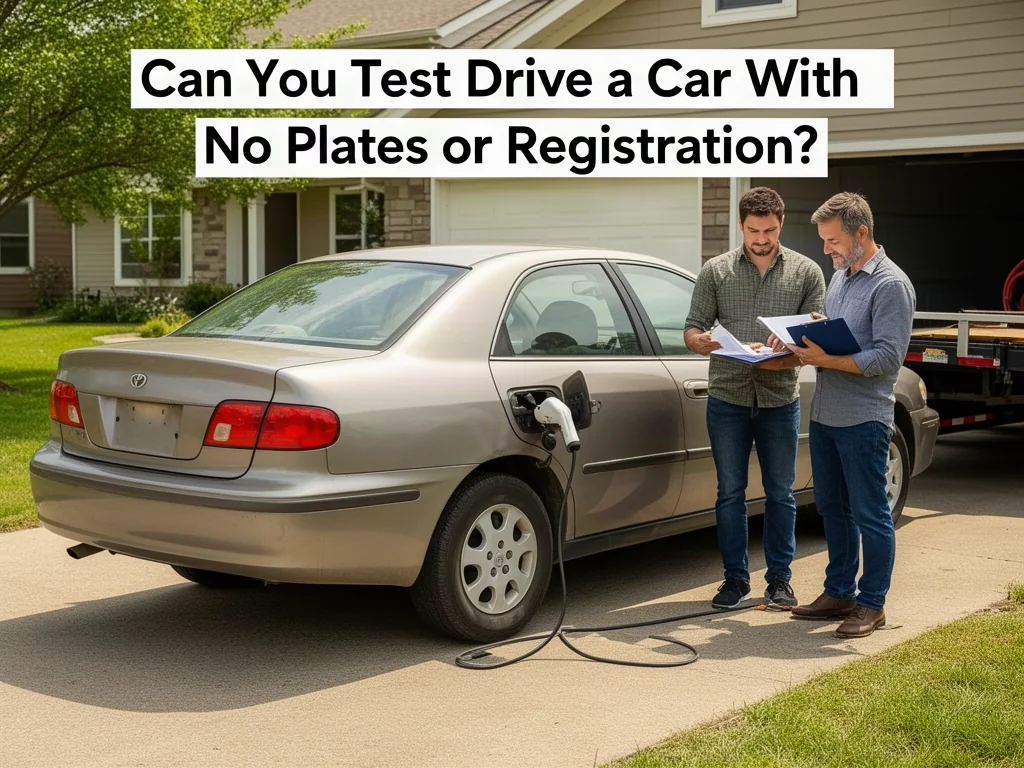
Test driving a car with no registration can quickly turn a private-party sale into a legal problem. Most US states require current registration and license plates for any public-road operation, even a short pre-purchase spin. The rules change depending on whether the tags simply lapsed, were never transferred, or the vehicle is declared off-road under a status like SORN in the UK or a state non-operation order. Before you accept the keys, understand what the DMV actually permits and what temporary options may keep the inspection legal.
Why an Unregistered Car Usually Isn't Road-Legal for a Test Drive
Driving on public roads generally requires the vehicle to be currently registered in that state, though each state sets its own details. There is no single national rule that allows a test drive just because the seller agrees. An expired registration is often treated differently from a car that was never put in the buyer's name or one still registered elsewhere. Buyers cannot rely on a seller's claim that a quick neighborhood drive will be overlooked.
For a private-party sale, a lapsed registration may simply mean the owner stopped paying fees, while a car never registered in the seller's name could signal an unreported transfer or title issue. A vehicle registered in another state may need different paperwork to be legal on local roads. The driver, not just the seller, can be cited if the registration is invalid. Checking your state's motor vehicle agency website before the test is the only way to confirm any exception.
Driving Without License Plates: What Buyers and Sellers Risk
A car that is unregistered and unplated draws immediate attention from police, even if the driver has a valid license and insurance. Officers can stop the vehicle for the missing plate alone and issue a citation for the registration violation. In many states the license plates belong to the registered owner, so a seller may remove them at the time of sale or before showing the car. That means a car can have valid registration but no plates attached.
Buyers and sellers sometimes move plates from another vehicle or borrow a set to make the test drive look legal. This creates separate offenses for misuse of plates and can invalidate insurance coverage. The person behind the wheel is generally responsible for the car's legal status, not just the registered owner. If you are driving, you need to know that the plates are valid for that specific vehicle before leaving the driveway.
What SORN Means and Why It Matters for a Test Drive
SORN stands for Statutory Off Road Notification, a status used in the UK to declare that a vehicle is kept off public roads. US buyers may encounter the term when importing a car or reading a seller's description. Once a vehicle is under SORN, it generally cannot be driven on public roads at all. Some narrow exceptions exist for pre-booked MOT tests, but sellers are not the final authority on those rules.
A few US states offer similar non-operation or off-road registration statuses that exempt the owner from some fees while banning public-road use. A car under such a status usually also lacks the insurance and inspection documentation normally required for street driving. Relying on the seller's word that the car is safe for a short trip does not change its legal standing. Check your state's DMV and, for a SORN car, the official UK government guidance before any drive.
Insurance Gaps When Test Driving an Unregistered Car
Insurance coverage often follows the registration. When a car is unregistered or declared off-road, the seller's policy may have lapsed or been canceled entirely. In that case the vehicle has no coverage of its own, and the owner's policy will not pay for damage or injuries caused during a test drive. The buyer should not assume that their personal auto policy automatically extends to a vehicle they don't own.
Many non-owner policies or regular auto policies provide only limited coverage for temporary substitute vehicles, and those terms vary. Driving an uninsured, unregistered car after an accident can leave you personally responsible for repairs, medical bills, and legal costs. Before any public-road test, call your insurer and ask specifically whether your policy covers driving a vehicle you are considering buying. Request the confirmation in writing so there is no dispute later.
Legal Alternatives: Temporary Permits, Trip Permits and Dealer Plates
Many state DMVs issue temporary operating permits, sometimes called trip permits or transit permits, that allow a vehicle to be driven for a limited purpose such as a pre-purchase inspection or driving home after a sale. The eligibility requirements, required paperwork, and duration vary widely by state. A buyer may be able to get temporary tags after purchasing the car if the title is in hand, but it is not wise to assume this is automatic.
Dealer plates are issued to licensed dealerships and are not a workaround for private-party sales. Using a friend's dealer plate is illegal and can void any insurance. If a temporary permit is available in your state, the DMV will tell you what identification, title documents, and fees are needed. Do not rely on third-party advice; confirm the exact process with your state's motor vehicle agency before scheduling the drive.
How to Evaluate the Car Without Driving It on Public Roads
When a road test is not legal, a careful stationary inspection can still reveal a lot. Start the engine from cold and listen for rough idle, knocking, or excessive exhaust smoke while the car is parked. Watch the dashboard for warning lights that stay illuminated. Look under the vehicle for fluid leaks and check the tires and brake rotors visually. These checks require no disassembly and are safe to perform in a driveway.
If the owner permits, you can move the car slowly on private property to feel for clutch engagement or loose steering, but only in a clear, flat area away from traffic and pedestrians. Such low-speed maneuvers cannot show highway stability, braking at speed, or problems that only appear after the engine warms up. For a complete evaluation, hiring a flatbed tow truck or trailer to take the car to an independent shop for a pre-purchase inspection is the safest path.
Red Flags and Paperwork to Check Before Buying an Unplated Car
Before discussing a test drive, ask the seller why the car is unregistered, unplated, or declared off-road. A reasonable answer might involve an overseas move or a stored project, while a vague or changing story is a warning sign. Confirm that the title is present and that the name on it matches the seller's identification. Check the vehicle identification number on the title against the VIN plate and the sticker on the driver's door jamb.
If the seller pressures you to take the car on public roads despite the missing plates, treat that as a red flag. A legitimate seller will understand the legal risk and cooperate with a trailer or a pre-purchase inspection. Make the sale contingent on a satisfactory professional inspection and on confirming which documents are required to register the car afterward. If the title is missing or the numbers don't match, walk away.