Can You Smoke in a Rental or Leased Car? Policies, Detection and Fees
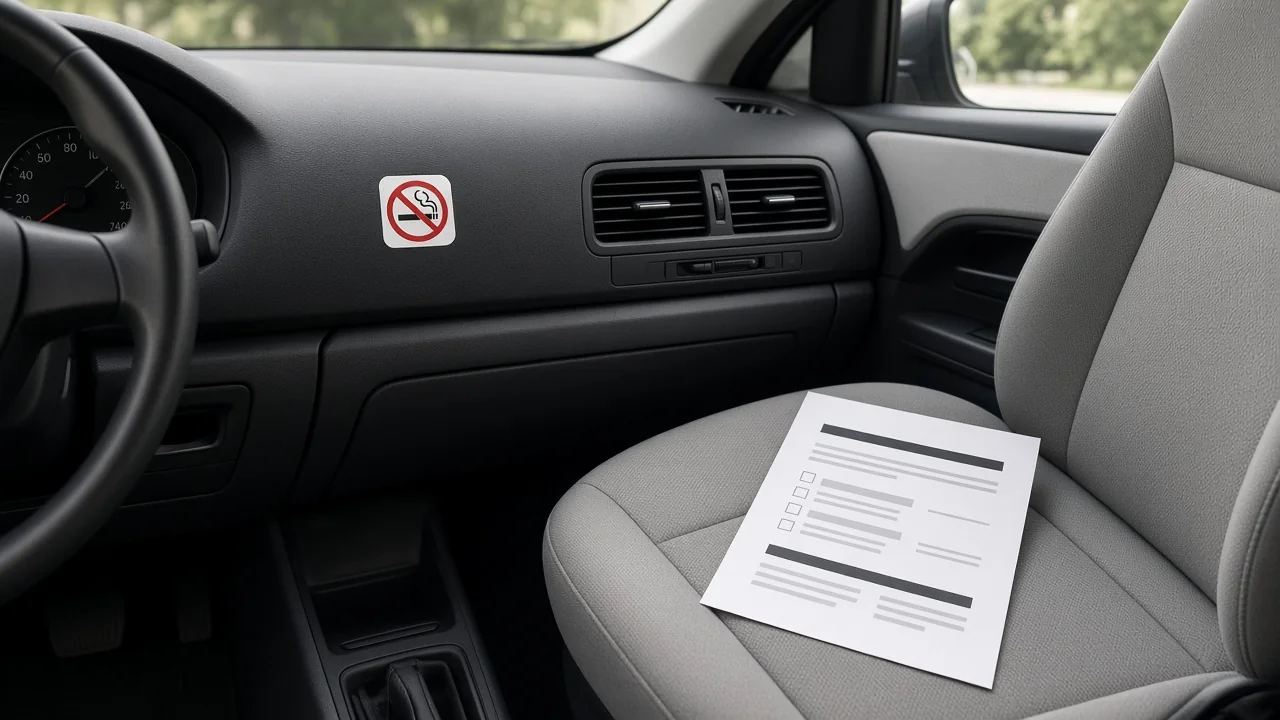
Whether you can smoke in a rental car or a leased car is a contract question, not a matter of convenience. Permission exists only when the rental agreement or lease says so, often through a non-smoking policy. A missing cabin device, ashtray, or sticker does not create an exception. The same terms govern cleaning charges, interior damage findings, and how smoke odor may be documented at return.
Check the Rental Agreement Before Smoking
Anyone asking whether they can smoke in a rental car, including an Enterprise or Hertz booking, should start with paperwork rather than the cabin. Permission depends on the rental agreement and the smoking policy for that reservation. Read prohibited activities, interior-use rules, and cleaning charge language before accepting the keys. A car without a posted notice or visible detector may still fall under a fleet-wide ban. The signed document, not the look of the dash, controls what is allowed.
Opening a window, cracking a sunroof, or lighting up only for a short drive does not create an exception to a smoking prohibition. Tobacco, cannabis, and other smoked products can leave odor in fabric, headliner, and ventilation even after a brief session. If the agreement bars smoking, that bar applies for the entire rental period, including overnight stops and passenger use. Confirm the charge provisions as well, because a cleaning charge or interior damage assessment may follow a policy breach.
How to Confirm Whether a Rental Allows Smoking
If you are looking for car rentals you can smoke in, ask the provider about that specific booking and vehicle rather than relying on general advertising. Request written confirmation that smoking is expressly permitted and that it matches the rental agreement you will sign. Verbal comments at the counter can be incomplete, and a clerk's casual remark does not override printed terms. Until that written match exists, treat the car as covered by the non-smoking policy. Authorization comes from the contract, not from a used-looking interior.
An existing smoke smell, a leftover ashtray, or signs of a previous renter does not authorize you to smoke. Those conditions may instead call for a condition report note or a request for another vehicle. If written permission is unavailable, smoke outside the vehicle where it is allowed, and keep smoked materials away from the cabin, cupholders, and floor mats. That step avoids transferring ash residue into a car the agreement treats as smoke-free.
What Smoking Can Mean for a Leased Car
Smoking in a lease car or a leased car is governed by the lease agreement and the return-condition standards that go with it. Review clauses covering smoking restrictions, interior odor, burns, and upholstery before you treat the cabin as a personal space. A lease return inspection often compares the interior against those standards, including lingering smell and visible marks. Even a lease without an explicit smoking clause may still allow charges when odor or interior damage leaves the vehicle outside ordinary wear under the contract's condition terms.
Lingering odor, burns, and upholstery damage are conditions to raise with the leasing company before return rather than surprises at the inspection desk. A documented condition assessment, with dated photos and notes on when an issue was first noticed, helps establish what needs attention and which contractual provisions apply. That record does not assume a charge is inevitable, but it frames the discussion around actual cabin condition instead of last-minute argument. Ask how the lessor evaluates smoke odor against wear-and-tear language so you understand the standard that will be used.
Do Rental Cars Have Smoke Detectors?
A smoke detector in a rental car cannot be assumed as standard equipment. Whether a fleet installs a car smoke alarm, a smaller cabin sensor, or no device at all depends on the provider and the individual vehicle. A conventional smoke alarm is designed to sound when it detects particles in air, while some sensors are intended to log possible smoking events for later review. Neither type should be treated as universal. Ask the rental company whether that specific car has detection equipment and how any record would be used.
A visible cabin gadget cannot be identified as a rental car smoke detector from appearance alone, because many interior modules look similar. If a smoke detector in the car matters to you, ask the provider rather than guessing from shape or placement. Tape over a device, or any other covering, is inappropriate, may itself violate the agreement, and does not change the smoking policy. Tampering does not create permission to smoke, and there is no legitimate reason to interfere with cabin equipment.
How Rental Companies May Identify Smoking
How rental car companies tell if you smoke often starts with the return inspection, not with a hidden gadget. Staff may note smoke odor in seats, headliner, or vents, ash residue in trays and cupholders, discarded smoking materials, and burn marks on fabric or plastic. Those observations go onto the condition report and can support a cleaning charge or interior damage claim under the agreement. A rental car company does not need a detector to document what is visible and what the cabin smells like at handover.
Where a sensor is installed, its record may form part of the provider's assessment, without proving every fleet has the same capability or that a logged event is automatically accurate. Odor or residue alone may not establish when smoking occurred or who caused it, especially if the car already smelled of smoke at pickup. That is why a condition report at collection, plus prompt written notice of an existing smell, matters. Identification is an inference from inspection, paperwork, and any equipment actually in use.
Prevent Smoking Charges and Respond to a Disputed Fee
Cleaning or damage charges depend on the agreement and documented condition, not on a single industry-wide fee. At pickup, inspect the interior, photograph visible residue or burns, and report odors in writing before leaving the lot. Request acknowledgment on the condition report, or ask for another vehicle if the cabin already smells of smoke. That record is the baseline for any later cleaning charge. Surface wiping or airing out is not a guarantee, because odor in fabric can remain after a quick tidy.
The reliable way to prevent a smoking-related fee is to follow the smoking policy and report problems promptly, not to mask odor with fragrances or interfere with sensors. If a cleaning charge appears anyway, treat it as a fee dispute: request the inspection record, supporting photos or notes, a charge breakdown, and the contract clause the provider relies on. Submit your dated pickup photos and written reports through the company's dispute channel. Compare that evidence against the original condition report so the review turns on documentation rather than memory.