Can You Safely Unstick a Car Thermostat?
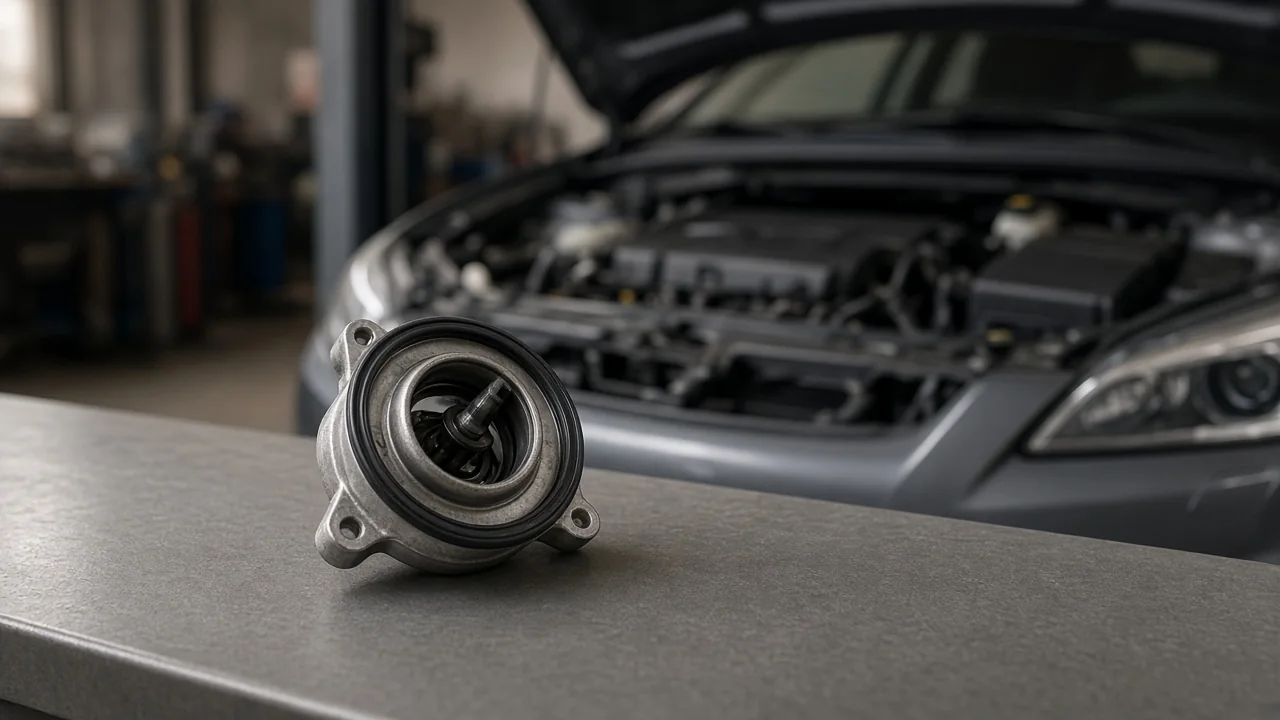
A sticking coolant thermostat can disturb coolant flow and engine temperature, and the usual hope is to unstick a car thermostat without replacing it. There is no dependable shortcut that proves the valve will keep regulating after it moves once. Safe cooling system diagnosis, limited thermostat cleaning, and a clear view of the risks explain why a sticking thermostat is usually replaced rather than forced back into service.
Can a Sticking Car Thermostat Be Freed Safely?
There is no dependable external trick for unsticking a thermostat in a car while it remains installed and then confirming that it will regulate temperature reliably. Tapping the housing, cycling the engine, or waiting for a thermostat that is not moving to free itself may produce a brief change in coolant flow, yet that motion does not prove the sticking problem is gone. Until the valve opens and closes at the temperatures the engine needs, any apparent recovery is only a snapshot, not a repair.
The coolant thermostat controls coolant flow as the engine warms, typically remaining more closed until the powerplant approaches operating temperature and then opening to send heat toward the radiator. Designs vary by vehicle, so one housing layout cannot be assumed for every car. Getting a car thermostat unstuck is therefore a question of safe checks, the limits of cleaning, and whether replacement is the honest repair decision rather than a promise that a freed valve will keep working.
What Temperature Symptoms Can Actually Tell You
A thermostat stuck closed can restrict radiator circulation so heat stays in the engine instead of moving through the cooling circuit, which can contribute to a rapid rise in engine temperature and an overheating warning. A thermostat stuck open can keep coolant circulating too early, which often shows up as a long warm-up, a gauge that stays cooler than expected, and weak cabin heat even after a drive. Those patterns are useful clues, but they describe system behavior, not a confirmed mechanical state of the valve.
A blocked thermostat still requires cooling system diagnosis, just as a report that the thermostat is not moving does. With the unit installed, opening and closing generally cannot be watched, so you cannot tell whether the valve is jammed, sluggish, or simply closed while the engine is cold. Coolant loss, trapped air, circulation problems, fan faults, and temperature-sensor issues can produce overlapping symptoms, so fixing a stuck thermostat in a car begins by sorting those possibilities rather than assuming the valve is the only cause.
Safe Checks Before Attempting to Free Anything
Before trying to unstick a thermostat on a car, use what normal driving already shows: temperature warnings, how long the engine takes to warm, heater output, and any visible leaks. Do not try to reproduce overheating on purpose. With the engine fully cool, check the visible reservoir level according to the owner's manual and look for staining or puddles, staying away from belts, fans, and other moving parts. Those observations help decide whether the cooling system needs attention without making a temperature problem more dangerous.
Restoring a low coolant level may change the temperature reading, but it does not prove you have gotten the thermostat unstuck. Unexplained coolant loss still needs investigation because a leak, a failed cap, or another circulation issue can remain. Tapping the thermostat housing, revving the engine, running repeated heat cycles, or pouring in chemicals is not a dependable way to unstick a thermostat in a car. Those tactics can mask the fault, damage parts, or create a false sense that the valve has been freed for good.
Why Cleaning May Not Restore Thermostat Operation
Deposits or debris can interfere with a sticking thermostat, so cleaning looks like an easy fix. Thermostat cleaning may remove scale or particles from surfaces you can reach, yet it cannot establish that the temperature-sensitive element, spring, seals, and valve remain sound. A unit that looks cleaner can still hang closed, hang open, or stick after a few heat cycles. You can clean a car thermostat and still fail to restore reliable regulation of engine temperature.
Accessing the thermostat generally means opening the cooling system, so an in-place shortcut cannot confirm recovery. You can clean a thermostat in a car only after it is out, and even then visual cleanliness is not a function test. A cooling-system flush is not a guaranteed remedy for a sticking thermostat and should follow vehicle-specific service guidance when contamination is actually present. Persistent debris calls for diagnosis of its source rather than solvents, scraping, or additives that promise to free the valve.
Why Forcing the Thermostat Open Is Not a Repair
Opening a thermostat on a car can mean two very different things. In normal service the valve opens as engine temperature rises and coolant needs a path through the radiator. Physically forcing that valve, wedging it, drilling it, or removing the thermostat altogether is not a fix for a stuck thermostat. Those actions defeat the intended control of coolant flow, can damage the housing or adjacent hoses, and can leave the engine running too cold or, in some layouts, without the restriction the system was designed around.
A technician can compare opening behavior with the vehicle's specifications using appropriate shop methods, without home experiments that heat the unit over a flame, dunk it in boiling water, or pressurize hot coolant. Intermittent sticking can return on the next heat cycle, so one free movement does not prove the valve will keep regulating. Trying to unstick a car thermostat by force is not a repair, because temporary motion is not evidence of durability.
When Replacement and Professional Testing Are Needed
A confirmed sticking thermostat is generally replaced because reliable temperature regulation has to be restored, and an intermittent recovery does not demonstrate that the part will last. Fixing a stuck thermostat in a car is usually a matter of installing a new unit after the rest of the cooling system has been considered, not declaring the old valve cured. A technician can review temperature data, coolant level and condition, leaks, and circulation before attributing the fault to the thermostat, which keeps a sensor, fan, or air-pocket problem from being misread as a failed valve.
If you see an overheating warning, steam, or a rapidly rising temperature gauge, pull over safely, shut the engine off, and arrange assistance. Never open a hot cooling-system cap, because pressurized coolant can scald. Continued driving with unresolved overheating risks engine damage, while persistent slow warm-up also warrants diagnosis even when the car still runs. Getting a thermostat unstuck at the roadside is not the priority; professional testing is, once the engine has cooled and the vehicle can be inspected safely.