Can You Jump-Start or Drive a Car With a Bad Alternator?
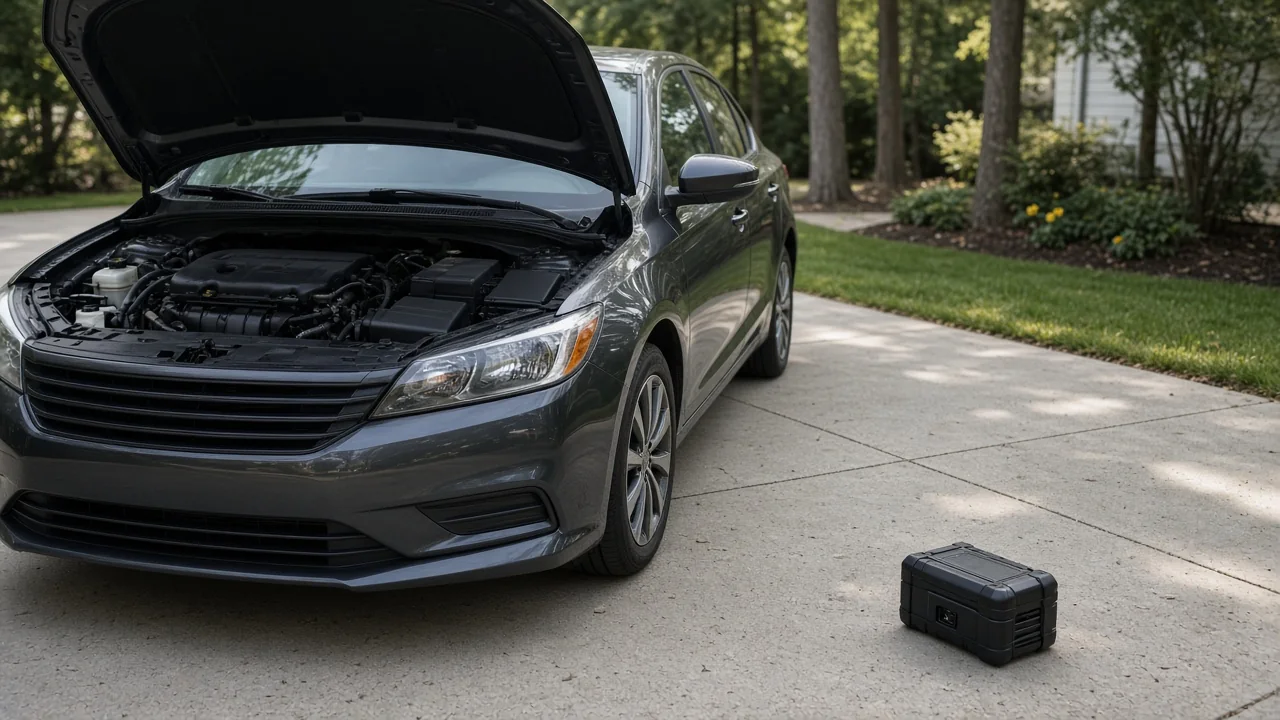
A jump-start may crank a vehicle whose battery is too low to start, even when the alternator is no longer charging. That boost does not repair the charging system. Once the cables or booster pack come off, the car runs on remaining battery reserve, which can fade quickly as electrical load rises. Distance and safety depend on conditions a restart cannot reveal.
A Jump-Start May Start the Engine Without Restoring Charging
Yes, you can jump a car with a bad alternator if remaining battery charge is too low to crank the engine. External power from jumper cables or a jumpstart pack can turn the starter without repairing the charging system. Success still depends on battery condition and the underlying fault. A damaged or nearly empty battery may not accept the assist, and a mechanical problem will not respond to extra voltage. The same approach applies to conventional vehicles with an alternator; other powertrain designs need vehicle-specific guidance.
That borrowed current only helps the engine fire. It does not restore alternator output or correct a charging-system fault in the regulator, belt, or wiring. After the donor vehicle or booster is disconnected, ignition, fuel delivery, and engine controls draw from the battery alone. If that electrical load exceeds what the battery can supply, voltage can drop and the engine may stall soon afterward. A restart therefore answers only whether the engine could crank, not whether charging has resumed.
Why There Is No Reliable Battery-Only Driving Distance
How long a vehicle can run after a jump depends on remaining battery reserve, battery health, electrical demand, and whether the charging system still produces any output. A battery that is old, deeply discharged, or already weak will collapse sooner than a healthy one with unused capacity. Headlights, climate fans, heated glass, and infotainment all add load. Complete charging failure leaves the battery as the only source, while intermittent or reduced output may stretch runtime without making it predictable. Those distinctions cannot be settled from a restart alone.
A successful jump-start does not show how much usable reserve remains, so it cannot support a dependable trip plan. Drivers sometimes ask how far they can go on battery only, but mileage and minutes vary with temperature, accessory use, engine speed, and the battery's true state of charge. Partial charging can mask the problem until voltage falls. Because none of those variables is known at the roadside, battery-only operation is not a reliable way to reach a shop. Treat remaining range as unknown rather than a calculated distance.
Warning Signs That Call for a Safe Stop
A battery warning light, often labeled as a charging or battery symbol, can indicate that the system is no longer maintaining voltage. Dimming headlights, flickering interior lamps, weak power windows, and other electrical malfunctions may appear as supply falls. Engine stalling can follow when control modules and ignition no longer receive adequate power. These signs call for charging-system evaluation, but they do not prove the alternator itself has failed. A loose belt, corroded cable, failing battery, or wiring fault can produce a similar pattern and needs testing to sort out.
If the engine stalls, some vehicles lose a portion of power steering or power brake assistance, which makes continued travel unsafe even if the car can be restarted. When symptoms appear, the safer course is to reach a protected stopping place if you can do so without creating a hazard, then request roadside assistance. Smoke, a burning smell, or signs of overheating are reasons to stop operation immediately rather than trying to limp farther. Do not keep driving to diagnose the fault while voltage is collapsing.
When a Jump-Start Should Not Be Attempted
Follow the owner's manual and the jump-starter instructions, including vehicle-specific connection points and any restrictions on using another vehicle as a donor. Do not attempt a jump-start when the battery is swollen, leaking, cracked, or suspected to be frozen, because those conditions raise the chance of rupture or chemical spray. If the car sits in traffic, the cables or pack are the wrong type, or the procedure is unclear, call roadside assistance instead of improvising. Guessing at clamp locations on modern vehicles can damage electronics.
A long-standing myth holds that disconnecting a battery cable with the engine running will prove whether the alternator is working. That test should not be used. Removing the battery while the engine is running can send voltage spikes through modules, sensors, and the charging circuit and can damage electrical systems. Charging system testing belongs on proper equipment that measures output, voltage stability, and related circuits with the battery still connected. If you are unsure you can jumpstart the vehicle safely in your situation, skip the attempt and wait for help.
What Starting and Stalling Can Tell You
Starting with external power only shows that added electrical support helped the starter and engine controls. It does not identify whether the alternator, battery, belt, connections, or another part is at fault. Stalling after the cables or pack are removed raises concern that available electrical power cannot sustain operation, but that pattern is not a conclusive alternator diagnosis. A weak battery, high resistance in a cable, or a control issue can produce the same result. Treat the event as a clue, not a completed test.
Note warning messages, a battery warning light, dimming, and whether problems began before or after the restart, then stop repeating start attempts that further drain the battery. Professional charging system testing can check battery condition, charging output, ground and positive connections, wiring integrity, and the alternator drive belt or pulley as needed. Manufacturer-dependent codes and live data require vehicle-specific confirmation; a stored code is evidence to interpret, not proof that a part has failed. Replacement decisions should wait until those checks isolate the cause.
Arrange Assistance Instead of Planning a Battery-Only Trip
If charging failure is suspected, especially if the charging warning remains on or electrical symptoms continue after a jump, arrange towing rather than driving on reserve. A jump-start should not be treated as assurance that the vehicle can reach a repair shop. Voltage can fall without much warning once the battery is the only source, and an unexpected stall in traffic is a larger risk than a delayed arrival. Roadside assistance can move the car to a facility equipped for charging-system diagnosis.
Keep required lights and other safety functions available; switching off optional accessories may slow the drain but cannot establish a safe driving range. Being able to jump start a car with a bad alternator does not mean the vehicle can be nursed home on remaining charge. After the car is recovered, charging-system repair and assessment of a depleted battery may both be needed before dependable operation resumes. A battery that was deeply discharged can remain unreliable even after charging is restored.