Can Shock Absorbers Be Repaired or Rebuilt?
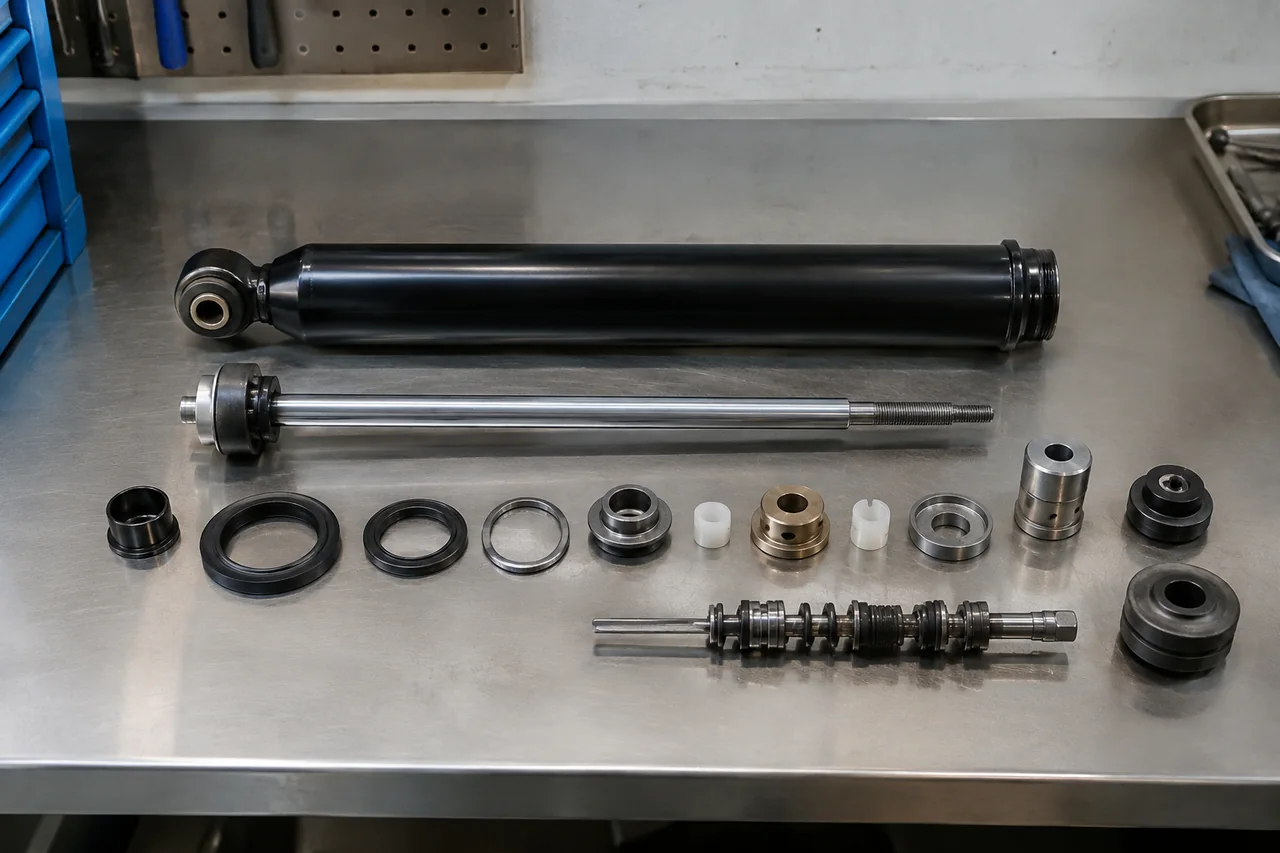
Whether you can fix a shock absorber depends on the damper, not the leak or the corner of the car. Many original-equipment shocks and struts are sealed replacement units, while some rebuildable dampers can be serviced with documented seals and oil. Repair may mean internal work, a strut cartridge, or only an external mount. Those distinctions keep shock absorber repairs focused on damping performance rather than a wet housing alone.
When Shock Absorber Repair Is Possible
Internal shock absorber repair is possible only when the unit is designed for servicing and suitable parts and procedures exist. A sealed shock absorber or sealed strut is typically a replacement assembly; cutting or improvising access is not an approved way to fix it. How to repair a shock absorber therefore starts with identifying the exact damper, not assuming every leaking unit can be opened. A strut also carries a structural suspension role, so the assembly on the car matters when discussing car shock absorber repair versus swapping a serviceable strut cartridge.
A repair estimate should state what work is actually included. Shock absorber repairing may cover internal damper work, replacement of a serviceable cartridge inside a strut housing, or an external item such as a mount or bushing. Tightening hardware or replacing that external component does not restore a damper that has lost fluid or suffered internal wear. Shock absorber car repair that only addresses a noisy mount can leave damping performance unchanged, so the written estimate should separate those jobs from true shock absorber repairs on the hydraulic unit.
What Oil on a Shock or Strut Can Tell You
Hydraulic damping units contain damper oil and can leak around a rod seal, through a damaged seal housing, or from body damage. Struts can leak, and car shocks leaking around the piston rod are a common reason owners ask how to fix a shock absorber. Nearby wetness is not automatically damper oil, because brake fluid, power steering fluid, or underbody spray can collect on the same parts. Identify the source during suspension inspection before treating a wet housing, oily dirt, or a trail on a leaking strut on the car as damper oil.
Document what you can see with the vehicle parked: a light film, accumulated oily dirt, wet trails, or drips from struts leaking oil. Serviceability is judged with the unit manufacturer's criteria, not a single appearance grade. Continued bouncing, unsettled handling, and unusual tire wear are reasons for inspection, yet none of those symptoms proves the shock has failed. Appearance and a simple bounce check cannot establish internal condition or remaining service life, so owner checks stay limited to safely visible areas.
Locating Front or Rear Leaks and Assessing Urgency
When struts on a car are leaking, record the corner and the visible wetness rather than assuming every vehicle uses struts at both axles. Some vehicles use struts in front and separate shocks at the rear, so leaking front struts and leaking rear struts describe different assemblies. A shop should inspect the wet damper, its attachments, nearby suspension parts, and the other unit on that axle, because leaky struts and shocks leaking on a car often share wear with the partner on that end.
Axle location alone does not establish rebuildability. Rear shock absorber repair, like work when front struts are leaking, depends on the exact unit's design and condition. Fluid seepage from struts leaking on a car or from rear struts leaking still warrants prompt inspection of damping and structure. Stop driving when there is severe instability, visible structural damage, or a loose suspension component. Remaining mileage cannot be promised from a wet housing, whether oil is on a front strut, a rear shock, or only one corner.
Confirming That a Damper Is Rebuildable
Shock absorber rebuilding starts with the manufacturer and the exact part number, then confirmation that the unit is documented as serviceable and that an authorized or qualified rebuilder is available. Some specialty and performance dampers have supported rebuild procedures, including a shock absorber rebuild kit matched to that design. An external look or a product category does not prove a rebuildable damper. On a sealed original-equipment unit, how to repair shock absorber internals is usually replacement, not a workshop improvisation.
A successful shock absorber rebuild can still be blocked by a scored piston rod, corrosion in the seal area, a distorted body, worn internal surfaces, or parts that are no longer supplied. Sealed or otherwise unserviceable units require replacement. Cutting open or improvising access to a sealed body is outside an approved rebuild. Car shock absorber repair in that case means installing a correct replacement damper rather than attempting shock absorber repairing on a housing that was never meant to be serviced.
What Seals and Rebuild Kits Can Address
A shock absorber seal, especially the rod seal at the piston rod, retains damper oil and helps keep contamination out of the working chamber. Other internal sealing elements in the seal housing do similar work at joints and caps. A shock absorber repair kit or a shock absorber rebuild kit may include seals, O-rings, wear bands, or bushings, but contents vary by product. New shock absorber seals restore containment only when the rod and its sealing surface are still in usable condition.
Match any shock absorber rebuild kit to the exact damper model and revision using the unit manufacturer's documentation; vehicle fitment alone is not enough. New seals cannot correct a damaged rod or a worn sealing surface, so those findings end a rebuild before oil is added. Damper oil specifications and any charging requirements must come from that same service documentation. Using a generic fluid or an unmatched kit is not a reliable way to repair shock absorber leaks or recover damping performance.
What a Professional Shock Rebuild Involves
Professional shock absorber rebuilding follows a controlled sequence: assessment, controlled disassembly, cleaning, inspection, approved component replacement, reassembly, and the specified filling or charging. Stored gas pressure and suspension spring energy require appropriate equipment and training, which is why this work belongs in a qualified shop rather than a driveway experiment. The process is not a set of owner steps for how to repair a shock absorber at home. If the unit is not rebuildable, the same assessment should redirect the job to replacement instead of improvised access.
After reassembly, professional leak checks and damper testing, including bench testing where specified, are what confirm damping performance. A dry exterior alone does not prove a successful repair, because valving, gas charge, and internal wear are not visible from the paint. A useful estimate lists parts included, inspection findings, testing, warranty, installation work, axle pairing guidance, and whether the vehicle's procedure calls for alignment afterward. Those details keep shock absorber repair, rear shock absorber repair, and work on leaking struts on a car comparable from shop to shop.