Can an OBD2 Scanner Read Airbag Codes?
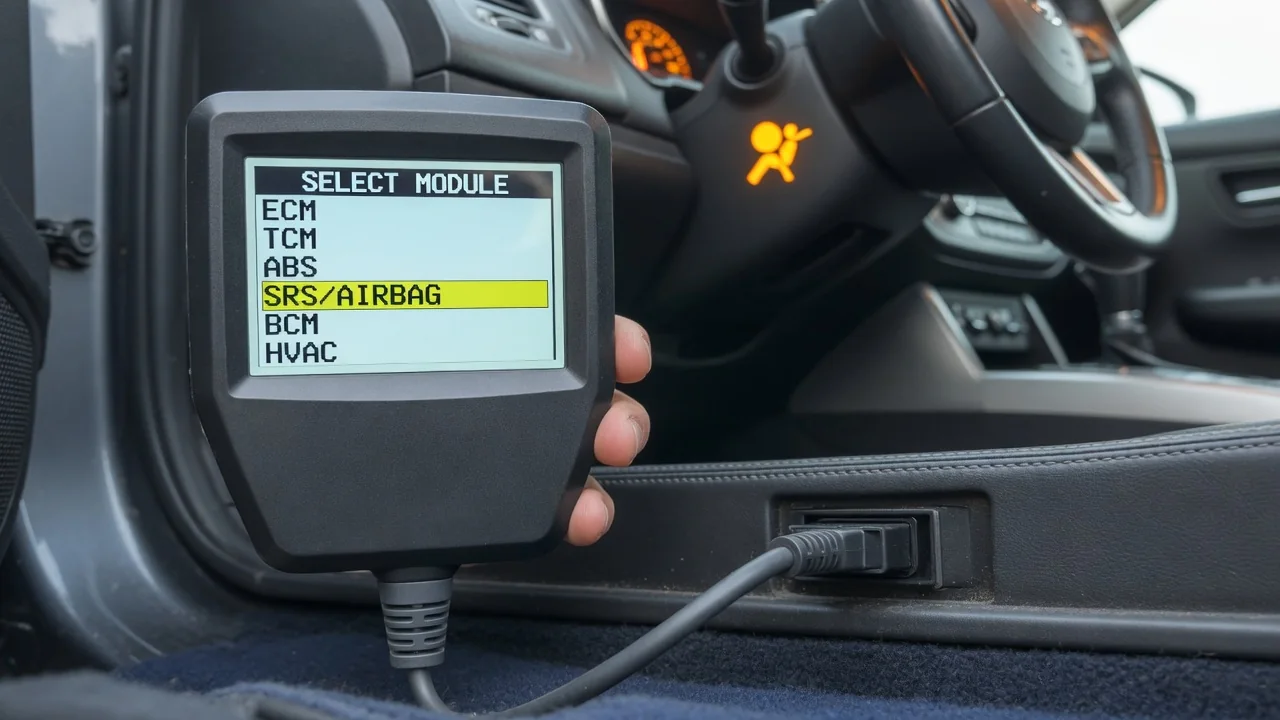
When the airbag warning light comes on, many drivers reach for the same tool they use for a check engine light. Whether an OBD2 scanner for airbag light problems can actually help depends on the tool's capabilities and the vehicle it is connected to. Understanding how the supplemental restraint system reports faults makes it easier to choose the right scanner and interpret what it shows.
Why a Basic OBD2 Code Reader Often Misses Airbag Light Faults
Generic OBD2 was designed around emissions and powertrain monitoring, so its standardized functions focus on the engine, fuel system and related components. On many vehicles, the airbag control module sits outside that required scope. As a result, a basic code reader plugged into the OBD2 port may never establish communication with it. The reader can still talk to the engine computer, so it appears to work normally, but it does not know how to request data from the supplemental restraint system.
In practice, a driver using a basic reader while the SRS warning light is on usually sees a no-codes message or only engine-related codes unrelated to the airbag lamp. That empty result does not mean the airbag system is healthy. It only means the tool did not reach the module that turned on the warning. Whether SRS access is possible depends on the vehicle make, model and year, along with how thoroughly the scanner's software supports that particular vehicle.
What an Airbag Light Scanner Must Do to Read SRS Codes
An airbag light scanner needs enhanced diagnostics, meaning it uses manufacturer-specific communication to reach modules beyond the generic emissions set. Once connected to the airbag control module, a capable tool may display SRS fault codes, short descriptions, and a status showing whether each code is current or stored. Some tools also show module identification details. This information helps a technician tell whether a problem is ongoing or happened earlier and then stopped.
Because each manufacturer implements its own module communication, the same scanner may read SRS codes on one vehicle but fail to connect on another. This can happen even within a single brand across different model years. Packaging that promises airbag support is therefore only a starting point. Before relying on any scanner for airbag light diagnosis, compare the tool's published vehicle coverage list against your exact vehicle. Confirm that the SRS module is listed, not just the engine.
Choosing an OBD Scanner for an Airbag Light: Features Worth Checking
When shopping for an OBD scanner for airbag light faults, confirm a few basics first. The tool should support SRS module access, its coverage should include your specific vehicle, and it should be able to both read and clear SRS codes rather than only read them. Keep the vehicle identification number, model year, trim and engine details nearby while checking compatibility. Coverage can change between trims or production years, so a close match may not be enough.
Software updates and the coverage list usually matter more than price tier or device type, because a well-maintained database is what lets a tool talk to newer modules. Simple code readers are inexpensive and easy to use, but they are often limited to engine data. Enhanced handheld scanners typically add access to multiple systems on a dedicated screen. App-based tools pair a plug-in adapter with a phone and offer frequent updates, though some features may depend on paid add-ons or the specific vehicle.
Reading Airbag Codes and Interpreting Them Correctly
After reading SRS fault codes, look up their meaning in vehicle-specific service information or in the tool's manufacturer-specific definitions. Airbag code definitions often vary between automakers. A code that means one thing on one brand may describe something different on another, so no universal definition should be assumed. Also note whether each code is active or stored. An active code means the module sees the condition now. A stored code means it was detected earlier and may be intermittent or historical.
SRS codes generally point toward categories such as deployment circuits, impact sensors, seat belt pretensioner and buckle circuits, or the occupant classification sensor. Others involve the clock spring circuit in the steering column or communication between modules. A code identifies a circuit or condition the module detected, not necessarily the failed part. A resistance-related code, for example, could involve a connector, the wiring or a component itself. Proper testing is needed before anything is replaced.
Clearing the Airbag Light: When It Stays Off and When It Returns
Clearing SRS codes without correcting the underlying condition usually brings the airbag light back. This often happens during the system self-check at the next ignition cycle or once the module detects the fault again. Possible reasons include a loose connection under a seat, a clock spring circuit problem, a seat belt component fault or a sensor issue. Each of these remains only a possibility until proper diagnosis confirms it. A light that stays off after clearing is encouraging, but it is not proof of a repair.
Some vehicles or faults require specific procedures to clear airbag codes or reset the module. Certain conditions, such as stored crash data after a deployment, may need dealer-level tools or module service. A scanner that clears ordinary codes may not handle these cases. Most importantly, an airbag warning light that stays on can mean the system has disabled some or all of its functions. In that case, airbags or pretensioners may not deploy as intended in a collision.
Airbag System Safety Limits and When to Get Professional Diagnosis
Airbag components should never be removed, unplugged, probed or tested by untrained people. Accidental deployment can cause serious injury, and improper testing can damage the system. Safe DIY steps are limited to observation. Note when the light appears, record the codes and their status with a scanner, and think about recent events such as seat adjustments, objects under the seats, interior work, battery service or a collision. These details give a technician useful context without putting anyone at risk.
Professional SRS diagnosis is needed after any collision, when codes keep returning after being cleared, or when the cause is unclear from the codes alone. Share the recorded codes, their status and your observations with a qualified technician instead of attempting repairs yourself. It is also worth checking for open safety recalls through official manufacturer or government channels using your vehicle identification number. Don't assume a campaign applies to your airbag light without confirming it.