Can an Electric Car Overheat? Battery and Motor Thermal Management Explained
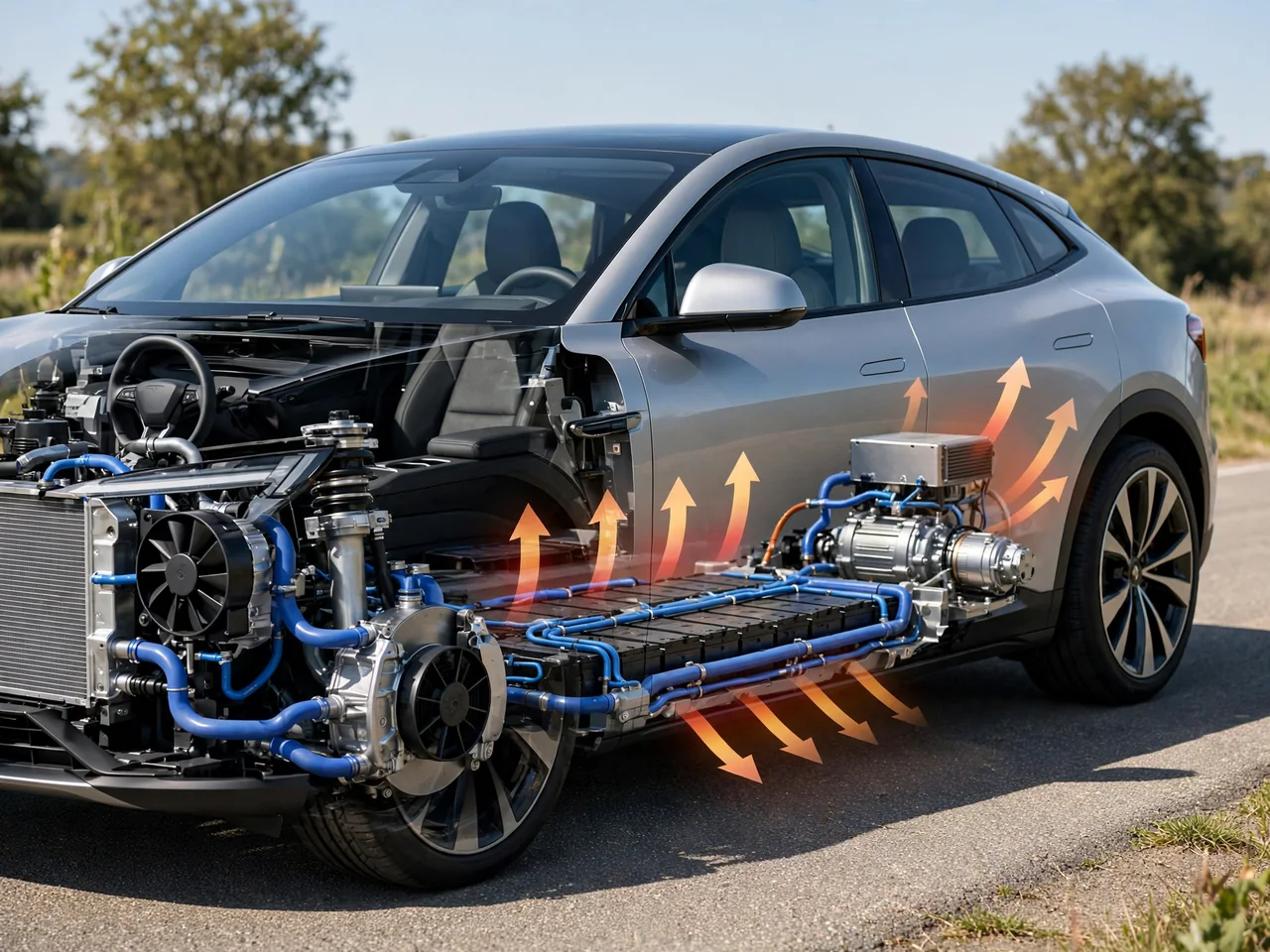
Electric vehicles run hot under the right conditions, but not in the same way a gasoline engine does. There is no combustion, no exhaust manifold, and no coolant boiling in a radiator. Instead, heat builds up in the traction battery, the electric motor, and the power electronics that manage energy flow. The vehicle’s software monitors these components continuously and typically intervenes before temperatures become dangerous. A driver may see reduced power, slower charging, or a temperature warning—signals that the thermal management system is doing its job.
Can an Electric Car Really Overheat? Where EV Heat Comes From
Yes, an electric car can overheat, but the failure mode differs from an internal-combustion car. A gasoline engine produces waste heat constantly, and cooling failure can quickly lead to a seized engine or a ruptured radiator. In an EV, the main heat sources are the lithium-ion battery during charging and discharging, the electric motor under load, the inverter that converts DC to AC, and the onboard charger when plugged in. These components are designed to operate within a temperature band, and the car’s software constantly reads sensors to keep them there.
Because thermal limits are managed electronically, an EV will usually reduce power or pause charging before any physical damage occurs. The driver may notice a message like “battery temperature high” or a turtle icon indicating limited performance. Each manufacturer uses its own wording, icons, and thresholds, so the owner’s manual is the best reference. Heat-related warnings are protective, not proof of a failed part, but repeated alerts suggest the cooling system is struggling and needs professional attention.
How Battery Thermal Management Keeps Cells in a Safe Temperature Range
Lithium-ion battery cells prefer a narrow temperature window, roughly between 60°F and 95°F for optimal performance and longevity. Running colder reduces available power and slows charging; running hotter accelerates chemical aging and can trigger safety limits. The battery thermal management system works to keep every cell within that range, using sensors and a control strategy that responds to driving style, ambient temperature, and charging state. Even a few degrees above the ideal can reduce efficiency and shorten the battery’s useful life.
Most modern EVs use a liquid coolant loop that circulates a water-glycol mixture through channels in the battery pack. A chiller, tied to the air-conditioning system, can remove heat more aggressively when needed. Some smaller or older models rely on air cooling, which is less precise. The same system often warms the battery in cold weather by routing heat from the motor or a dedicated heater. Preconditioning the battery before a DC fast charge or a cold-weather drive brings the pack to the right temperature. After parking or while charging, you may hear pumps, fans, or the A/C compressor running; this is the system continuing to manage temperature and is usually normal.
Motor, Inverter and Charging Heat: The Other Parts That Need Cooling
The electric motor and inverter also generate heat, especially under sustained high load. Copper windings have electrical resistance, and the inverter switches large currents rapidly, producing switching losses. Many EVs cool the motor and inverter through the same coolant circuit as the battery, but some use a separate loop because these components can tolerate higher temperatures. After repeated hard acceleration, a long climb, or a sustained top-speed run, the drive unit may reach its thermal limit, and the car will reduce power output to protect the motor windings and power semiconductors.
Charging adds heat, particularly DC fast charging, which pushes high current into the battery quickly. As the pack temperature rises, the onboard charger or the charging station will taper the current to prevent overheating. This is why the second or third fast charge on a road trip can be slower than the first. The battery management system balances charging speed against temperature rise. Repeated fast charging in hot weather stresses the cooling system and may extend charging time, but it is a controlled process, not a sign of impending failure.
Situations That Push EV Temperatures Higher
High ambient temperature and direct sun increase the cooling workload. The cabin air conditioner pulls heat from the interior and rejects it through the condenser, which sits near the battery radiator. Parking in the sun heats the body and the battery enclosure, so the thermal system must work harder before you even drive. Running the cabin A/C at maximum while climbing a grade in hot weather combines several heat loads, and the car may reduce power available to the wheels to protect the battery.
Back-to-back DC fast charging sessions are a common cause of elevated battery temperature. Some EVs show a charging speed slowdown or a message that the battery is cooling. Heavy towing or carrying a full load up long grades also generates sustained heat in the motor and inverter, and the cooling system may reach its limit. Track use and performance driving push all components to maximum. A blocked front air intake—from leaves, snow, or a deformed grille—reduces airflow to radiators and can cause temperature warnings even in mild conditions. A cooling system fault, such as a failed pump or low coolant, has the same effect, but the occurrence rate of such failures varies.
Overheating Warnings and What the Car May Do to Protect Itself
Drivers may see various alerts when an EV runs too hot: a battery temperature warning, a drive-system or power- electronics message, a reduced-power icon like a turtle, or a charging speed notice. Some vehicles display a “battery too hot, performance limited” banner or reduce cabin cooling to protect the battery. The wording and severity differ by manufacturer, and a yellow warning may simply mean the car is managing heat, while a red warning may require stopping. The owner’s manual explains each message and the expected action.
A reduced-power mode is a protective response, not a breakdown. The car is intentionally limiting torque or top speed to lower heat generation. In many cases, driving gently or waiting a few minutes allows the system to recover. However, if the warning persists or recurs, the vehicle should be inspected. Diagnostic trouble codes related to thermal faults are manufacturer-specific; a generic code reader may show a code, but its exact meaning for that vehicle must be confirmed with the right service information. No universal definition can be applied to EV thermal codes.
Safe Driver Responses When an EV Temperature Warning Appears
When a temperature warning appears, the first step is to reduce electrical load and find a safe place to stop when practical. Turn off unnecessary accessories, avoid hard acceleration, and follow the instructions shown on the screen. If the message says to stop immediately, do so in a safe location and exit the vehicle if told. Never open the battery enclosure, touch orange high-voltage cables, or attempt to service the cooling system or power electronics. Even a seemingly simple action can expose you to dangerous voltage.
Smoke, hissing, popping sounds, a strong chemical smell, or visible sparks indicate a possible thermal runaway condition in the battery. In that case, stop safely, get everyone out, move well away from the car, and call emergency services. Do not try to extinguish a battery fire yourself. If a warning will not clear or keeps returning after normal driving, contact the manufacturer’s roadside assistance or an authorized EV service center. Many EVs require a flatbed tow because towing with wheels on the road can generate voltage in the motor and damage components.
Reducing Heat Stress and Knowing When Professional Testing Is Needed
You can reduce heat stress with a few safe habits: park in shade when possible, use cabin preconditioning while plugged in to cool the interior before driving, and space out DC fast charging sessions on long trips. Keep the front grille and air intakes clear of debris, and avoid unnecessary heavy loads in extreme heat. Preconditioning the battery before a long drive or fast charge uses grid power to bring the pack to a good temperature, which can improve charging speed and reduce strain on the cooling system.
Coolant checks and thermal system service should follow the schedule in the owner’s manual and be performed by a qualified technician. Do not attempt to add coolant or inspect high-voltage cooling lines yourself. A driver can note repeated temperature warnings, unusually slow charging sessions, or cooling fans running constantly at high speed, but these observations alone cannot pinpoint the cause. Diagnosing EV thermal faults requires manufacturer-specific diagnostic tools and high-voltage safety training. Any ongoing or unusual behavior should be checked by a professional who can access the vehicle’s thermal data and test the cooling loop safely.