Can a Bad Water Pump Cause a Car Not to Start
Direct Answer
In most vehicles, a bad water pump by itself will not prevent the engine from starting. The starter motor can still crank the engine, and the ignition and fuel systems normally operate independently of coolant flow. A leaking, noisy, or worn water pump usually causes overheating, coolant loss, or bearing failure long before it affects startup. However, there is one important exception: if the water pump seizes and locks the drive belt or timing belt, the engine may not crank or may fail to start. On some engines, a failed water pump can also cause timing belt damage that leads to a no-start condition.
How a Water Pump Normally Behaves
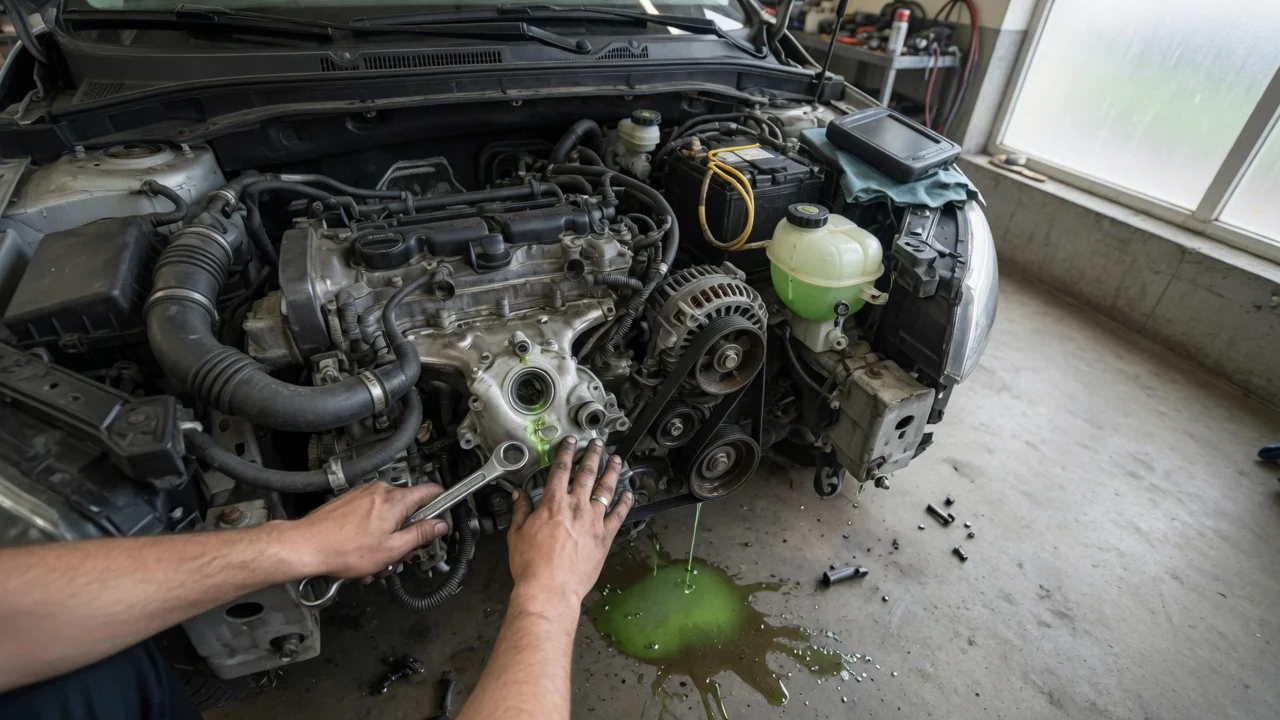
The water pump circulates coolant through the engine block, cylinder head, radiator, and heater core. It is driven either by an accessory serpentine belt or by the timing belt. A typical worn water pump produces a grinding or rumbling noise from a failing bearing, leaks coolant from the weep hole, or shows play in the pulley. These symptoms can lead to overheating but do not directly interrupt the electrical or fuel delivery needed for starting.
When a Bad Water Pump Can Affect Starting
Seized pump on a serpentine belt: A locked water pump pulley can stop the accessory belt from turning. The belt may also drive the alternator, power steering pump, or air conditioning compressor. If the belt slips or breaks, the alternator may stop charging, but the engine can often still crank briefly on battery power. Seized pump on a timing belt: On interference engines where the water pump is driven by the timing belt, a seized pump can cause the timing belt to jump teeth or break. This can result in a no-start condition and possible internal engine damage. Coolant loss into the timing cover: If a timing-belt-driven water pump leaks badly, coolant can contaminate the timing belt and accelerate wear. A snapped timing belt will prevent the engine from starting.
Symptoms That Point to a Water Pump Problem
Coolant puddle under the front of the engine, often near the water pump weep hole; Rumbling or whining noise from the pump area that changes with engine speed; Visible wobble in the water pump pulley; Steam from the engine bay or rising temperature gauge; Low coolant warning light with no external hose leak
What Usually Causes a No-Start Instead
When a car turns over but does not start, the cause is more often a failed crankshaft position sensor, a faulty fuel pump, a dead battery, a bad starter, or an immobilizer fault. A water pump does not send an electronic signal to the engine control unit, so it will not directly prevent spark or fuel delivery. If the engine does not crank at all, check the battery, starter circuit, and whether the accessory belt or timing belt is intact.
Model-Specific Qualification
The risk of a no-start from a failed water pump depends on the engine design. On many inline four-cylinder engines with a timing-belt-driven water pump, such as certain Honda, Toyota, Volkswagen, and Ford units, a seized pump can directly damage the timing belt. On V6 and V8 engines with an external serpentine-belt-driven pump, the failure is usually limited to overheating and belt damage. Always confirm whether the water pump is timing-belt driven for the specific engine before assuming a no-start link.
What to Check Next
Try cranking the engine and listen for a normal cranking sound; Inspect the serpentine belt for slipping, glazing, or breakage; Look for coolant leaks near the water pump and timing cover; On timing-belt engines, verify the belt is intact through the inspection cover if accessible; Scan for diagnostic trouble codes if the engine cranks but does not fire
Bottom Line
A water pump failure typically causes overheating rather than a no-start. The exception is a seized pump that jams or breaks the drive belt, especially a timing belt. If the engine does not crank or the timing belt is damaged, the water pump may be the root cause. Otherwise, look to the battery, starter, fuel, or ignition system for the no-start condition.