Camper Van Conversion Seats
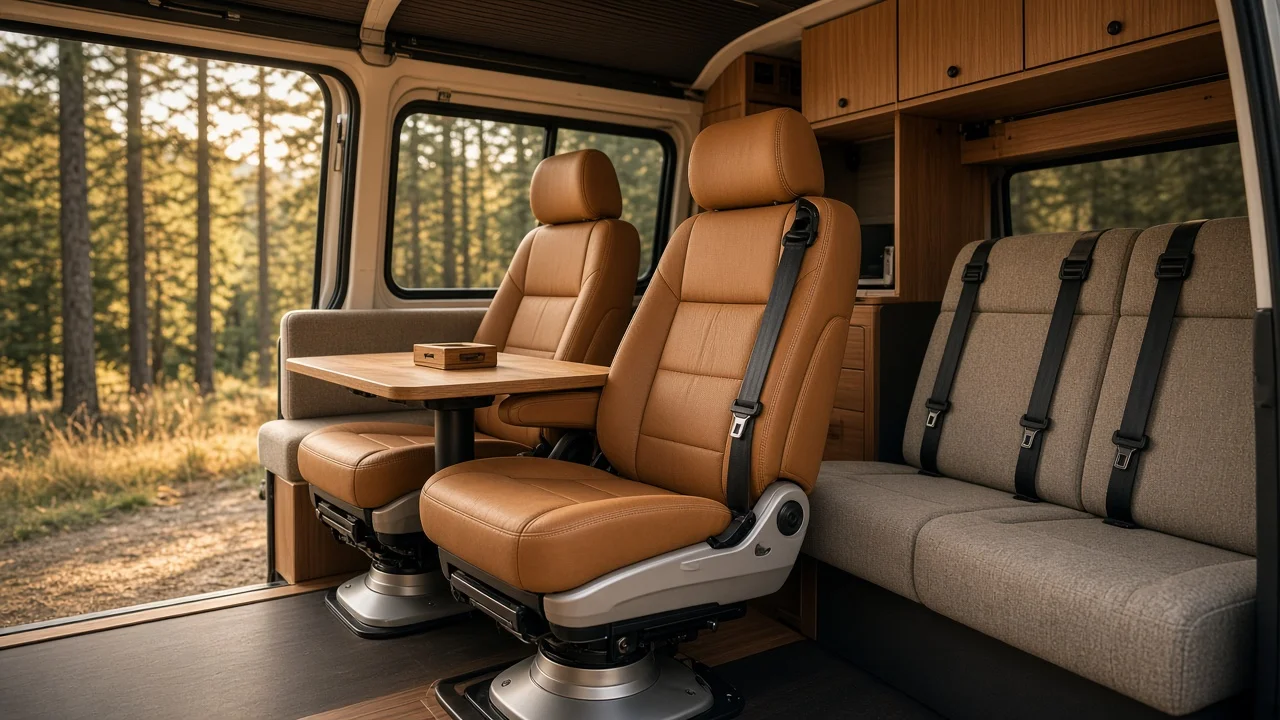
Choosing the right seats for a camper van conversion shapes how the finished vehicle works every day. The seat choice affects driving comfort, passenger capacity, cargo access, and how easily the rear living space can be used. A factory bench may not suit a layout with storage cabinets, a bed platform, or a galley. At the same time, seats must remain safe and properly anchored. This decision involves more than appearance: body configuration, seating layout, wheelbase, cargo access, powertrain options, and market specification all influence which seating designs fit a particular van and how the conversion can be arranged.
Essential answer
Camper van conversion seats are seating components selected or modified for a van that is being turned into a living space. They can include original factory chairs, aftermarket captain seats, bench seats that fold into part of a bed, or removable bases that free floor area at camp. The essential answer depends on the van’s body configuration and seating layout, because a short-wheelbase cargo model offers different room than a long passenger version. In most conversions, the front seats remain for driving, while rear seating is reduced, relocated, or replaced to balance occupant safety with usable interior room.
Seat choice directly affects cargo access and daily use. A fixed second-row bench may block side or rear doors, while a swivel base on a front captain seat can turn the cab into part of the living area. Vans sold for different market specifications may have different floor anchor points, seat belts, and trim panels, so a seat assembly that fits one model may not transfer to another without checking the mounting pattern. Powertrain options matter less for seating itself, but they can affect underfloor clearances that limit where seat rails or swivel plates may be installed.