Camper Van Conversion Flooring
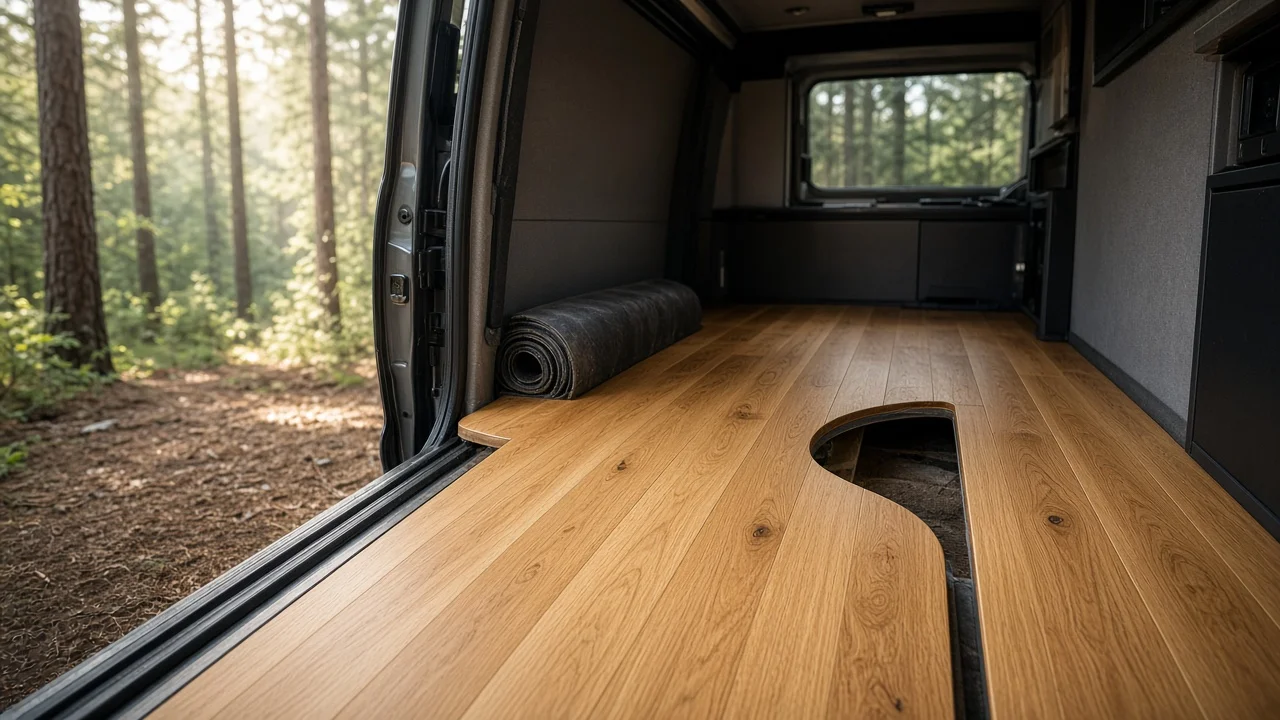
Choosing flooring for a camper van conversion shapes comfort, durability, and how the finished interior feels. The floor is more than a surface; it works with the vehicle's body configuration, cargo access, and wheelbase while managing temperature, moisture, and road vibration. Because a van flexes and lives outdoors, materials that perform well in a house can fail when the vehicle twists, expands, or carries wet gear. This guide explains how to approach the floor as a structural and practical layer rather than a simple cosmetic finish.
Essential answer
Camper van conversion flooring is a layered system installed over the metal cargo floor to create a stable, insulated, and comfortable surface for living inside the vehicle. It differs from residential flooring because the base moves, flexes, and transfers vibration through the body structure. The system typically includes a moisture barrier, an insulation layer appropriate for the climate, a subfloor that spreads point loads, and a wear surface chosen for traction and cleanability. The best design addresses the specific van's seating layout and how occupants enter through side or rear cargo access.
Material selection should follow the van's wheelbase and intended use rather than only appearance. A shorter van with frequent loading may favor thin, tough flooring that preserves headroom and payload, while a longer build can support thicker insulation without compromising comfort. Powertrain options do not directly dictate the floor, but underbody heat and exhaust routing can influence adhesive or foam choices in some sections. Market specification matters because vehicles sold in different regions may have different cargo floor contours, tie-down points, or factory mat provisions that affect how a new floor is anchored.