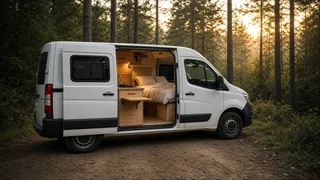
Camper Van Conversion Electrics

Camper van conversion electrics blend a practical home system with the constraints of a moving vehicle. Whether you are planning a basic 12-volt build or exploring an electric van camper conversion, the core challenge is balancing loads, storage, and wiring safely. A complete kit can simplify parts selection, while a clear wiring diagram helps turn individual components into a dependable off-grid setup.
Essential answer
Camper van conversion electrics describe the low-voltage and, on EV-based builds, high-voltage systems that support lighting, refrigeration, charging, and climate control away from shore power. The subject spans a conventional 12-volt leisure battery setup with solar charging as well as an electrified platform's integration concerns. Understanding which type of conversion is involved matters, because a combustion van's auxiliary circuit is engineered differently from a factory EV's traction battery and thermal management network.
A practical first step is distinguishing the house side from the vehicle side. The house side typically includes a deep-cycle battery, fuse block, inverter, charger, and camper van conversion wiring sized for expected current draw. The vehicle side uses the alternator or an EV's DC-DC converter to provide charging compatibility while preserving the starting battery. Isolation between these circuits prevents one depleted bank from stranding you, and a conversion wiring diagram clarifies how the two electrical worlds safely meet.