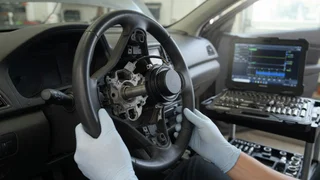
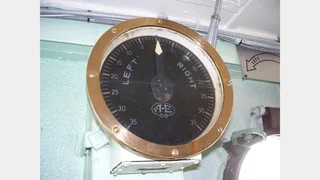
C1290 abnormal zero point of steering angle sensor
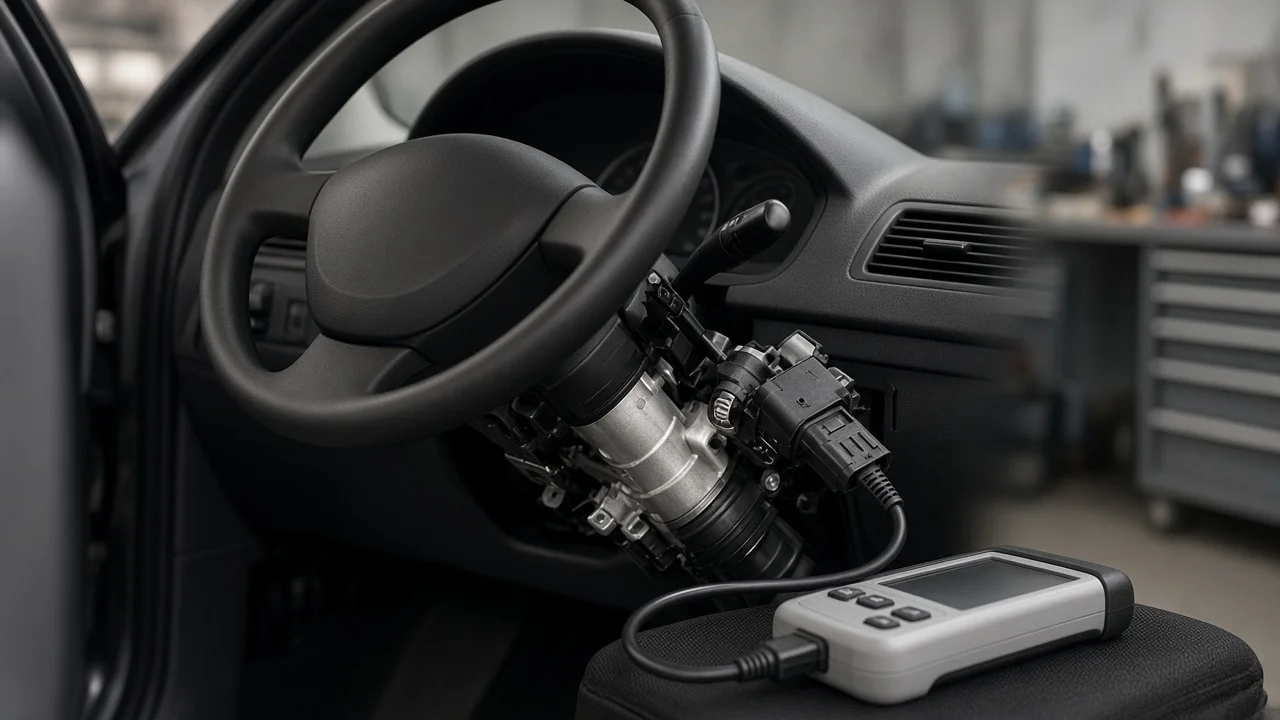
A C1290 trouble code indicating an abnormal zero point for the steering angle sensor can feel unsettling because this signal anchors several stability and driver-assist calculations. The stored diagnostic points away from a simple mechanical failure and toward a calibration or reference mismatch between the sensor and the vehicle’s suspension geometry. Before replacing parts, it helps to interpret the code as evidence about signal plausibility rather than proof that the sensor itself has failed. Understanding what the module expects from the zero point, how wheel alignment and mounting points affect that reference, and when a relearn procedure may be needed narrows the likely causes and avoids unnecessary component swaps.
Essential answer
The code C1290 describes a condition where the steering angle sensor’s learned or stored zero position falls outside the range the control module accepts as normal. The zero point is the signal value representing straight-ahead travel; it is adapted so the stability system can compare driver steering intent with the vehicle’s actual yaw and wheel-speed behavior. If that reference shifts too far, the module cannot reliably judge whether steering input matches the direction of travel. The issue is therefore a plausibility fault, not a direct statement that the sensor is electrically dead or that a specific component must be replaced.
Several inputs shape this zero point, including how the steering wheel is centered during alignment and whether the sensor is mounted securely to the column. Changes in ride height, worn joint play in tie rods or control arms, and even a recent alignment can move the relationship between the steering wheel, the rack, and the road wheels. Because the diagnostic threshold and relearn routine can differ by manufacturer and platform, the code must be confirmed against the specific vehicle application. A scan tool may show implausible degree readings at straight ahead, but that reading should be treated as diagnostic information to interpret alongside suspension measurements rather than as an automatic sensor failure.