C0800 Code: Meaning, Symptoms, and Diagnostic Next Steps
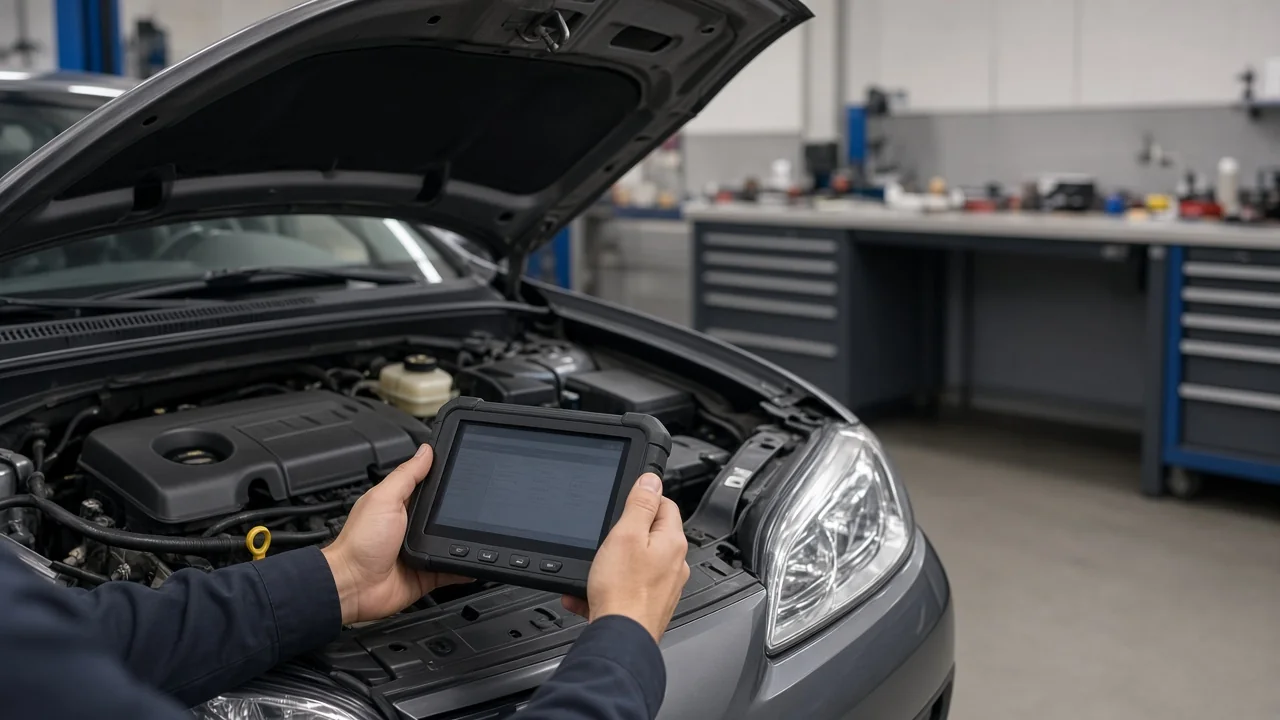
A C0800 code is a chassis diagnostic trouble code that needs vehicle-specific confirmation before you assign meaning. Scan data may also show neighboring entries such as C0807 and C0875, and those require their own definitions from manufacturer service information. Start with the reporting control module, stored fault status, and the complete tool description. That context decides whether you are looking at a module supply voltage concern, a ground circuit issue, or something else.
Verify What C0800 Means on Your Vehicle
C0800 does not have one universal definition across every year, make, and model. Before you interpret the C0800 code, match it to manufacturer service information for that vehicle and the reporting control module that logged it. The scan tool’s full text, including any suffix, failure type, or symptom byte, can change the meaning from a supply concern to a different circuit condition. Two vehicles can share the same identifier and still describe unrelated problems, so the printed description is part of the diagnosis.
When the verified definition points to a module supply voltage concern, the reporting control module is saying it saw voltage outside the range it expected while it was powered. That observation is evidence of a condition at the module’s power input, not proof that a battery, fuse, relay, wiring run, connector, or the module itself has failed. Stored fault status can capture a brief dip that has already recovered. Until circuits are tested, C0800 remains a flag that supply or monitoring did not look right, not a parts list.
Symptoms to Record and When to Stop Driving
A C0800 code may appear with a warning lamp, a driver information message, intermittent electrical behavior, or a function the affected module no longer provides. Those possibilities depend on which reporting control module logged the fault and how that module shares power with other systems. One vehicle may show only a stored chassis entry with no drive complaint, while another may lose a comfort or chassis feature when supply voltage sags. Treat the scan report as a map of which controller complained, not a prediction of road feel.
Write down when the warning first appeared, how the vehicle started, whether recent battery work or jump-starting occurred, and whether the fault returns after a rest or restart. Those notes help a technician compare stored fault status with a real voltage disturbance. A diagnostic trouble code by itself cannot establish whether the vehicle is safe to drive. If braking or steering feel changes, the engine stalls, or you notice smoke or a burning smell, stop in a safe place and arrange assistance rather than continuing to diagnose from the driver’s seat.
Possible Power and Ground Causes Behind a Verified C0800
When manufacturer service information confirms a supply-voltage definition for C0800, weak battery condition, a charging system that cannot hold voltage, or an interrupted feed to the module can all produce the same logged event. A deep discharge, a failing alternator regulator, or a power feed that opens under load can drop module supply voltage below the threshold the controller monitors. The code does not rank those possibilities. Charging system output, rest voltage, and the path that actually feeds the reporting control module still have to be measured against the vehicle’s published procedure.
Loose terminals, corrosion at a connector or ground eyelet, damaged wiring, and a poor ground circuit are equally plausible once a supply-voltage C0800 is verified, but each needs physical and electrical evidence. A stored event may only record an earlier disturbance that happened during cranking, after a jump start, or while a connection flexed. Replacing the reporting control module without testing its external power and ground circuits first can miss the real path problem and allow the same diagnostic trouble code to return as soon as voltage drops again.
How to Interpret C0807 in the Same Scan Report
C0807 deserves its own lookup even when it appears on the same scan as a C0800 code. Confirm the definition with manufacturer service information for that year, make, model, and reporting control module, including any failure type or symptom byte the tool captured. Numerical closeness does not mean the two identifiers share a circuit, a cause, or a repair. Chassis numbering often groups power-related messages, but the next sequential code can still describe a different controller, a different monitor, or an unrelated chassis function.
If the verified service information for C0807 does connect it to module supply voltage or a ground circuit, test the circuit named in that procedure rather than assuming it is the same path that set C0800. Shared battery condition or a charging system disturbance can set more than one chassis diagnostic trouble code at once, yet each module still monitors its own feed. Treating the pair as one repair without that evidence can send you after the wrong harness, the wrong ground, or a controller that never lost power.
What to Establish Before Diagnosing C0875
C0875 must be verified the same way as C0800: use manufacturer service information for the exact vehicle and the reporting control module before you assign it a meaning. Neighboring chassis identifiers are not interchangeable, and C0875 can describe a reference voltage, a sensor supply, a ground, or another monitored condition depending on the platform. The scan-tool description and any extra bytes belong in that lookup. Until that definition is confirmed, C0875 is only another stored identifier on the report, not a second name for the C0800 code.
Record the stored fault status for C0875, any associated symptoms, and freeze-frame or event data that show when it was logged. Those details establish whether the controller saw a momentary dip, a continuous out-of-range reading, or a condition that still exists. Linking C0875 to C0800 or C0807 requires evidence from the verified definitions and from circuit tests, not from the codes sitting next to each other on a printout. C0875 may need its own diagnostic procedure even when all three appear after the same battery or charging system event.
Safe Checks, Professional Testing, and Repair Confirmation
Save the complete scan report, including C0800, C0807, C0875, pending or stored fault status, and any event data, before anyone clears codes. An engine-off visual look at readily visible corrosion, a loose battery cable, or obvious harness damage can be useful, but do not unplug, probe, or disturb electrical components as a first step. Moving a connector can change the evidence and create new problems. Leave circuit tracing, fuse identification, and any disconnection to a procedure written for that vehicle and to someone equipped to follow it.
Professional diagnosis uses battery condition checks, charging system evaluation, module supply voltage measurement, and ground circuit voltage drop testing only as the verified definitions and vehicle procedures specify. Those tests separate a weak battery, a charging fault, a high-resistance ground, and a module that is simply reporting what it saw. Repairs should follow confirmed findings, not the presence of a diagnostic trouble code. After work, rescan and, when it is safe, recreate the original conditions that set the fault. Clearing C0800, C0807, or C0875 without that confirmation does not prove the concern is gone.