C0296 Through C0299 Codes: Meaning, Diagnosis, and Repair
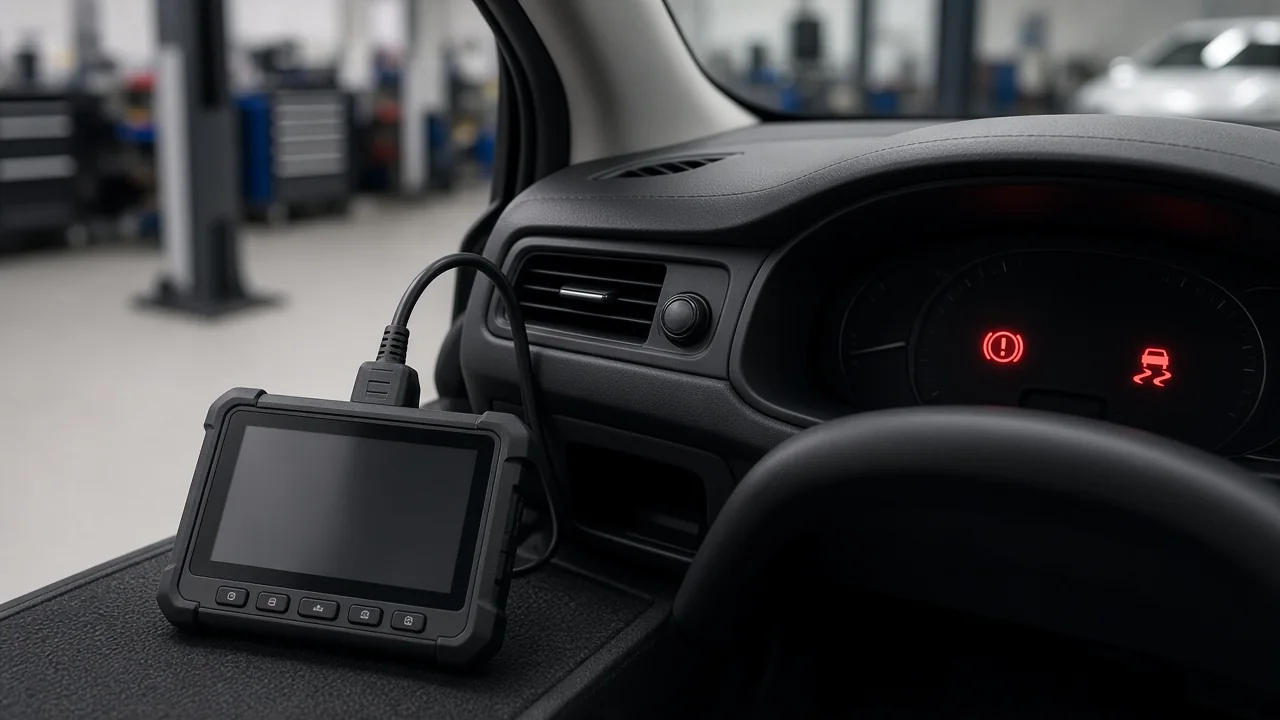
When a scan tool reports C0296 through C0299, the meaning is not fixed across vehicles. These manufacturer-specific chassis codes require the year, make, model, and reporting module to interpret correctly. A stored code may correspond to a monitored circuit, sensor, or control function, but it does not prove a failed part by itself. Drivers commonly notice an ABS, brake, or stability warning alongside these codes, while other vehicles show no symptom at all. Confirm each definition before planning diagnosis or repair.
C0299: Confirm the Meaning for Your Vehicle
C0299 is not a universal fault description. On some vehicles it may relate to a brake control module signal, while on others the same number could point to a different chassis circuit entirely. The reporting module matters: a code generated by the electronic brake control module is not necessarily the same as one from the body control module. Without the year, make, model, and complete code text, assigning a cause is speculative and can lead to incorrect repairs.
Vehicle-specific service information establishes the monitored function and the exact conditions that set C0299. For example, the definition might describe an implausible sensor voltage, an open circuit, or a communication timeout. Until that definition is confirmed, possible causes should remain open. A basic code reader often shows only the alphanumeric value without the module details or diagnostic coverage needed for interpretation, so the first step is to obtain the full fault description from a suitable scan tool.
C0298: Read the Full Fault Description and Status
C0298 also requires vehicle-specific verification. The same numeric code can have different meanings depending on the manufacturer and the reporting module. Before describing causes or symptoms, read the complete fault description supplied by the module. This often includes a suffix or failure-type detail that narrows the fault to a specific circuit condition, such as a short to ground or an open circuit, rather than a generic component failure.
The code status is equally important. A current code indicates the fault condition was present during the last diagnostic cycle, while a history code means it occurred previously but is not active now. Accompanying codes and available event data can help establish the circumstances, such as whether the fault appeared during startup or while driving. However, this information correlates with the fault; it does not prove root cause until the definition is confirmed.
C0296 and C0297: Establish Each Code’s Definition
C0296 and C0297 cannot be assumed to be related simply because they appear together and have consecutive numbers. Each code must be verified independently using the applicable service information. One might relate to a wheel speed sensor circuit, while the other could involve a brake fluid pressure sensor, a steering angle sensor, or a communication error. The reporting module and fault-setting conditions for each will determine what systems are actually involved.
Once each definition is known, plausible cause categories can be considered only where the diagnostic information supports them. For example, a code defined as a sensor circuit high voltage may suggest a wiring or sensor issue, while a code defined as a communication timeout points toward network or module concerns. Consecutive code numbers do not establish a shared component, a failure sequence, or a repair. They are identifiers, not a diagnostic pathway.
Symptoms to Record and Warning Signs That Require Stopping
Record symptoms without assuming every code causes the same behavior. A driver may see an ABS warning light, a brake warning light, a stability control message, or no warning at all. Changes in brake pedal feel, reduced braking, or abnormal activation of the stability system are useful observations, but they do not identify which code, if any, is responsible. Note whether the warning appeared at startup or during ordinary driving, but do not deliberately recreate a braking or handling fault because that can be unsafe.
A stored code can exist without noticeable symptoms, and normal pedal feel does not establish full system operation. Some faults affect only self-test functions, while others degrade control assistance only under specific conditions. If the vehicle exhibits reduced braking, an abnormal brake pedal, visible fluid leakage, or a stop-driving warning, stop safely and arrange professional assistance. Always follow the owner’s guidance for warning lamps and never continue driving when safety is in question.
How Professional Diagnosis Narrows the Cause
Before clearing codes or disconnecting power, preserve the full scan report, code status, and any event data. This information helps a professional understand the conditions under which the fault was set. Diagnosis often requires a scan tool that can communicate directly with the module reporting these chassis codes, not just a basic reader that displays the number. The module may provide live data, freeze frame information, or bi-directional controls that aid in pinpointing the fault.
Professional checks should be based on the verified fault definition. These may include testing power supply, grounds, wiring continuity, communication lines, and relevant sensor inputs or outputs. A code alone cannot establish whether the cause is a component, a circuit problem, an operating condition, or a fault in another module. Do not attempt to bypass safety systems, probe restraint circuits, open hydraulic circuits, or conduct hazardous road tests. Leave those procedures to qualified personnel.
Repair Decisions and Confirmation That the Fault Is Resolved
Repairs should be linked to a demonstrated cause and the applicable vehicle procedure, not to a code number. Replacing a sensor or module on the basis of a code alone often fails to correct the root cause. Wiring repair, component replacement, programming, or calibration may be appropriate only when the diagnosis and vehicle requirements support them. Each repair type has specific prerequisites, such as sensor learning routines or module initialization, that must be followed exactly.
Verification means more than clearing the code or watching the warning light go out. The repair should be confirmed through required initialization, a repeat module scan showing the code remains absent after the appropriate drive cycle, and checks performed under safe, manufacturer-specified conditions. A cleared code or an extinguished warning light does not prove the underlying problem is resolved; the fault may return only after specific operating conditions are met.