C0251 Through C0256 Codes: Meaning, Causes, and Fixes
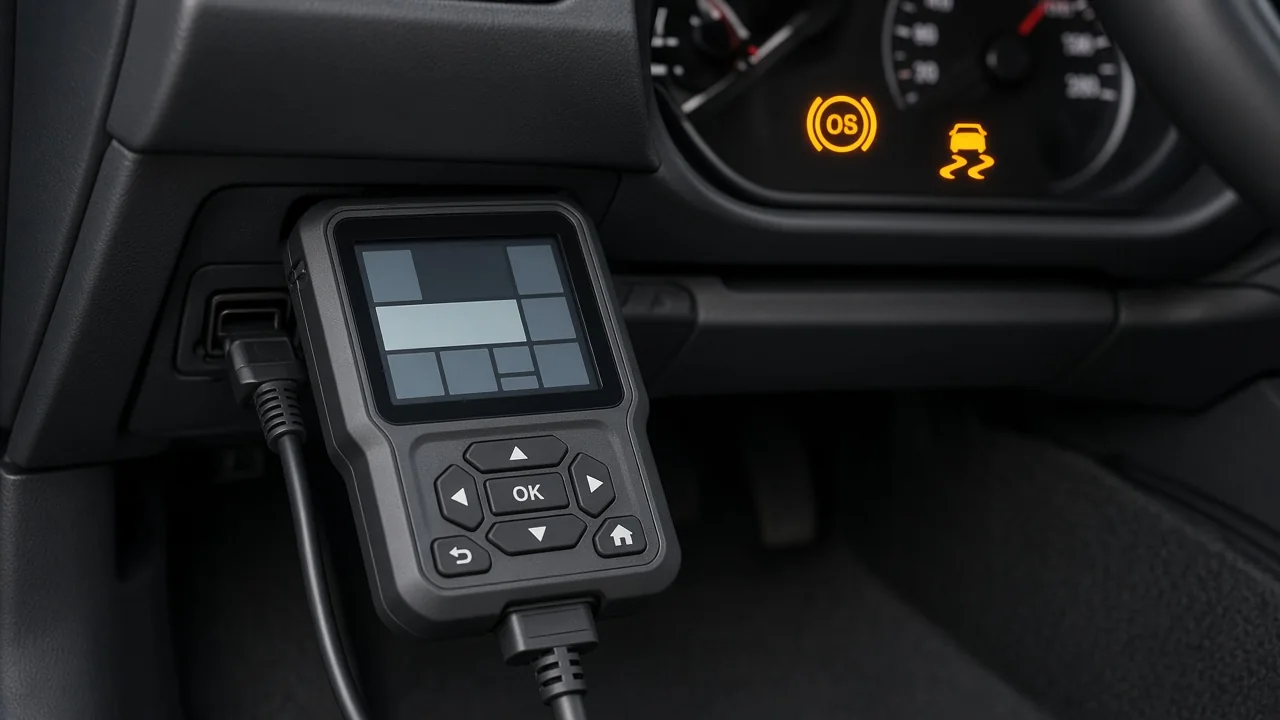
When your dashboard lights up with an ABS, traction, or stability warning and a scan pulls codes like C0251, C0252, C0253, C0254, or C0256, you're facing a chassis-level fault that can affect braking and stability systems. These manufacturer-specific codes don't have one universal meaning, so jumping to conclusions can lead to wasted parts and unresolved problems. Instead, understanding how to interpret them for your vehicle, what symptoms to watch for, and how professionals diagnose them gives you a practical roadmap from warning light to verified repair.
What C0251 Codes Are and Why Their Meaning Depends on Your Vehicle
Codes beginning with the letter C are chassis diagnostic trouble codes, meaning they relate to systems outside the engine and transmission—most commonly brakes, steering, suspension, and stability control. The specific definition of C0251 is not standardized across all manufacturers. A code that means one thing on one model may refer to a completely different circuit or sensor on another, so the number alone cannot tell you which component is involved.
To get the exact definition for your vehicle, use a scan tool with manufacturer-level chassis coverage, consult factory service information for your specific make and model, or have a dealer look it up by VIN. Never rely on a single online description, as generic lists often misapply codes. Before clearing anything, record the freeze frame data, note whether the code is current, history, or pending, and write down any companion codes—these details are essential for accurate diagnosis later.
C0252 Code: Interpreting It Within Your Vehicle's Chassis Systems
C0252's meaning depends entirely on your vehicle's manufacturer documentation. Once you confirm what system or circuit it references—such as a stability control sensor, brake pressure circuit, or suspension module—you can predict which warning lights might appear and how driving behavior may change. For example, a stability-related code might trigger the traction control light and traction control light, while a brake circuit fault could illuminate the ABS warning light and alter pedal feel.
Companion codes stored with C0252 can suggest a shared cause. For instance, multiple wheel speed sensor codes alongside C0252 might point to a common wiring or power supply issue rather than separate part failures. However, that inference stops at the data you have. Do not replace any component based only on the code number; a confirmed definition and targeted electrical or functional tests are needed to prove a diagnosis before spending money on parts.
C0253 Code: Confirming the Definition Before Drawing Conclusions
Like its neighbors, C0253 has no single universal meaning and must be checked against service information for the exact make, model, and year. Code status helps distinguish a hard fault from an intermittent one. A current code present right now is more likely to be consistently reproduced, while a history code that does not return after clearing may reflect a one-time glitch, such as a momentary voltage drop or communication hiccup.
If C0253 appears after battery work, a low-voltage event, or recent repairs, consider that the cause may be related to disturbed connections, discharged modules, or a transient power loss rather than a failed component. However, if C0253 is stored alongside active warning lights for the ABS, stability control, or brake system, continued driving may be unsafe. In such cases, stop and have the vehicle evaluated by a professional rather than guessing or resetting the light repeatedly.
C0254 and C0256: Understanding the Less Common Codes in the Group
C0254 and C0256 are less frequently discussed but still appear in this code family. Their meanings also vary by manufacturer, and they are sometimes stored alongside C0251 through C0253. Do not assume that nearby numbers describe the same component or circuit; each code must be looked up separately using factory service information for your vehicle. A C0254 could relate to a pressure sensor while C0256 references a motor circuit, depending on the platform.
Reviewing the full group of stored codes together can point toward a shared circuit, module, or power supply issue without proving it. For example, if multiple codes involve the same control module, a communication or ground problem becomes more plausible. The gap in numbering—no C0255 in this cluster—should not be treated as meaningful; code ranges are not necessarily sequential in function, and only manufacturer service data can verify relationships.
Shared Symptoms and Safe Observations When These Codes Appear
Driver-visible signs accompanying these codes often include an illuminated ABS warning light, traction control light, stability control fault indicator, or suspension warning message. These lights may appear together or separately and can be accompanied by changes in brake pedal feel, reduced stability intervention, or a harder or softer ride in vehicles with adjustable suspension. However, observe without tying a specific symptom to a specific code—your vehicle's service information is the only reliable guide.
Safe observations you can make include noting exactly when the light appears: at startup, after hitting a bump, during wet weather, or only when turning at speed. Also record the road conditions, vehicle speed, any recent repairs, and battery condition. Remember that normal-feeling brakes do not guarantee that stability or traction assist functions are working while a fault is stored. Any change in braking, steering, or ride control means the vehicle should be inspected promptly by a qualified technician.
Common Contributing Factors Across the C0251–C0256 Group
Several general categories can trigger chassis codes like C0251 through C0256. Low system voltage, poor grounds, damaged wiring harnesses, corroded connectors, faulty sensors, and module communication problems are all common contributors. A weak battery or loose battery terminal can cause multiple seemingly unrelated chassis codes simultaneously, while a damaged wheel speed sensor harness may set a code only when the suspension moves and flexes the wiring.
Corrosion, water intrusion, or recent collision or suspension work can also affect chassis circuits. These should be treated as possibilities to test for, not automatic conclusions. On some vehicles, software or calibration issues may be involved; only manufacturer service information can confirm whether a reflash or calibration is needed. Do not assume fault frequencies, part compatibility, or recall status without verified data from the manufacturer or a professional scan tool.
Professional Diagnosis, Repair Paths and Verifying the Fix
A professional technician typically starts by confirming the exact code definition for your VIN, then checks system voltage and grounds, runs module self-tests, and performs circuit and component tests with a scan tool that covers chassis systems. Brake, stability, and suspension systems may require specialized scan functions, electronic bleeding procedures, or sensor calibrations that are not safely performed as DIY repairs. These steps ensure the fix is complete and does not compromise safety.
At the owner level, you can safely check battery condition and visible connector damage, but do not take apart brake or suspension parts. After any repair, clear codes only after the fix is complete, then verify with a test drive or self-test that the code does not return. Keep records of all codes, freeze frame data, repairs, and results to help diagnose any future intermittent fault, especially if the same code reappears later under different conditions.