C0242 Code: Meaning, Warning Lights, Diagnosis and Repairs
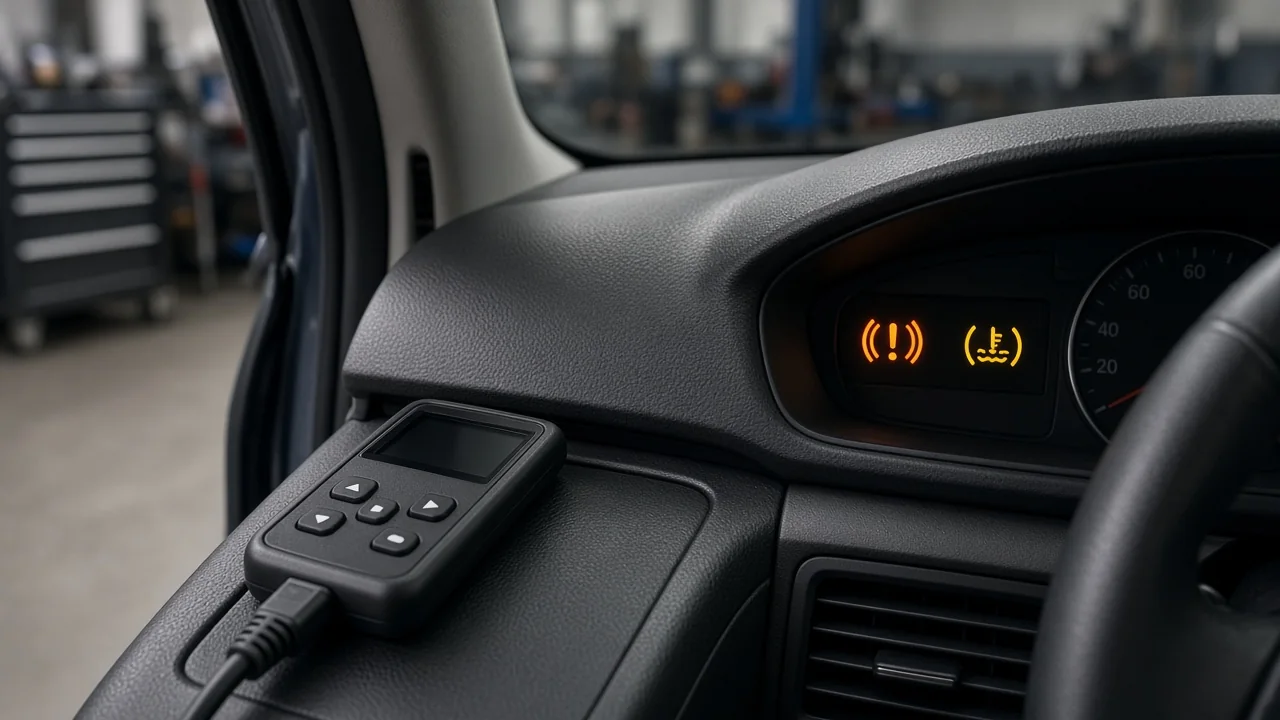
The C0242 code is a chassis diagnostic trouble code that a scan tool may report from a brake or stability system. Its meaning is not universal. Year, make, model, powertrain, and the reporting module decide how the C0242 code should be read, and the same numeric label can point to different tests on different vehicles. Treat it as stored evidence to interpret, not as proof that a particular part has failed.
Verify What C0242 Means for Your Vehicle
Before interpreting C0242, confirm the definition against the vehicle's year, make, model, powertrain, reporting module, and manufacturer service information. C0242 is a chassis diagnostic trouble code, yet its wording and the diagnostic procedure that follows can change by manufacturer and application. Record the complete code, any suffix or symptom byte, and the scanner's exact description. A generic scanner description may omit the module context needed to choose the right tests, so keep the printed wording with the rest of the diagnostic scan report.
The C0242 code by itself cannot identify a failed part or establish the required repair. Manufacturer-dependent chassis codes need vehicle-specific confirmation because similar labels may describe a sensor circuit, a torque request, or a communication issue depending on the electronic brake control module that stored the entry. Use service information to map the recorded definition to the correct flowchart rather than assuming a parts replacement. Until that mapping is complete, C0242 remains a starting point for diagnosis, not a verdict.
Warning Lights and Symptoms to Record
An ABS warning light, traction control warning, stability control lamp, or brake message may appear with C0242 only when the verified vehicle-specific definition ties the code to those functions. Note whether warnings show at startup or while driving, whether they come and go, and whether an engine warning is present at the same time. Those observations help a technician compare the dashboard picture with companion fault codes, but they do not prove which circuit is at fault.
A driver may notice no obvious change even when a monitored function such as traction control is unavailable. Dashboard observations do not establish system health, and a lamp that is off does not confirm that the electronic brake control module is operating as designed. If braking feels abnormal, the pedal is soft, brake fluid is visibly leaking, or a red brake warning requires stopping under the owner's manual, stop safely and arrange professional assistance rather than continuing to drive.
Potential Causes Must Follow the Confirmed Definition
Possible causes for the C0242 code should follow the manufacturer's diagnostic criteria rather than a universal parts list. When the verified definition concerns an engine-control or torque-control fault reported to the brake controller, C0242 may reflect a problem that originated elsewhere and was passed through module communication. In that case, chasing only chassis hardware can miss the source. Companion fault codes in the engine or transmission controllers often show which request or signal the electronic brake control module rejected.
Power supply, wiring, connections, or module communication belong in the investigation only when the applicable procedure or companion codes support those paths. Neither a wheel-speed sensor nor a control module should be condemned solely because C0242 or an ABS warning light is present. Those parts fail in some applications, but the same warning pattern can come from a stored communication timeout, a low-voltage event, or a torque-management request the engine controller never completed. Condemnation requires tests that match the confirmed definition.
Safe Checks and Information to Preserve
Save the diagnostic scan report, code status, available freeze-frame data or failure records, and dashboard messages before anyone clears codes. Freeze-frame data can show speed, voltage, and operating conditions at the moment the C0242 code set, which is often more useful than a later snapshot after the warning has changed. Note recent battery problems, jump-starts, repairs, or a change in warning behavior as context, without treating the timing as proof of causation. Clearing first can erase the only record of how the fault appeared.
Limit owner observations to dashboard messages and readily visible concerns while parked safely. Do not lift the vehicle, probe circuits, or open brake components; those steps belong to a technician following service information. A basic engine-code reader may not access the module storing C0242, so incomplete scan coverage can hide relevant companion fault codes in the electronic brake control module or related controllers. If the tool only lists powertrain codes, request a chassis-capable scan before concluding that C0242 is the only stored entry.
How Professional Testing Determines the Repair
Professional diagnosis starts with a full-system scan using equipment that can identify the reporting module, list companion fault codes, and show whether C0242 is current or stored. Current status usually means the enabling conditions are still present, while a stored history entry may describe an intermittent event. The technician then follows the vehicle-specific diagnostic sequence, including any prerequisite engine or communication faults identified by service information. Skipping those prerequisites can send testing into the wrong circuit even when the C0242 code remains displayed.
Circuit, power-supply, communication, or functional testing is selected from the verified fault definition and the scan results rather than applied as a standard package. High-level checks may confirm that the electronic brake control module is powered, that it can exchange messages with related controllers, or that a requested function actually operates. Repair confirmation includes watching for returning faults and verifying affected functions under the manufacturer's prescribed conditions. Clearing an ABS warning light or traction control warning without that verification does not prove the C0242 code is resolved.
Repair Options and What Shapes the Estimate
Possible repairs follow confirmed findings, such as resolving a companion fault or repairing a verified connection problem. There is no standard C0242 fix, because the same chassis diagnostic trouble code can point to a torque-control request, a communication dropout, or a local brake-controller issue depending on the application. Diagnostic labor varies with how easily the code can be accessed, whether the fault can be reproduced, the vehicle's module configuration, and the testing needed to isolate the cause. Those factors often outweigh the cost of any single part.
An estimate typically covers diagnostic time, authorized repair labor, confirmed parts, any required programming or calibration, and post-repair verification of the affected chassis functions. Request the confirmed code definition, supporting test results, and an itemized estimate before authorizing parts replacement. Without those documents, a quoted module or sensor swap is still a guess. Exact prices and a typical total cannot be stated here because they depend on the vehicle, the verified cause, and local labor rates. Authorization should wait until the C0242 code has been interpreted against the correct service information.