C0110 and Related ABS Codes: Meanings, Symptoms and Diagnosis
A C0110 code is a chassis trouble code that often points to the antilock braking system, but its exact meaning depends on the vehicle. Related entries such as C0111, C0114, C0115, and C0116 can describe pump motor circuit conditions, other ABS functions, or entirely different faults. Treat each code as evidence to interpret with a vehicle-specific definition, then use warning lights, visible conditions, and professional ABS scan data to decide next steps.
Verify the Vehicle-Specific Meaning of C0110
Chassis codes such as C0110 are manufacturer-dependent. Before any interpretation, match the definition to the year, make, model, and the module that reported it. Record the complete C0110 code, any suffix, and the scan tool's exact description rather than relying on a generic list. Two vehicles can use the same number for different circuits, so a borrowed meaning can send diagnosis toward the wrong pump motor circuit or an unrelated brake control module path.
When the verified description identifies an ABS pump motor circuit fault, that circuit supplies and controls the hydraulic pump that builds pressure for antilock braking. The C0110 code indicates the control module detected an electrical or functional problem in that path. It is not proof the ABS pump motor itself has failed. Wiring, connectors, module power and ground, circuit protection, and control electronics can all produce the same stored result, so the pump remains a possible location rather than a confirmed failed part.
Confirm What C0111, C0114, C0115 and C0116 Identify
A C0111 code, C0114, C0115, and C0116 each need their own vehicle-specific definition before meaning is assigned. Consecutive chassis numbers do not automatically identify the same component, the same fault condition, or the same diagnostic sequence. On one platform a C0111 code may describe pump motor circuit voltage or command, while C0114, C0115, or C0116 may address a different ABS channel, a relay, or a circuit the scan tool labels in unrelated terms. Confirm each description independently.
Where the verified scan-tool text connects C0114, C0115, or C0116 to the ABS pump motor circuit, treat that documented condition as the starting point: open, short, current, voltage, or control disagreement, depending on what the manufacturer actually states. If the tool description does not name the pump motor circuit, the meaning of that code remains unconfirmed for this vehicle. Do not fold an undefined C0111 code into a pump diagnosis simply because C0110 already points that way.
Recognize Warning Lights and Decide When to Stop Driving
An ABS warning light commonly accompanies a stored C0110 or related chassis trouble code and can indicate that antilock braking is limited or unavailable. Other lamps, messages, or stability features may also change, but those extra effects depend on how the vehicle is designed, so they cannot be assumed from the code number alone. Conventional hydraulic braking may still operate, yet the antilock braking system will not necessarily intervene during a lockup event if the module has disabled pump or valve control.
Normal pedal feel does not confirm that ABS is functioning, and it does not establish that continued driving is safe. Stop as soon as it is safe and arrange professional assistance if a red brake warning appears, the pedal feels abnormal, fluid is leaking, or stopping ability is reduced. Follow the owner's manual for warning-specific guidance, including any instruction to limit driving when both brake and ABS lamps are on. Treat a flashing or unexpected combination of warnings as a reason to stop rather than a cue to keep testing the system.
Understand the Faults a Confirmed Pump Circuit Code Can Indicate
Once a vehicle-specific definition confirms a pump motor circuit fault, the stored C0110 result can reflect problems in the supply path rather than in the motor windings. Lost battery feed, a poor ground, damaged wiring, a corroded connector, or an open fuse or fusible link can starve the ABS pump motor of current or distort the voltage the brake control module monitors. Intermittent electrical faults are common here: a connection that works at rest can open under vibration, heat, or moisture and set the same chassis trouble code.
The pump motor and the control electronics inside the hydraulic unit or brake control module are possible fault locations only when the verified circuit design actually places those parts in the monitored path. A code that watches motor current, driver output, or relay command can implicate those internals, but the C0110 code alone cannot identify the failed part. Replacing an ABS pump motor or the module without confirming power, ground, and circuit continuity is not justified by the stored number, even when several related codes are present.
Gather Useful Evidence Without Operating the ABS System
Preserve codes, freeze-frame or snapshot data if available, pending versus current status, and any other ABS scan data before clearing memory or disconnecting the battery. Clearing a C0110 code, a C0111 code, C0114, C0115, or C0116 erases timing clues and can hide an intermittent electrical fault that will not reset until the next drive cycle. Note whether the ABS warning light came on at start-up, after a stop, or during a hard brake, and record recent battery, charging, or brake work without assuming those events caused the fault.
Limit owner checks to dashboard observations and conditions visible without disassembly: lamp behavior, obvious wiring damage, fluid on the ground, or a loose battery terminal. Do not install pump jumpers, bypass relays, probe connectors, or try to trigger ABS on the road. Those actions can damage the pump motor circuit, create new faults, or reduce braking control. The goal is a complete record for a technician, not a roadside attempt to energize the antilock braking system or prove that the pump still runs.
What Professional Diagnosis and Repair Verification Should Establish
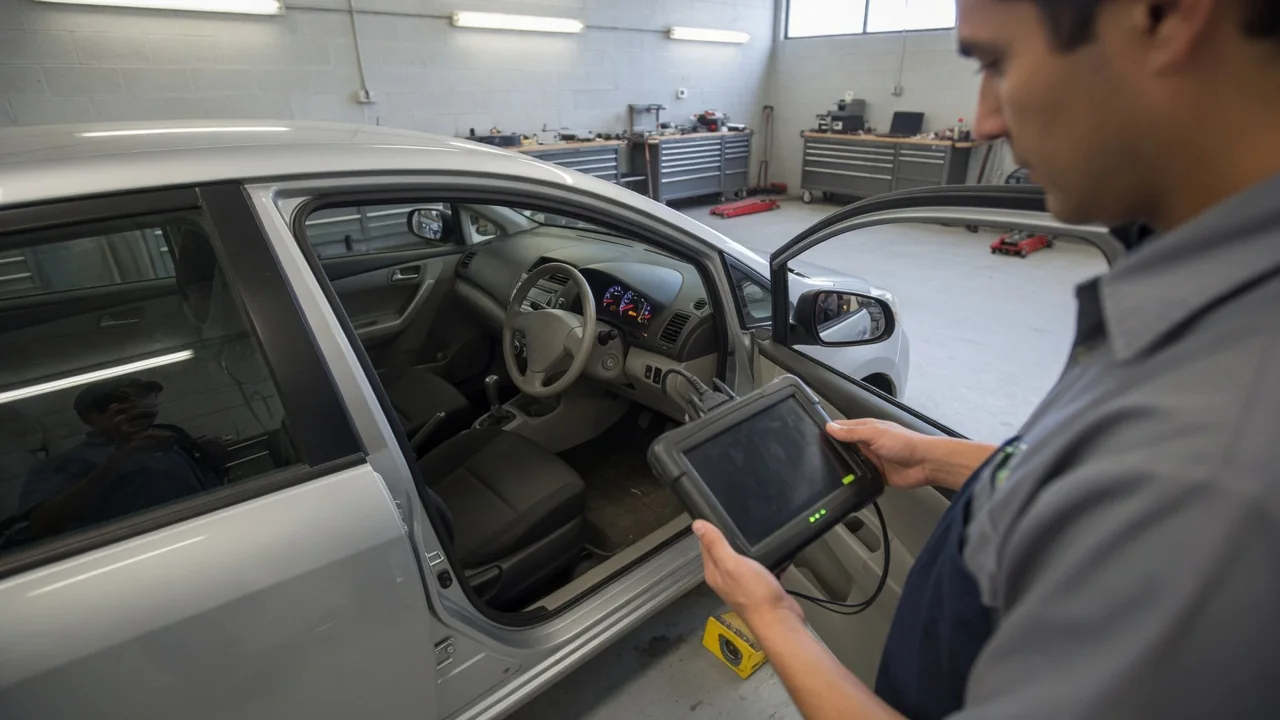
Professional diagnosis of C0110 and related pump motor circuit codes usually requires an ABS-capable scan tool, the correct wiring diagram for that vehicle, and the manufacturer's test procedure. Generic readers may display the chassis trouble code without bidirectional commands, motor status, or the voltage and current parameters the procedure uses. A technician evaluates module power and ground, circuit protection, control signals, and pump response at a high level, comparing commanded operation with what the circuit actually does, without improvised energizing of the hydraulic unit.
Repair verification must address the documented fault, not merely erase memory. After a confirmed repair, prescribed checks should show that the ABS warning light behaves as specified, that C0110, C0111, C0114, C0115, and C0116 do not return under the conditions the procedure requires, and that antilock function is restored through the manufacturer's operational tests. Clearing a code alone does not demonstrate a repair; an intermittent electrical fault can stay silent until the next heat cycle or vibration event if the root cause remains.