C0082 and C0083 Codes: Meaning and Safe Diagnosis
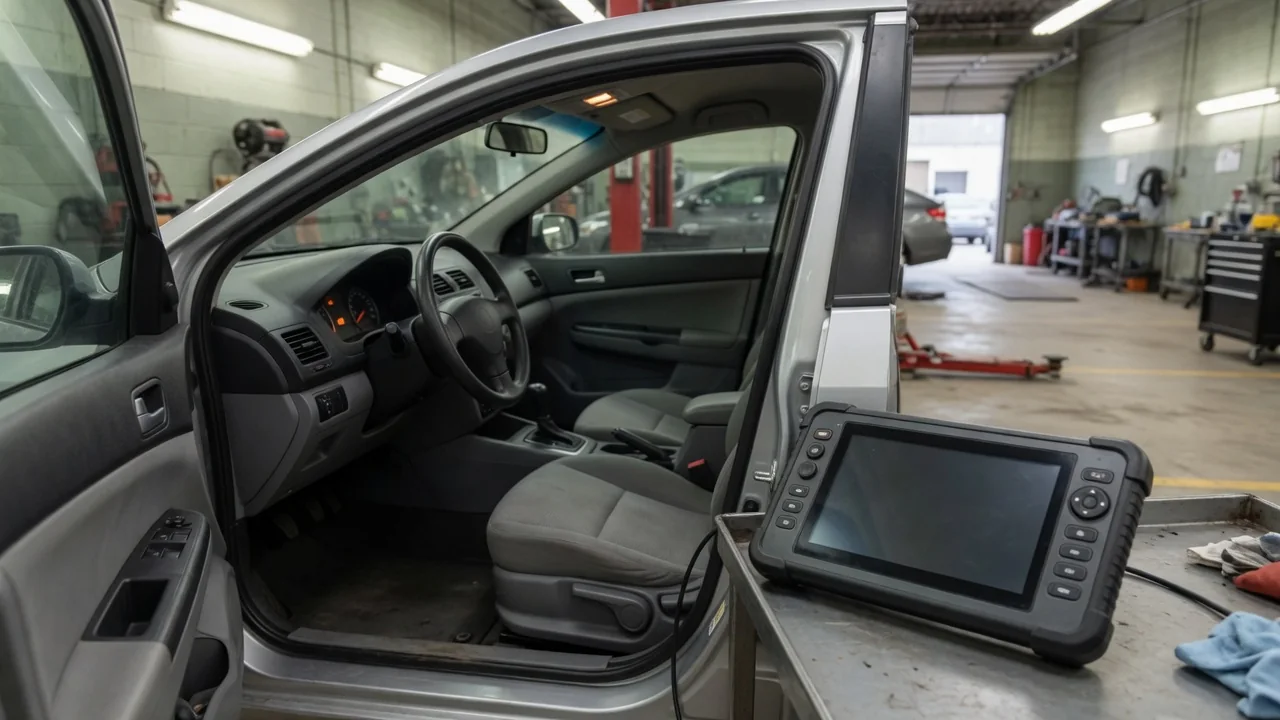
C0082 is a chassis diagnostic trouble code, and C0083 is a closely numbered sibling that must be read the same way: as stored fault data that still needs a vehicle-specific code definition. Year, make, model, and the reporting control module change what each code describes, so neither number should be treated as a universal parts list. This standalone guide covers meaning, warning signs, possible causes, and safe diagnosis without assuming a failed component.
What C0082 Means on Your Vehicle
On most scan tools, C0082 appears in the chassis family rather than engine or body groups, which already tells you it relates to stability, braking assistance, steering assist, or another chassis function. That family label is not a definition. Manufacturers reuse the same numeric identifier for different conditions, so the year, make, model, reporting control module, and the complete code text or suffix on the printout are required before you interpret C0082. Without those details, any generic description you find can describe the wrong system entirely.
Even after the applicable definition is confirmed, C0082 still only reports that a control module detected a condition that met its set criteria. It does not prove that a named sensor, actuator, harness, or module has failed and must be replaced. Freeze-frame or snapshot data, code status such as current versus history, and whether the fault is intermittent all belong in that interpretation. Treating the code as a parts order skips the diagnostic path the manufacturer wrote for that detected condition.
How to Interpret a C0083 Code
C0083 needs the same independent verification. Adjacent numbering does not transfer the C0082 definition, the same circuit, or the same repair. Pull the full scan result, including the reporting control module and any enhanced text an enhanced scan tool can display, then match that string to the service information for that exact vehicle. A suffix letter, sub-code, or module identifier can change the meaning. Until that vehicle-specific code definition is confirmed, C0083 remains an unidentified chassis diagnostic trouble code rather than a diagnosis.
If C0083 appears together with C0082, that pairing is still not proof of one shared failed part. Compare which modules reported each code, whether both are current or one is stored history, and what operating conditions were recorded when each set. Shared power, ground, communication, or a common operating event can link them, but so can coincidence after a low-voltage episode. A technician uses those status details to decide whether the faults should be diagnosed as related or as separate detected conditions.
Symptoms and Warning Signs to Record
Warning lights and dashboard messages should be recorded against the verified definition, not against a generic chassis-code symptom list. A stability, brake-assist, or steering-related lamp may match C0082 or C0083 on one vehicle and have no connection on another. Note whether the warning appears at startup, after the vehicle is moving, or as an intermittent fault that comes and goes. Also write down any change in pedal feel, steering effort, traction behavior, or message wording, because timing often matters more than the lamp color alone.
A stored code can remain after the warning has gone out, so the absence of a current light does not mean C0082 or C0083 is inactive or unimportant. History status still documents a condition the module previously judged out of range. If braking or steering feels abnormal, or if the vehicle displays a stop-driving or reduced-function warning tied to those systems, stop in a safe place and arrange professional assistance rather than continuing to drive to test the fault. Record what you felt before the vehicle is moved.
Possible Causes After the Definition Is Confirmed
Once the confirmed fault description is in hand, possible causes should follow that wording: an implicated circuit, an implausible signal, a component the module monitors, or an operating condition that fell outside limits. Wiring damage, connector problems, power-supply issues, and component faults become candidates only when the applicable diagnostic procedure points to them. An electrical connector inspection is useful when the procedure calls for checking seating, corrosion, or terminal fit at the named circuit, not as a blanket first step for every C0082 or C0083 result.
Recent battery trouble, a collision, water exposure, or work on nearby harnesses is useful history because low voltage and disturbed connectors can set chassis codes, but timing is not proof of causation. The reporting module can also be at fault, yet a control module should not be condemned from the code number alone. Modules often store C0082 or C0083 after they lose a valid input or communication path. Replacement is a last-step conclusion after the procedure has ruled out wiring, power, ground, and the monitored device.
Safe Checks Before Professional Diagnosis
Before any code is cleared, save the complete scan report: every code, the reporting control module, status (current, pending, or history), warning messages, and any stored fault data or freeze-frame the tool captured. That record is the baseline a technician needs if the condition is intermittent. A basic code reader may not communicate with the chassis module that set C0082 or C0083, or it may show only a numeric identifier without the manufacturer text. An enhanced scan tool is often required to see the full picture.
Owner checks should stay limited. With the vehicle parked securely, in park or in gear with the parking brake set, and powered off, you can note visible connector damage, recent impact marks, or water in an obviously flooded area without disconnecting anything. Do not probe circuits, jumper or bypass chassis systems, crawl under the vehicle without proper equipment, or road-test in a way meant to reproduce unsafe braking or steering behavior. Those steps belong in a shop with the service procedure, not in a driveway experiment.
Professional Testing and Repair Verification
A technician starts from the verified C0082 or C0083 procedure, not from a parts catalog. That path may call for live module data, circuit testing at specified points, or functional checks of the monitored system, depending on what the definition actually describes. Bring the vehicle identification, the complete code text and suffixes, which module reported each code, when warning lights and symptoms appeared, and any recent battery, body, or electrical repair history. Those details shorten the search and prevent clearing useful stored fault data at the first appointment.
Clearing codes or watching a warning lamp go out after a restart does not prove the underlying condition is repaired. An intermittent fault can sleep through one drive cycle and return later. Confirmation follows the prescribed post-repair checks in service information, then a fresh module scan to confirm C0082 and C0083 are gone and that related warnings and driving symptoms have not returned under the conditions that originally set them. Only that combination shows the detected condition, not just the reminder lamp, has been addressed.