C0077 and C0078 Codes: Verified Meanings and Diagnostic Next Steps
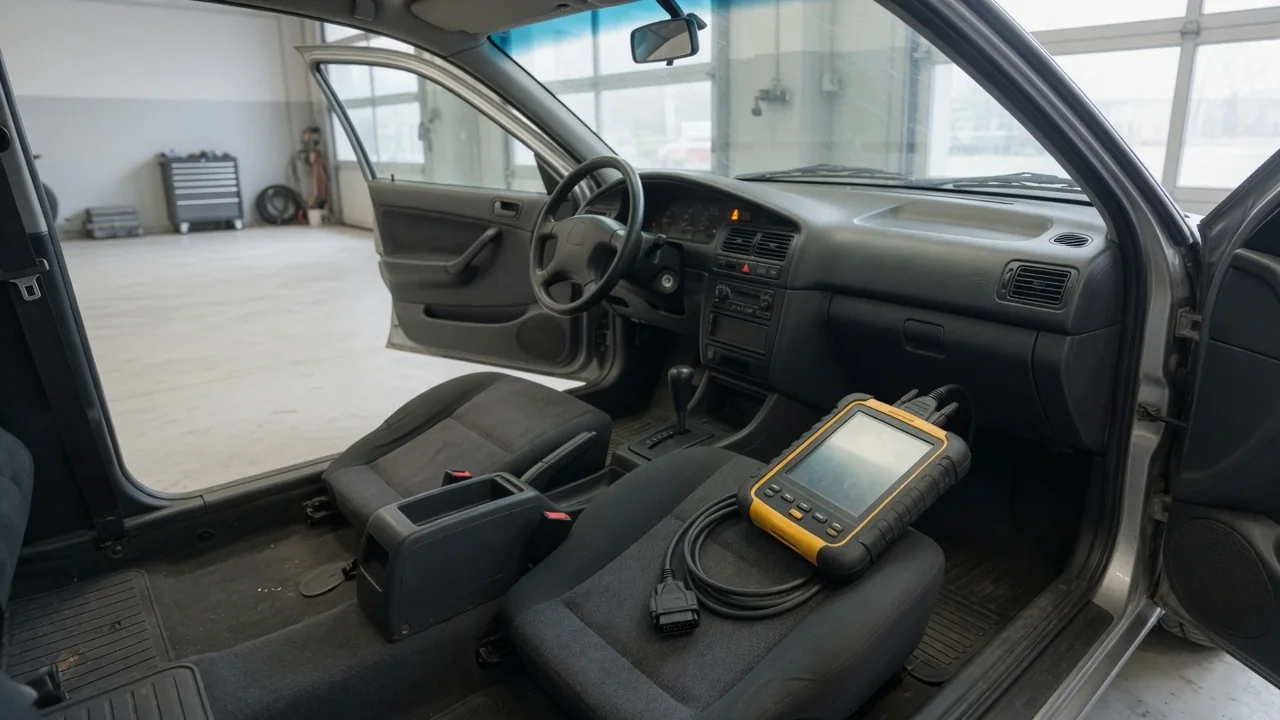
A scan tool report of C0077 or C0078 leaves many owners with more questions than answers. These chassis diagnostic trouble codes are not universal descriptions; their meanings depend on the vehicle manufacturer, the reporting control module, and the full code text. The warning indicators that appear may involve braking, stability, or other chassis functions, but the code alone does not name a failed part. Before replacing anything, you need the complete diagnostic scan report and the correct service information for your exact vehicle. This article explains how to verify each code and take safe next steps.
Verify What C0077 Means for the Vehicle
C0077 is classified as a chassis code, but its specific definition varies by vehicle. Manufacturers assign meanings through their own service documentation, which lists the reporting control module, setting conditions, and possible causes. The code text may describe a circuit fault, an implausible sensor signal, or an internal module error. Without knowing the year, make, model, and which module reported the code, a generic scanner description cannot establish what failed. A brief readout that says only “chassis” or “undefined” is not sufficient for diagnosis and must be verified against the correct service information.
To interpret C0077 accurately, collect the full scan report, including the code text, any suffix, the module source, and the code status. A stored code may be historical, while a current code indicates an active fault. The manufacturer’s fault code definition will list the conditions that set the code and the diagnostic steps to follow. Treat the code as evidence, not as proof that a particular component has failed. Replacing a part based on a partial description often leaves the original fault unresolved and may waste money on a good component.
Confirm C0078 Before Connecting It to C0077
C0078 must be verified independently through service information for the exact vehicle and reporting module. Adjacent code numbers do not imply that the two codes share a component, circuit, or failure mode. A manufacturer may assign C0077 to one subsystem and C0078 to a completely different function. Only the vehicle-specific diagnostic procedures can show whether these codes are related. Before connecting them, look up each code’s definition and setting conditions. Assuming a relationship because the numbers are close can misdirect the diagnostic process and lead to unnecessary repairs.
When both codes appear, document each one’s status, freeze frame data, and any event records. A stored C0077 with a current C0078 may indicate different faults occurring at different times. The scan tool should show which module set each code and any mileage or time stamps. A technician follows the manufacturer’s fault tree for each code separately, then determines if a shared cause is plausible based on wiring diagrams and live data. This evidence-based approach prevents jumping to conclusions from code numbering alone.
Record Warning Lights and Driving Symptoms
The dashboard warning indicators and messages that accompany C0077 or C0078 depend on the vehicle and the affected system. There is no universal warning light for these codes. You might see a stability control icon, an antilock brake light, a brake warning, or a service message. Record exactly which indicators are illuminated and any text displayed. Note when the warning appears: at startup, continuously, or during specific driving conditions. This information helps a technician match the symptom to the code definition and narrow down the possible causes.
Driving symptoms may be subtle or absent. A chassis code can be stored without any obvious change in braking, steering, or vehicle behavior. If you notice a symptom, describe it precisely: when it occurs, how it feels, and whether it changes with speed or road surface. Reduced brake assist, abnormal pedal feel, or steering pull are noteworthy. A warning light alone cannot identify the failed component; it only signals that a system has detected a fault. If braking is impaired, steering feels unsafe, or the dashboard instructs you to stop, pull over safely and seek professional assistance.
Preserve the Scan Report and Make Safe First Observations
Preserve the complete scan report before clearing any codes. The report includes code descriptions, reporting modules, status, and any available event data or freeze frame. Clearing codes erases this information and can make later diagnosis much harder. Save a printed copy or a clear photo of every page. Note the date, mileage, and conditions when the warning first appeared. Recent service, battery replacement, or jump-starting can be relevant diagnostic context, but these events are not proven causes. A record of when and how the fault occurred gives the technician a useful starting point.
With the vehicle parked safely, you can make basic visual observations. Look for obvious damage, loose battery connections, or fluid leaks near brake and chassis components. Do not crawl underneath the car, disconnect wiring, or probe connectors unless you are qualified. Note anything unusual such as corroded battery terminals, low brake fluid, or damaged wheel speed sensor wiring visible at the wheel. Keep in mind that a scanner may not communicate with every module, and an incomplete scan cannot prove that other systems are fault-free. A professional scan tool may be needed to access all chassis controllers.
Use the Verified Definition to Guide Professional Testing
Once the C0077 definition is verified, possible triggers follow from the manufacturer’s setting conditions. The code description tells you what the module observed, such as an implausible signal or a circuit open, but not the root cause. For example, a wheel speed sensor circuit code could result from a failed sensor, damaged wiring, a connector issue, or a module fault. A technician uses vehicle-specific procedures to narrow the cause. They may check power and ground at the module, use an oscilloscope to view waveforms, or command components with a scan tool while monitoring live data.
It is crucial to distinguish between a reported condition and the underlying cause. A C0077 code might say “sensor signal invalid,” but that does not mean the sensor itself is bad. It could be a wiring harness rubbed through, a corroded connector, or a module power supply problem. Directed tests based on the code’s diagnostic tree will isolate the fault. Because these are chassis systems often related to braking and stability, electrical probing and component actuation should be performed by qualified professionals. Replacing a part based only on the code text can be costly and may not resolve the warning.
Confirm the Repair and Address Returning Warnings
No single repair can be promised for C0077 or C0078 until testing is complete. The appropriate fix depends on confirmed test results and may include a wiring repair, sensor replacement, software update, or module reprogramming. Some repairs require initialization procedures that only a shop can perform. Clearing a code or temporarily extinguishing a warning does not prove the fault is corrected. Many chassis codes require a specific drive cycle or test sequence before the module will re-evaluate the system. If the code returns, the underlying condition still exists.
After a repair, verification should follow the applicable service procedure. This may include clearing the code, performing a function test, and driving the vehicle under the conditions that originally set the code. A follow-up scan should show no pending or current codes, and the original warning indicator should stay off. If warnings return, preserve the new scan information and return for further diagnosis. Do not continue driving if vehicle behavior is unsafe. A recurring code often points to an intermittent fault that requires data logging and inspection of connectors and wiring under specific conditions.