C0031 Code: Meaning, Symptoms, and Wheel Speed Sensor Checks
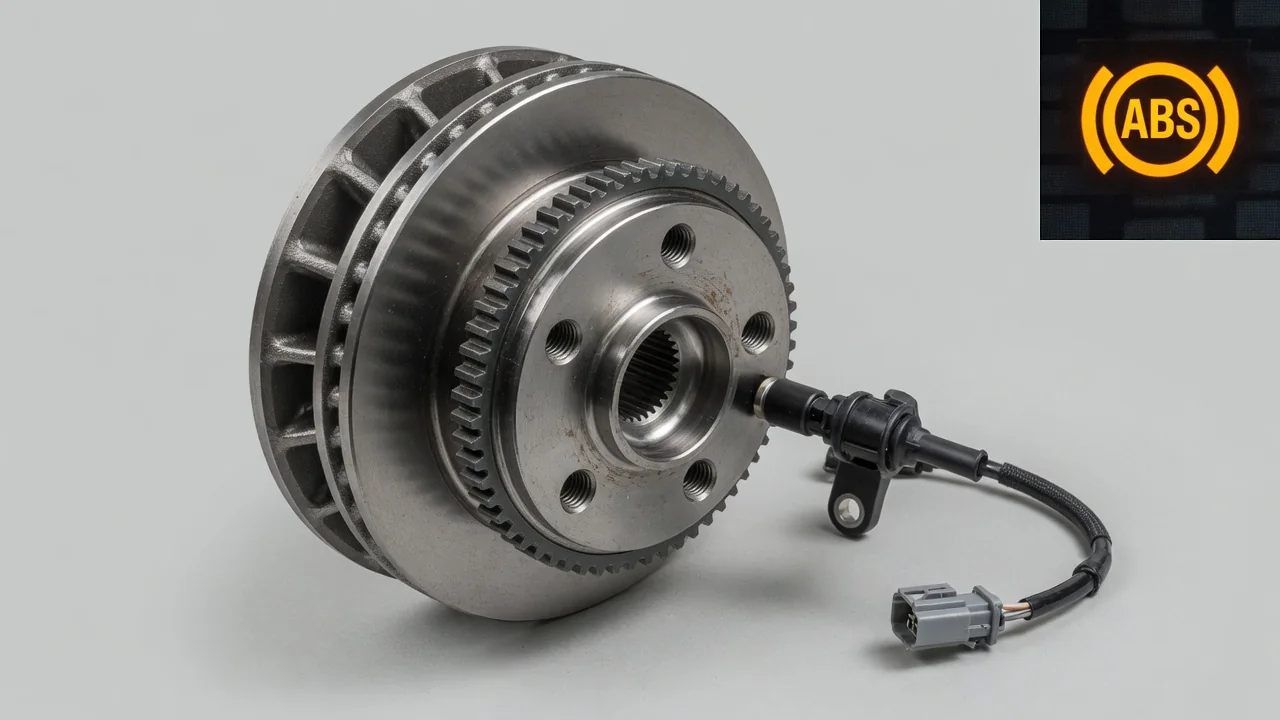
A stored C0031 code often flags a wheel speed sensor circuit condition, frequently the left front circuit on applicable vehicles. Related ABS reports can include C0030, C0032, and C0033. A code is evidence of a detected condition, not proof that a part has failed. Confirm year, make, model, reporting module, and the complete scanner message, including any diagnostic trouble code suffix, before interpreting the fault.
Verify What C0031 Means for Your Vehicle
On many chassis systems a C0031 code can identify a left front wheel speed sensor circuit concern, yet that mapping is not universal. The reporting module, typically the ABS control module, and the vehicle's year, make, and model determine how the identifier is defined. A scanner may also append a diagnostic trouble code suffix that describes the detected circuit condition, such as an open, short, or implausible signal. Interpret the complete readout against manufacturer information for that vehicle rather than assuming a generic meaning.
The wheel speed sensor supplies rotational information the ABS control module uses to compare wheel behavior during braking. Where the vehicle is equipped, traction control and stability control also rely on that same live wheel speed data to limit wheel spin or help keep the vehicle tracking as intended. A stored C0031 code means the module detected a condition on the monitored circuit; it does not establish that the sensor itself has failed or that any particular part must be replaced. Testing is required before parts are changed.
Read C0030, C0032, and C0033 in Their Vehicle Context
A C0030 code, a C0032 readout, or a C0033 report must be verified independently even when they appear alongside C0031. Nearby numbers are not automatically subcodes of one another, do not necessarily identify the same wheel, and do not prove a shared fault. One identifier may describe a right-side circuit while another points to a different corner or a related monitoring function. Until vehicle-specific definitions are confirmed, treat each stored message as its own finding rather than a family of identical left-front problems.
Preserve the scanner's complete readout, including any failure-type suffix attached to C0030, C0031, C0032, or C0033. The base diagnostic code names the monitored circuit or function, while the suffix, when present, describes the type of condition the module recorded. Confirmed definitions plus the reporting module determine whether those codes belong in the same wheel speed sensor circuit investigation. If they originate in different controllers or describe unrelated circuits, they should not be folded into a single C0031 diagnosis.
Possible Warning Lights and Braking Symptoms
Drivers may see an ABS warning light, a traction control lamp, a stability control indicator, or a combination of those messages after a C0031 code sets. None of those warnings is guaranteed, and some vehicles store the fault with little driver-facing indication until a later key cycle. Affected assistance functions may become unavailable while the condition is detected, so anti-lock braking, traction intervention, or stability assist can drop out depending on the vehicle and the fault the module recorded. Actual behavior varies with system design.
Intermittent warnings, unexpected low-speed ABS activation, or a warning that comes and goes can accompany a signal interruption on a wheel speed circuit. Those symptoms still cannot identify the failed part, because wiring, the sensor, an encoder ring, or a related connection can produce similar behavior. Abnormal pedal feel, reduced braking, or a red brake warning calls for stopping safely and arranging assistance. An amber ABS warning warrants prompt assessment and a check of the owner's manual for that vehicle's recommended response.
Fault Sources a Wheel Speed Circuit Diagnosis May Investigate
A wheel speed sensor circuit diagnosis often starts with the electrical path rather than the sensor body. Damaged wiring, a loose sensor wiring connector, corrosion, or moisture can interrupt the signal the ABS control module expects. An internal sensor fault is one possibility, but it remains only a possibility until testing shows the sensor itself is not producing a usable output. Replacing the sensor because a C0031 code is stored skips the circuit checks that can locate the actual interruption.
Where the vehicle's sensor design uses a tone wheel or magnetic encoder ring, damage, debris, incorrect mounting, or hub-related issues can distort live wheel speed data even if the electrical circuit looks intact. Those mechanical influences are relevant only when the confirmed code definition and the sensor architecture make them applicable. Power, ground, or ABS control module faults also cannot be inferred from C0031 alone. Each of those possibilities needs supporting test results before it is treated as the cause.
Safe Observations to Record Before Service
Record when the warning appeared, whether it is intermittent, and any recent tire, wheel, brake, or hub work, without assuming that recent service caused the C0031 code. Save the complete scan report and any available freeze-frame or event data before codes are cleared, because that snapshot can be lost once the memory is reset. Some basic readers cannot access ABS faults, so a tool that communicates with the ABS control module may be required simply to capture C0030, C0031, C0032, or C0033.
Limit visual observations to damage or a loose sensor wiring connector that can be seen with the vehicle parked securely on level ground. Do not lift the vehicle, crawl underneath, or disconnect components as a do-it-yourself check. A warning that disappears after a restart does not confirm a repair; the condition may still be stored or may return when the signal interruption repeats. Avoid driving maneuvers intended to provoke ABS activation, because those attempts add risk and do not identify the failed part.
Professional Testing and Repair Confirmation
A technician investigating a C0031 code uses an ABS-capable scan tool and vehicle-specific procedures to review stored faults and compare live wheel speed data from each monitored corner. Missing, noisy, or mismatched readings help show whether the concern is isolated or shared with a C0030, C0032, or C0033 report. Circuit integrity, sensor supply, and signal testing then follow the sensor design used on that vehicle and require appropriate equipment. Guesswork substitutions for those tests can misidentify a wiring or connector problem as a failed sensor.
When the confirmed code definition and test findings support it, inspection continues at the relevant wiring, sensor mounting, encoder ring, and hub area. Those checks belong in the shop procedure, not in roadside disassembly. Repair confirmation includes verifying fault status and signal operation under an appropriate professional verification procedure after the identified cause is corrected. Clearing the C0031 code, or a neighboring C0030, C0032, or C0033 code, without confirming that live wheel speed data remains plausible does not prove the fault is resolved.