C0021 Code: Vehicle-Specific Meaning and Diagnosis
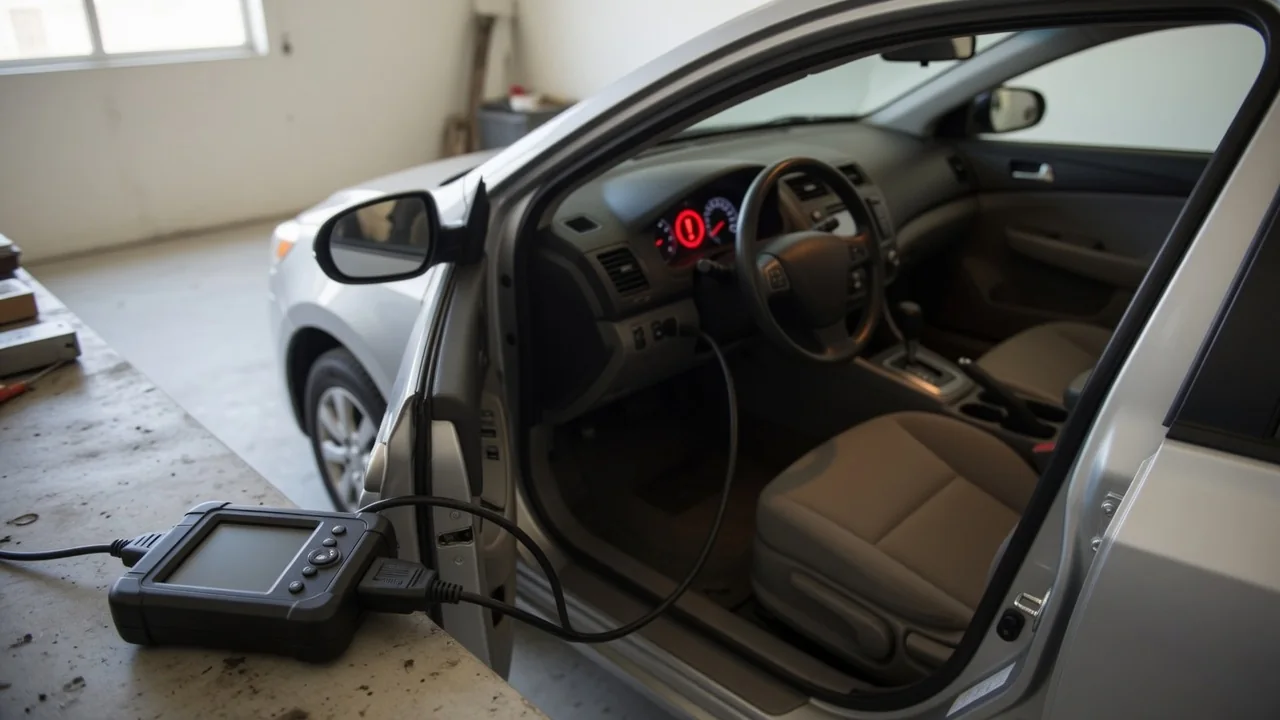
C0021 is a chassis diagnostic trouble code that requires the vehicle-specific code definition for that year, make, model, and configuration. The C0021 code flags a detected condition, not a confirmed failed part. Record the reporting module, full text, and any suffix before diagnosis. A brake warning light may appear, but only that vehicle's service information assigns the correct meaning.
What C0021 Means for Your Vehicle
C0021 belongs to the chassis family of diagnostic trouble codes, a group that typically involves stability, traction, or brake-related control systems. That family label is only a starting point. Manufacturers assign C0021 different definitions depending on year, make, model, and equipment, so the same alphanumeric string can describe different circuits or modules on different vehicles. Before any interpretation, confirm the exact wording in that vehicle's service information rather than relying on a generic code list or a handheld reader's abbreviated label.
A complete diagnostic scan report should capture the reporting control module, the full C0021 code text, and any suffix or subcode attached to the fault. Those details matter because a chassis code stored in an ABS control module is not automatically the same condition as an identically numbered code stored elsewhere. The stored entry means a control unit detected a condition that met its criteria; it does not prove which part failed or which part to replace. Any later discussion of sensors, valves, wiring, or modules must stay tied to that verified definition.
Possible Symptoms and When to Stop Driving
After the vehicle-specific meaning of C0021 is confirmed, the dashboard may show a brake warning light, an ABS or stability lamp, or a message from the affected chassis system. None of those indications is guaranteed, and the mix of lights can differ by manufacturer and by whether the fault is current or stored. A C0021 code can also sit in memory without a noticeable change in pedal feel, stopping distance, or handling. Treat the warning display as a prompt to capture scan data, not as a complete description of vehicle behavior.
If braking feels abnormal, stopping ability seems reduced, or the vehicle displays a stop-driving warning, pull over when it is safe and arrange professional assistance. The owner's manual is the correct source for what each warning light means on that model and for any manufacturer instruction about continued operation. The presence of C0021 by itself does not prove the brakes are adequate, and the absence of a dramatic symptom does not prove they are. Do not treat the code number as proof that the vehicle is safe to drive.
Potential Causes Behind the Verified Fault
Possible causes for a verified C0021 fault should follow the manufacturer's diagnostic procedure for that definition, not a generic list of chassis parts. If the confirmed wording points to a circuit, then wiring damage, corroded or loose connectors, and power or ground faults become relevant test targets. If it points to a component function, then a sensor, switch, actuator, or the ABS control module may be involved, but only after the procedure identifies that path. Discussing those items out of sequence invites replacing parts that have not been shown to be at fault.
Accompanying codes on the same diagnostic scan report can show whether C0021 appeared with related chassis or communication faults, which helps a technician choose the next test without proving that any one part caused the others. Recent battery work, module programming, or brake-system service can also supply context, because a disturbed connector or an incomplete initialization can set a chassis code. None of that history is causation. A sensor, switch, actuator, or control module should be implicated only after it fails the prescribed test; no cause should be labeled common without vehicle-specific evidence.
Safe Information to Collect Before Diagnosis
Before any codes are cleared, save the complete diagnostic scan report, including fault status and any freeze-frame or operating-condition data the tool can retrieve. That snapshot shows whether C0021 was current, stored, or pending and under what conditions the control module logged it. Note when the warning first appeared, whether it returns after a key cycle, and whether recent battery work or other vehicle service preceded it. Clearing first erases evidence that the later diagnostic procedure may need, and a returning light without that original record is harder to interpret.
A basic code reader may not communicate with the chassis module that stored C0021 and may omit manufacturer-specific text, subcodes, and live data that a shop-level scan tool can display. Owner checks should stay limited to writing down dashboard messages and looking for readily visible damage with the vehicle parked and secured. Do not disassemble components, probe electrical circuits, or try to reproduce the fault while driving. Those actions can create new damage, mask the original condition, or put the vehicle in an unsafe state before a technician begins circuit testing.
How a Technician Diagnoses C0021
A technician starts by confirming the vehicle-specific definition of C0021 in the matching service information, then scans the relevant modules rather than relying on a single engine-only readout. The applicable diagnostic procedure for that definition sets the test order. Fault status, related codes, and relevant live data show whether the condition is current, whether other chassis or communication faults are present, and which inputs or outputs look implausible. Those observations determine which circuit, power, ground, or component tests are warranted instead of jumping to a replacement.
Professional circuit testing typically compares power, ground, and signal conditions at the identified circuit against the values specified for that vehicle, then evaluates the component only if those checks support that step. The work stays on the bench and in the procedure; it is not a sequence of improvised probes. Intermittent C0021 faults may require further monitoring because a condition that is not present at the moment of the scan cannot be confirmed by a single snapshot. A code that disappears after a clear or a key cycle has not identified its original cause.
Repair Decisions and Confirmation
Repair decisions should follow confirmed findings, such as a damaged connection that fails inspection, or a component that fails the prescribed test for that C0021 definition. Replacing an ABS control module, sensor, or other chassis part because the code is present is not a diagnosis. Clearing C0021 without correcting the underlying condition can make the warning go dark briefly, but the control module will set the code again if the detected condition returns. Erasing memory is not repair verification and does not demonstrate that the fault path has been fixed.
After a confirmed repair, complete any calibration, initialization, or verification procedure specified for that vehicle, because some chassis functions will not operate correctly until those steps finish. Confirmation includes a follow-up scan for C0021 and related codes, a check that warning-light status matches the repaired condition, and professional verification that the affected system operates as specified. If the C0021 code or the original symptoms return, the earlier conclusion needs reassessment rather than another code clear. Persistent or returning faults indicate the detected condition was not fully isolated or that another related path remains.