BYD Electric Car Range Explained in Miles
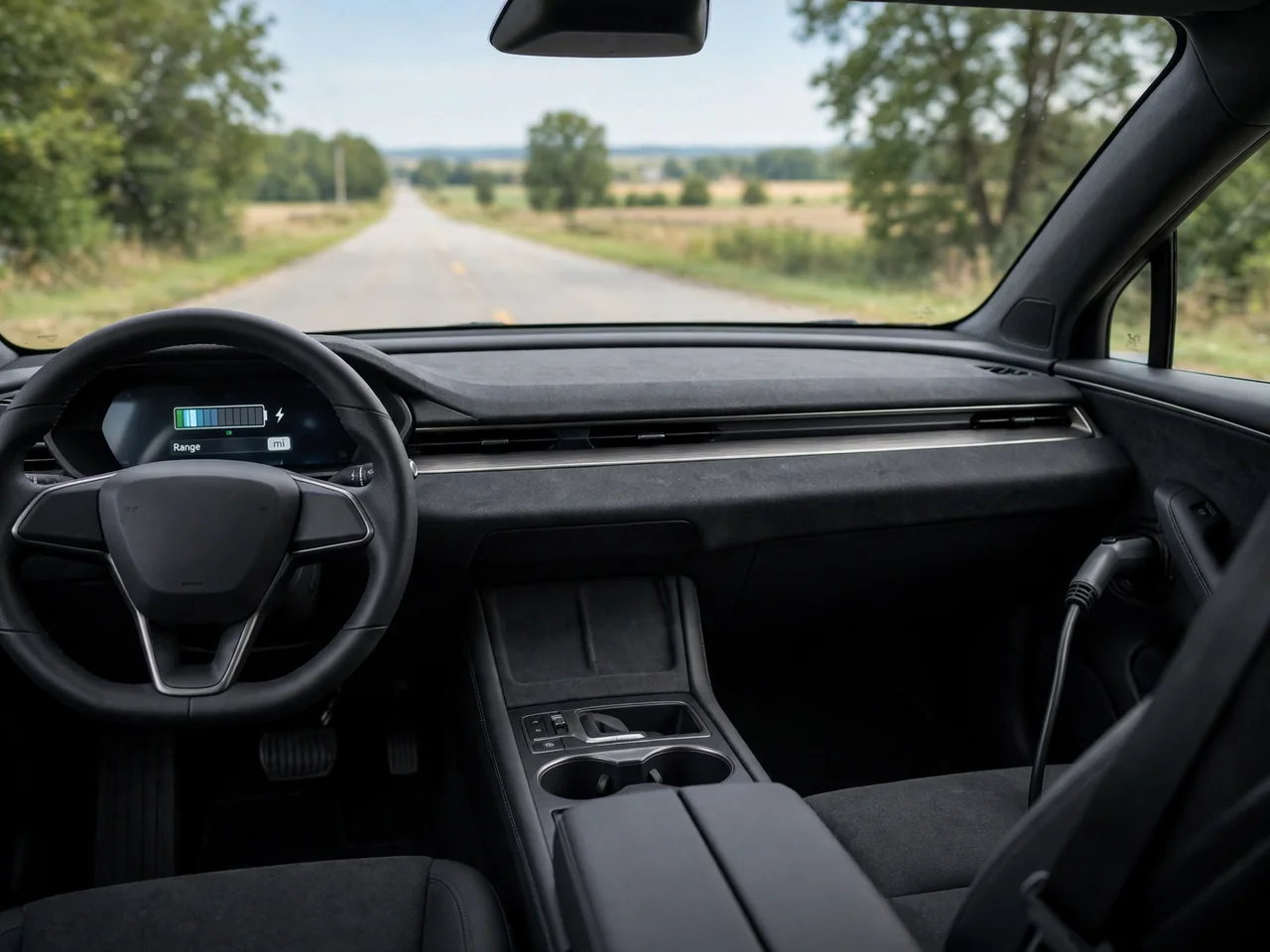
Drivers looking at BYD electric car range in miles need more than a headline number. A BYD EV range claim belongs to a named model, battery pack, market, and test cycle, whether the subject is the Song Ultra EV, the Han L EV, or a long-range variant. Chinese CLTC figures convert to miles without becoming real-world or EPA results, so the useful work is matching the claim to its conditions before planning a trip.
What a BYD Electric Range Figure Actually Describes
A quoted driving range on a BYD electric vehicle is not a universal property of the brand. It describes one model, often one model year, one battery configuration, one sales market, and one laboratory test cycle such as CLTC or WLTP. Change any of those details and the certified full-charge figure can change with them. Treat a brochure or listing as a labeled result, then confirm that the name on the document matches the vehicle you are actually comparing.
Battery-electric driving range is the distance available from the traction battery alone. A plug-in hybrid's combined fuel-and-electric distance is a different claim and should not be used as a stand-in for BYD EV range. Separately, the remaining-range estimate on the instrument cluster is a live forecast based on remaining battery charge and recent energy consumption. It is not the same number as the certified full-charge range published for that configuration, and it will move as conditions change during a trip.
Convert Chinese Range Figures Into Miles
Chinese range figures are usually published in kilometers. Convert them by multiplying kilometers by 0.621371 to obtain miles, then round to a sensible whole number or tenth rather than carrying extra decimal places that imply false precision. The original test-cycle label must stay attached. A CLTC result converted into miles remains a CLTC figure; a WLTP result converted into miles remains a WLTP figure. Unit conversion only changes the yardstick, not the laboratory procedure that produced the number.
Converting kilometers to miles does not establish everyday driving range and does not create a WLTP or EPA rating from a CLTC result. Different cycles use different speed profiles, climate assumptions, and accessory loads, so the same usable battery capacity can produce different certified distances. Avoid applying a fixed percentage haircut from CLTC to expected road mileage. Speed, temperature, cabin climate control, terrain, vehicle mass, and the specific Song or Han configuration all change energy consumption, so a single adjustment factor is not a reliable translator.
Check the Exact BYD Song Ultra EV Range Claim
Before attaching any BYD Song Ultra EV range number to the name, confirm the vehicle identity, intended market, model year, and whether the product is an announcement, a homologation listing, or a car actually offered for sale. Names in the Song family overlap, and a similarly named Song, Song Plus, or Song Pro figure cannot establish the Song Ultra EV's range. If the document does not identify the Ultra EV specifically, leave that specification unresolved rather than borrowing a nearby model's certified distance.
When a substantiated Song Ultra EV claim is available, tie it to the stated battery configuration and the labeled test cycle, then express the same claim in miles with the original kilometer value still visible. Preliminary press numbers, leaked slides, and unverified listings should be marked as unconfirmed. Without a supported pack size, drivetrain, and cycle, a BYD Song Ultra EV range in miles cannot be filled in from general BYD EV range talk. Accuracy here means withholding a number until the source matches the car.
Read BYD Han L EV Range by Configuration
A BYD Han L EV range figure is useful only when it identifies the model year, market, battery configuration, and drivetrain it covers. Present any supported distance in miles together with the original kilometer value and the CLTC or WLTP label that belongs to that test. Keep the information specific to the battery-electric Han L EV. Range published for another Han sedan, a Han plug-in hybrid, or an earlier Han EV does not transfer to this vehicle, even when the badges look related.
Wheel specification, tire size, extra equipment, and the exact certification document can all sit behind a quoted Han L EV number. A larger wheel or heavier option pack can raise energy consumption and shrink certified or observed driving range without changing the model name. If two listings disagree, compare those configuration details before treating either figure as the default. When those details are missing, the honest reading is that the Han L EV range claim is incomplete, not that a typical BYD EV range can be substituted.
What Supports a Longest-Range BYD EV Claim
A longest-range BYD EV claim needs a defined market, a date, a named test cycle, and a clear eligibility boundary, usually limited to production vehicles rather than concepts or one-off prototypes. Informal language such as BYD long range EV or BYD longest range EV is not the same as a manufacturer's formal variant name. Many makers use Long Range as a pack or trim designation; that label identifies a configuration, not an automatic ranking across the entire lineup. Scope comes first, then the model's own certified mileage.
Identify a claimed longest-range model only when that scope and the exact battery configuration can be substantiated. Without those anchors, there is no supported universal winner, and ranking every BYD EV by a single converted CLTC mile figure would mix markets, years, and test methods. State the qualifying vehicle's own certified distance and the conditions attached to it, then stop. A high number on one cycle in one country does not settle which BYD electric car travels farthest for a buyer in another market or on another procedure.
Use the Published Range to Plan a Drive
Published range is a planning starting point, not a guaranteed trip length. Highway speed, cold or hot weather, cabin heating or cooling, hills, payload, and battery condition all change how far remaining energy will go, and none of those effects has a single universal penalty. Usable battery capacity is the energy actually available to the motor and climate system. Dividing available kilowatt-hours by recent kilowatt-hours per mile produces a more personal estimate than treating the certified BYD EV range in miles as a fixed allotment.
How much of that usable energy you can spend on a particular leg depends on starting charge and the arrival reserve you want to keep. A car that begins at eighty percent with a twenty percent buffer is not using the full certified distance. Check recent energy consumption on similar roads and confirm charging availability along the route before relying on a headline Song Ultra EV or Han L EV figure. Treat the dashboard remaining-range estimate as a changing forecast that updates with driving style, not as a second certified rating.