Buying a Used Car With Cash or a Credit Card: What to Know
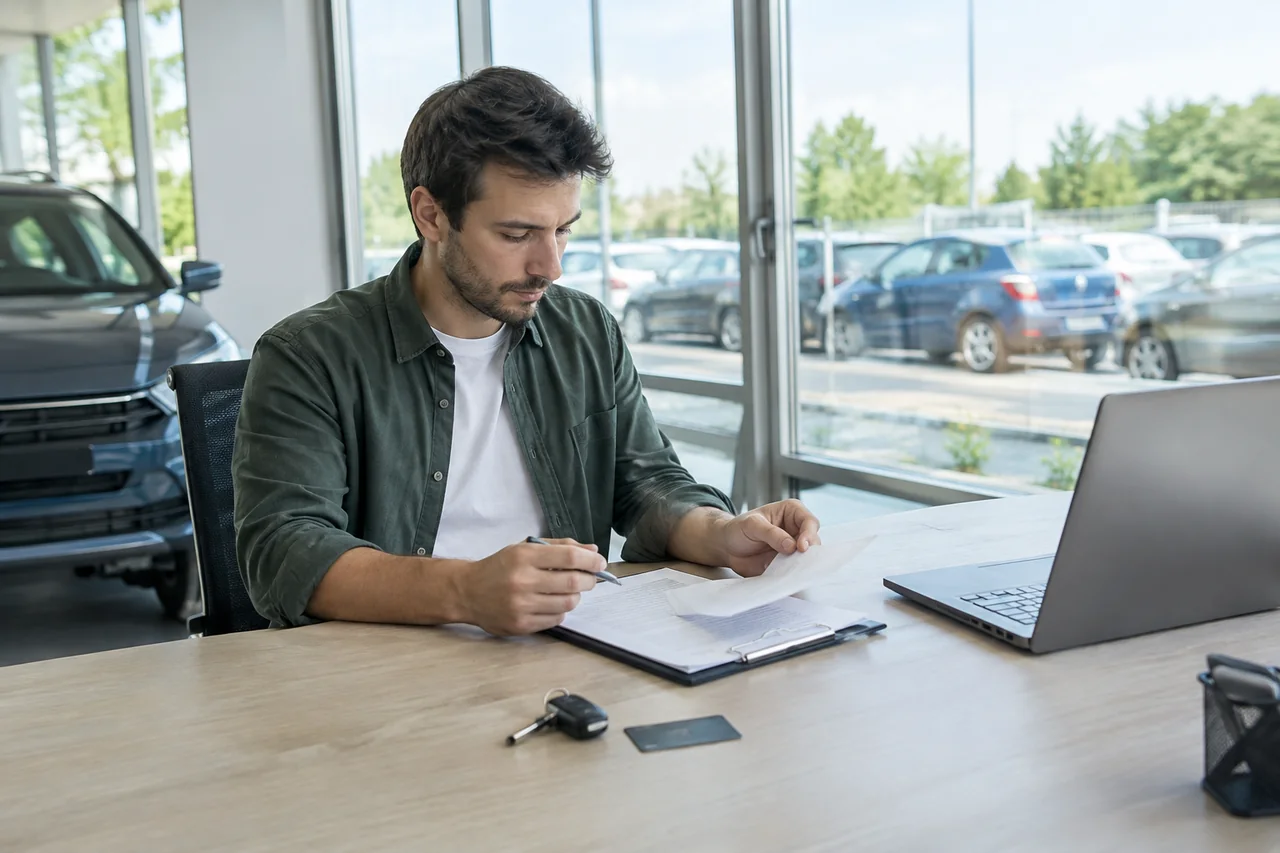
Buying a used car with cash means paying the full price without an auto loan, not necessarily handing over bills. The same caution applies when buying a used car for cash, in cash, from a dealership with cash, or with a credit card: confirm the out-the-door total, accepted payment methods, and title transfer steps before you release funds.
What Paying Cash Means for an Outright Purchase
When people talk about buying a used car cash, they usually mean an outright purchase that does not involve a lender. That can be a cashier's check, a bank transfer, a debit card, or actual currency, depending on what the seller will accept. Buying a used car in cash still requires the same homework as any other used-car deal: inspect the vehicle, confirm the seller can transfer ownership, and agree on a complete price before money changes hands. Physical bills are optional; a completed, documented payment is not.
Build a budget around more than the advertised figure. Taxes, title and registration charges, inspection costs, and an allowance for immediate maintenance belong in the number you can actually pay. After you evaluate the car, review the title and any lien paperwork, then lock in the agreed total and arrange payment before the handoff. Keys, plates, and possession should follow payment verification, not precede it. That sequence keeps buying a used car with cash from turning into a scramble over missing fees or unsigned documents.
Confirm the Dealership’s Total and Payment Requirements
Buying a used car from a dealership with cash still starts with paperwork, not a stack of bills. Ask for a written, itemized out-the-door total that separates the vehicle price from taxes, fees, and optional products such as warranties or protection packages. Decide which extras you actually want before you commit. Confirm the store's card acceptance policy and other payment methods, any per-transaction limits, the identification it requires, and the point at which it will release the vehicle. Those details determine whether you can complete the purchase on the day you visit.
Read advertised offers for payment-related conditions. An outright purchase does not automatically unlock a discount, and some promotions assume a particular payment type. If you intend to pay with currency rather than a check or transfer, ask how large cash payments are handled; qualifying currency amounts can create reporting obligations for the business. Do not split deposits or successive payments to avoid those rules. Buying a used car for cash is not automatically a currency transaction, so treat reporting as a currency issue, not a reason to hide an otherwise legitimate deal.
Arrange Payment Without Losing Control of the Handoff
Before you travel with money, confirm that the seller will accept the instrument you plan to use and how payment verification will work. Physical cash should be counted in a secure setting and documented with a payment receipt. A cashier's check can still bounce or be counterfeit until the receiving bank confirms it, so ask whether the dealer or private seller waits for that confirmation before releasing the car. Bank transfers need matching account names and a clear memo. Agree on these steps in writing so the handoff does not stall after you have already sent funds.
In a private sale, verify the seller's identity and authority to sell, read the title, and obtain a lien release if a lender still appears on the paperwork before you release funds. Meet at a bank or another appropriate secure location to exchange payment and documents, but a bank lobby does not prove ownership by itself. Independently confirm wiring instructions through a trusted contact method, especially if account details change. If anyone pressures you to send money before that check, pause. Title transfer should move with the money, not ahead of it.
Find Out Whether a Credit Card Can Cover the Purchase
Buying a used car with a credit card is possible only if the seller agrees, and a dealership may refuse to put the full price on plastic. A store may allow a card for a deposit or a limited portion of the price, then require another method for the rest. Before you visit, confirm the permitted card amount, any disclosed surcharge, and how the remaining balance must be paid. A private seller may refuse cards entirely. Buying a used car with credit card therefore needs a fallback instrument that the other party has already accepted in writing.
Check your available credit and any issuer controls such as merchant-category blocks, daily limits, or fraud holds. Enough unused credit does not guarantee approval at the terminal. If you are buying a used car on credit card as an outright purchase, treat the charge as a short-term payment tool and plan to pay that balance in full when the statement arrives. That keeps the transaction from becoming revolving debt. Bring a second accepted method for any amount the card cannot cover so the deal can still close the same day.
Check Card Costs, Refund Terms, and Dispute Limits
A credit-card purchase can cost more than the agreed vehicle total. Some merchants add a surcharge, and interest begins if you do not pay the statement in full or if the charge is treated in a way that ends a grace period. Read the applicable card terms before you authorize anything. Withdrawing cash from a credit card to complete an otherwise cash deal can be processed as a cash advance, with separate fees and interest that often start immediately. That path can add separate costs compared with a cashier's check or a bank transfer of funds you already hold.
If the dealership or seller wants a card deposit, get refundability and cancellation terms in writing before the charge is run. Ask what happens if you simply walk away, if an inspection fails, or if the title is not ready. Rewards, purchase protections, and dispute rights depend on issuer terms and the circumstances of the transaction. A chargeback is not a guaranteed remedy for a vehicle problem, a missed maintenance item, or a later mechanical complaint. Use the card, if accepted, as a payment method, not as a substitute for inspection and clear paperwork.
Finish the Purchase With Records and Transfer Documents
Before you leave, match the purchase agreement to the vehicle identification number on the car, the agreed total, and the payment receipt. Errors in those lines are harder to unwind after the seller has your money. Confirm how title transfer will be completed, whether a bill of sale or odometer disclosure is required, and who must file the documents under applicable state rules. A lien release, if one was needed, should be in the packet. Do not treat a signed contract as a substitute for the actual title paperwork that lets you register the vehicle.
Arrange required insurance and confirm registration or a temporary operating permit before you drive away. Keep copies of every signed page and every payment confirmation, including card authorizations and check images. Complete an independent inspection before the final commitment whenever you can, because a successful payment arrangement says nothing about the car's mechanical condition. Buying a used car cash, or putting part of the price on a card, only settles the money side of the deal. Ownership, lawful operation, and the condition of the vehicle remain separate questions that the paperwork and inspection still have to answer.