Buying a Used Car From a Dealership: Steps and Checklist
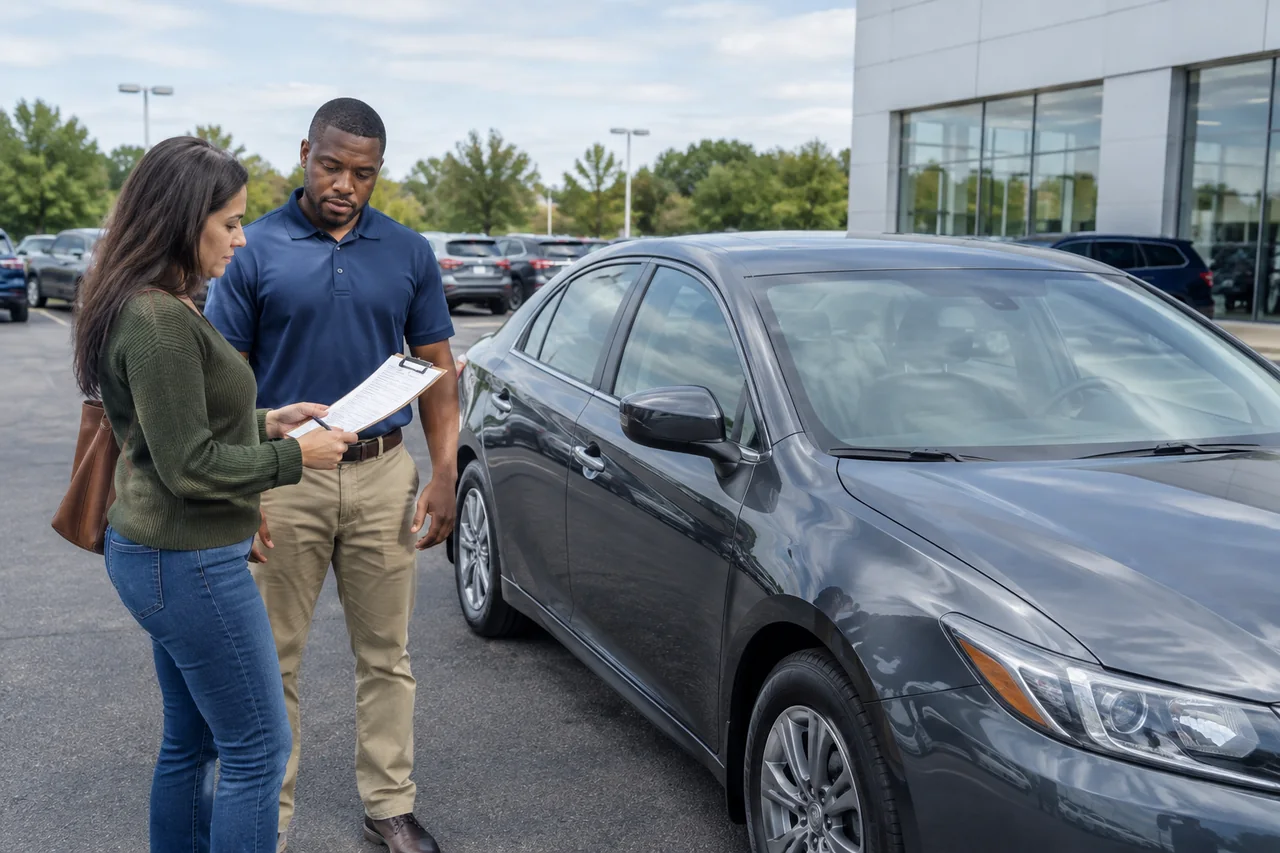
Buying a used car from a dealer or a used car lot follows a repeatable process: set a budget, confirm the exact vehicle, inspect it, and sign only after the paperwork matches what you were told. A dealership purchase can be safer than a private sale when you verify the dealer license, compare franchised and independent lots, and use a checklist. These tips apply at one store or a different dealership.
The Steps From Choosing a Car to Taking Delivery
The purchase starts before you visit the lot. Set a spending limit that includes tax, title and registration, plus an insurance estimate for the vehicle you need. Decide whether you will pay cash or arrange financing, and keep that plan separate from the car so a salesperson cannot redefine your budget on the floor. Intended use matters because commuting, family trips, and towing place different demands on size and condition.
The process of buying a used car from a dealer then follows a sequence. Confirm the store, identify the exact car, and match the advertised listing to its VIN before you travel or pay a deposit. Review records, inspect and test-drive the vehicle, and arrange a prepurchase inspection. Only then review the purchase agreement and take delivery. A visit or test drive does not require a purchase, so allow time rather than deciding on the spot.
Check the Dealership and Its Written Policies
Advice on buying a used car from a dealer starts with the business, not the car. Verify the legal name, physical address, and dealer license with the state authority that issues motor vehicle dealer licenses, and look for patterns in unresolved complaints. Buying from a used car dealer or dealership is not automatically safe, but a licensed store is easier to hold accountable. Ask each dealer about outside inspections, deposit terms, returns, and post-sale support.
Advantages of buying a used car from a dealership can include a physical location, documented inventory, and some warranty coverage, especially at a franchised dealer that advertises manufacturer certification. Obtain the inspection and warranty documents and confirm who backs that certification. At an independent used car lot, ask who inspected the vehicle, who provides any warranty, and where covered repairs can be performed. Disadvantages include sales pressure and affiliation that does not prove the car's condition or your protection.
Review the Car's Identity, History, and Sale Terms
When buying a used car at a dealership, match the VIN on the car to the listing and sale documents before you discuss price. Ask about title status, recorded mileage, prior use such as fleet or rental service, and available maintenance records. A vehicle history report can show recorded accidents, title brands, and odometer events, but missing entries do not prove the car was never damaged. Treat the report as one source, not a complete history.
Read the Buyers Guide on the car for the stated warranty coverage or as-is sale language, then request the full details, exclusions, and claim procedure. An as-is sale generally means the dealer is not promising post-sale repairs unless another writing says otherwise. Ask what the dealer's inspection or reconditioning included and request those records. Labels such as inspected or certified need supporting documentation; without it, the words add little to the sale.
A Checklist for the Walkaround and Test Drive
A checklist for buying a used car from a dealer should start with a daylight walkaround. Look for visible body damage, mismatched paint, uneven panel gaps, cracked glass, and tire wear. Note any fluid spots under the vehicle without crawling underneath it. Then sit inside and check seat belts, seat adjustment, lights, windows, climate controls, and other features you expect to use. Write these observations down before the test drive so you can brief an inspector later.
On a legal route in safe conditions, observe dashboard warning lights at startup and during the drive. Note starting behavior, steering, braking, shifting, unusual noises, and visibility from the driver's seat. A clean appearance and a short test drive cannot establish mechanical soundness, so record every concern for an independent inspector. If lighting or weather limited the first visit, repeat the walkaround and drive before you commit.
Get an Independent Inspection Before Committing
A prepurchase inspection by a qualified independent shop belongs in the process before you sign a binding agreement. Confirm that the car can leave the lot or that the inspector can work on site. Ask for written findings that identify safety concerns, needed diagnostic work, and repairs that require further assessment. Those notes become your basis for walking away or asking the dealer to address issues.
Treat dealer inspection records, a vehicle history report, and warranty promises as separate evidence, each with limits. None of them guarantees that the car is trouble-free, and a stored scan or fault code is evidence to interpret, not proof that a part has failed. Pause the purchase if the dealer refuses independent evaluation, pressures you to skip checks, or leaves material discrepancies unexplained. Walking away at that point is cheaper than inheriting someone else's problem.
Read the Agreement and Put Promises in Writing
Before you pay anything, obtain written deposit terms covering refundability, deadlines, and any inspection or financing conditions. Confirm that the purchase agreement identifies the correct vehicle by VIN, the stated mileage, the buyer, the seller, and the agreed sale terms. Resolve blanks and inconsistencies before signing, including add-on products you did not request. Treat an incomplete form as unfinished business, and ask for a copy you can read without time pressure.
Document promised repairs, included equipment, completion dates, and who is responsible for the work, then retain a signed copy. Read warranty and return provisions in the same packet, and verify whether financing is final before delivery. Do not assume a universal cooling-off period; buyer protections depend on the contract and applicable state law. If a verbal promise is not in the agreement, treat it as unenforceable until it is written and signed.
Complete the Handoff and Keep Your Records
A delivery checklist is the last practical step in buying a used car from a dealer. Recheck the car's condition in daylight and confirm that promised work is complete or covered by a signed written commitment before you accept delivery. Collect the agreed keys, manuals, inspection records, signed purchase documents, warranty information, and receipts. Do not accept a substitute vehicle that does not match the VIN on the signed agreement. Count the keys against what the agreement listed.
Arrange insurance before driving away, even if the lot offers a short courtesy plate. Confirm who handles title and registration, what temporary documents apply, and when follow-up is required if the title is delayed. Keep a purchase file with every signed page, and report unresolved issues to the dealer in writing. If a safety concern appears after you leave, stop driving and seek professional assistance rather than continuing to operate the car.