Buying a Used Car Battery: Date Codes, Tests, and Purchase Checks
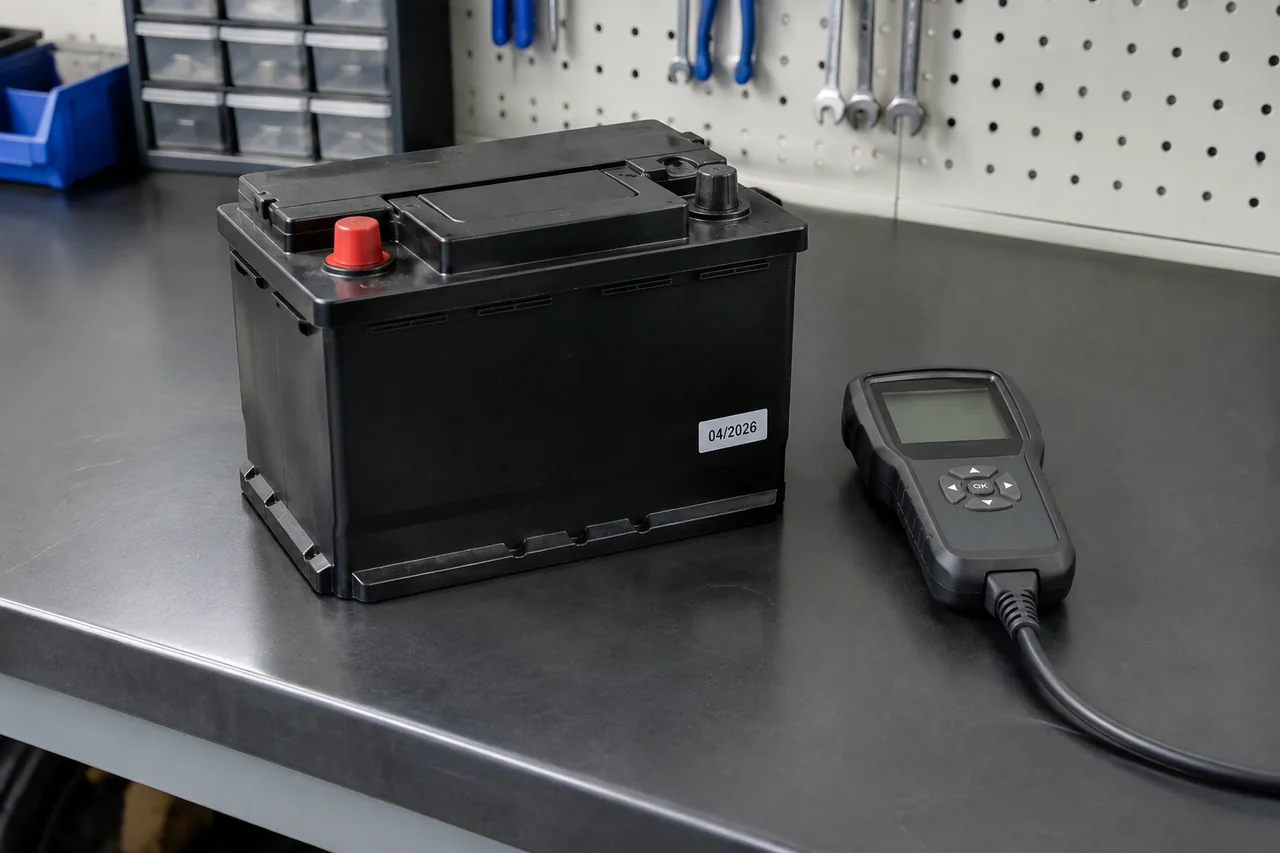
A used 12-volt battery can look like a bargain, but without proof of its condition, age, and fitment, it may leave you stranded. Buying a used car battery requires more than a low price: you need date-code decoding, a meaningful health test, and a seller who stands behind the product. The potential savings come with real risk, since battery performance depends on unseen internal wear. Before handing over cash, use vehicle requirements, physical inspection, and documented test results to decide whether the purchase makes sense for your dependability needs.
When a Used Car Battery Is a Sensible Purchase
A used battery is sensible only when four conditions align: confirmed fit for your vehicle, credible documentation of condition, a passing health test under proper conditions, and a return policy that protects you if the unit fails shortly after sale. Without all four, you are guessing. Batteries degrade chemically over time and with cycling, and that degradation is often invisible from the outside. A seller's assurance is not a specification; insist on tangible evidence that the battery matches your car's electrical demands and that it has been verifiably maintained.
Storage history matters because a battery that sat discharged for months may have permanent sulfation that reduces capacity even if it shows voltage after a recharge. Repeated deep discharge or exposure to extreme temperatures shortens service life unpredictably. Ask whether the battery came from a running vehicle, a storage shelf, or a salvage yard, and whether it has been regularly maintained. If the seller cannot answer these questions or will not allow testing, treat the battery as a core with unknown value rather than a dependable power source.
Confirm the Battery Meets Your Vehicle’s Requirements
Start with your owner's manual or a reputable application guide to find the exact 12-volt battery your vehicle requires. The three most important physical specifications are group size, terminal location, and hold-down style. Group size refers to the battery's case dimensions and terminal arrangement; using the wrong one can lead to loose mounting, short circuits, or hood contact. Terminal location—top post or side post, and on which side—must match your cables. The hold-down must secure the battery against vibration without placing pressure on the case.
Electrical ratings are equally important. Cold cranking amps (CCA) indicates the battery's ability to start the engine at 0°F; your vehicle has a minimum CCA requirement that accounts for engine size and compression. Reserve capacity (RC) measures how long the battery can run essential loads if the alternator fails; a lower RC may cause electrical issues during prolonged idling. Also confirm the technology type: many modern vehicles require an AGM or EFB battery for the charging system and start-stop function. A standard flooded battery that physically fits may charge incorrectly and fail early. Some vehicles also require registration of a new battery with the onboard computer, so verify that the used unit can be registered and that you have access to that procedure.
Read the Date Code and Ask About Storage History
Most batteries carry a date code stamped into the case or printed on a label, often near the top or side. The format varies by manufacturer: some use a letter for the month and a digit for the year, while others use a numeric date or a serial number that embeds the manufacturing week. Because these codes are not universal, you must look up the battery maker's specific decoding convention. Do not assume an obvious label showing a sale date or an installation date reflects the date of manufacture; a battery can sit on a shelf for a year before being sold, and that time counts against its useful life.
A manufacturing date tells you age, but age alone cannot establish condition. A gently used one-year-old battery may outperform a poorly maintained six-month-old unit. Still, the date is a starting point for seller questions. Ask how the battery was used, whether the vehicle had charging problems, how long the battery sat unused, whether it was ever deeply discharged, and what recharging or refurbishing was done. A seller who has no history is selling an unknown. If the battery came from a salvage vehicle, the history may be impossible to verify, which raises the risk of hidden internal damage.
Inspect Safely and Request a Meaningful Health Test
Before touching any battery, look for external damage. A swollen or bulging case often indicates overheating or internal shorting; a cracked case can leak acid; corroded or melted terminals suggest poor connections or excessive current. Any of these signs means the battery should be recycled, not tested or handled further. Do not attempt to charge or test a damaged battery; acid burns and explosions are real risks. If the case is clean and intact, proceed with a controlled health evaluation rather than relying on a simple voltage reading.
Resting voltage measured with a digital multimeter can indicate state of charge, but it cannot reveal cold cranking ability or remaining capacity. A worn battery can show 12.6 volts after a surface charge and still fail under load. The useful test is a conductance or load test at a qualified shop, where the tester is set for the battery's rated CCA and technology (AGM, EFB, or flooded). Ask for a dated printout showing the measured CCA or conductance compared with the rated value, and note whether the battery needed recharging before testing. A passing result offers some assurance but is not a guarantee of future life; it is a snapshot of current condition. Improvised tests like bridging terminals with a wrench or measuring voltage while cranking are unsafe and inconclusive, so avoid them.
Check Purchase Terms and Avoid Misdiagnosing Starting Trouble
Before agreeing to buy, calculate the total cost. A used battery may have a core charge added if you do not trade in an old battery, and there may be fees for testing, installation, or vehicle programming. Confirm in writing the return window and what constitutes a valid failure: for example, a load test result below a stated threshold within 30 days. Ask who pays for testing if you suspect the battery is weak after sale, and whether the seller will exchange it or refund your money. Without a written policy, you may be stuck with a battery that fails the first cold morning.
Remember that slow cranking or a no-start condition is not always the battery's fault. Corroded or loose connections, a failing starter, a bad alternator, or a parasitic drain can mimic a dead battery. If you install the used battery and still have trouble, have the charging and starting system diagnosed before blaming the battery. Recurring starting problems or a battery warning light call for professional testing of the entire electrical system. When the used battery truly reaches the end of its life, take it to an authorized recycling center rather than placing it in household trash.