Buying Audi Acoustic Front Door Glass: How to Get the Right Part
The short answer
Buy the front door glass that matches your car's exact build, identified by its VIN (vehicle identification number), rather than by model name alone. Audi door glass varies by model, body style, model year, market and fitted options, so two cars that look identical can need different parts. If your car already has acoustic glass, order the acoustic version for the correct side. If it currently has standard glass and you want to upgrade, confirm with an Audi parts department that the acoustic pane is a direct fit for your door before you buy.
What acoustic door glass is
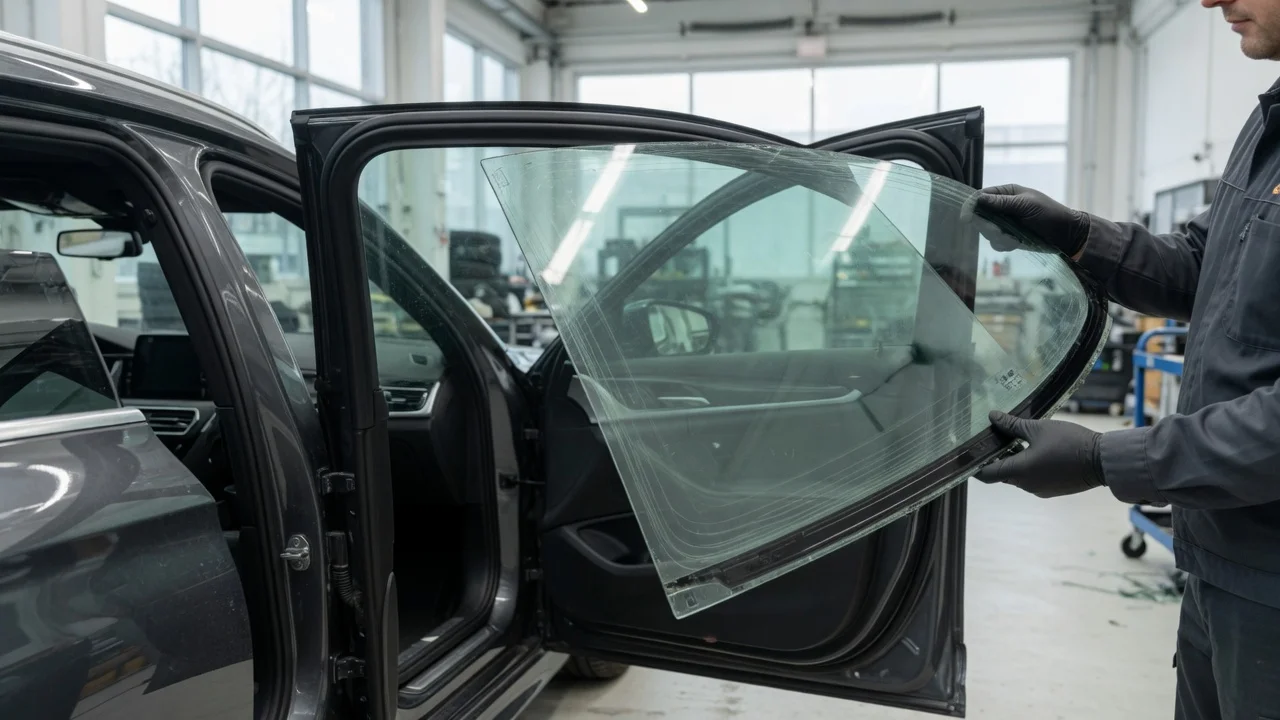
Acoustic glass is laminated: two layers of glass are bonded to a plastic interlayer formulated to damp sound, which reduces wind and road noise entering the cabin. Standard side windows are usually tempered, a single toughened layer that breaks into small granules when it fails. Laminated glass tends to crack but stay in one piece.
How to check what your car has now
Read the small printed mark in a corner of the existing glass. It normally indicates whether the pane is laminated or tempered. Lower the window slightly and look at the exposed top edge. Laminated glass often shows a faint line where the layers meet. Tempered glass has a single solid edge. If the glass is already broken, look at how it failed. A pane that cracked but held together points to laminated glass. A pane that shattered into small pieces points to tempered glass. Check the vehicle data sticker, usually found in the spare wheel well or the service booklet. It lists the factory option codes, which a dealer can use to confirm whether acoustic glazing was fitted.
Details that change which part you need
Side: driver and passenger front glass are separate parts, and left-hand-drive and right-hand-drive markets can use different part numbers. Body style and door type: frameless doors, as used on some coupe and sportback bodies, use different glass from framed doors on the same model line. Model year and facelift: glass shape or mounting can change within a model generation. Tint and coatings: solar-control or tinted glass is a separate specification from clear glass. Front side windows must also meet local light-transmission rules. Original versus aftermarket: genuine Audi parts and equivalent aftermarket panes may differ in markings, acoustic performance or fit. Ask the seller to confirm the cross-reference to your original part number.
If you are upgrading from standard glass
Fitting acoustic glass to a door that left the factory with standard glass is not always a simple swap. Laminated panes can differ in thickness or mounting from tempered ones, which may affect the window seals, guides or regulator clamps. On frameless doors, the automatic short-drop function that lowers the glass slightly when the door opens may need to be checked or re-adjusted after fitting. Ask the dealer whether any related parts or adjustments are needed for your specific car. Also consider whether replacing only the front doors will give the noise reduction you expect if the rear windows stay standard.
Recommended next step
Give an Audi parts counter, or a glass specialist with access to Audi parts catalogues, your VIN and tell them which side you need. Ask them to confirm the part number, whether it is the acoustic version, and whether it is a direct fit. Then compare genuine and aftermarket options against that confirmed part number. If the car is insured and the glass was damaged, check whether your policy covers like-for-like replacement with acoustic glass.
What this guide cannot confirm
No model-specific data was available for this guide. It does not state which Audi models, years, trims or markets had acoustic front door glass as standard or as an option. It also gives no part numbers, prices, stock availability or measured noise reduction. Confirm these against your VIN before buying.