British Sports Car Brands
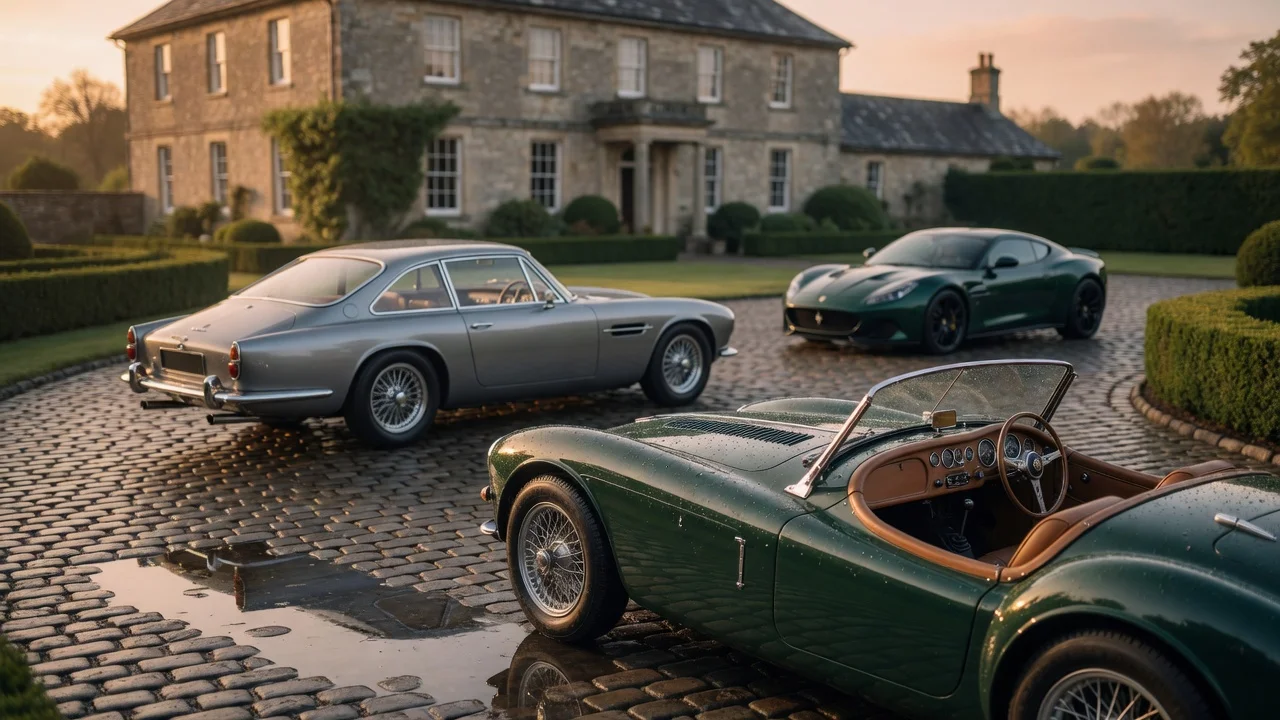
The short answer
British sports car brands are the nameplates that grew out of the United Kingdom’s long tradition of two-seat roadsters, lightweight coupés and driver-focused performance cars. The living core of that group is Aston Martin, McLaren, Lotus, Jaguar, Morgan and Caterham, with smaller specialists such as Ariel, BAC, Ginetta and Radical occupying the extreme track and kit-car end of the same tradition. The answer changes once ownership, factory location and body style are taken into account: several famous badges are still designed or assembled in Britain while being owned overseas, and some of the best-known historic names no longer build new sports cars at all.
What “British” covers here
The label is used in three overlapping ways, and they do not always agree. Brand origin is the usual starting point: a company founded in Britain to make sporting cars. Place of design and manufacture is the second test, because a car can still be engineered and built in the UK after the parent company has been sold. Current corporate ownership is the third, and it is the qualification that most often revises a casual list. A brand can be British in history and factory location while belonging to an Indian, Chinese, German or other overseas group.
Sports car is also a looser term than it first appears. In this guide it includes lightweight two-seat roadsters and coupés, mid-engined supercars, and small-volume track cars sold for the road. Grand tourers sit on the edge of the category: they share sporting intent with the two-seaters but are built for longer, quieter journeys. Pure luxury saloons and SUVs from the same groups fall outside the subject.
Major names still associated with sports cars
Aston Martin remains the best-known British grand-touring and sports brand, with design and manufacturing centred in the UK. The current range mixes front-engined GTs and sports cars with a mid-engined supercar line; exact engines, outputs and body styles vary by model year and market. The company is publicly listed, with a changing mix of institutional and strategic shareholders, so “independently British” is a weaker description than “British-based maker.”
McLaren is the modern British supercar house. Road cars are designed and built at the McLaren Technology Centre and production facilities in Woking, Surrey, and the cars are mid-engined, carbon-tub designs aimed at high performance rather than classic roadster manners. The road-car business sits alongside the Formula One team under the wider McLaren group; model names, powertrains and hybrid content change by generation and should be checked against the specific car, not the brand as a whole.
Lotus is the historic lightweight specialist. The brand’s reputation rests on low mass, sharp handling and relatively simple sports cars, later joined by more powerful coupés. Design and production have long been associated with Hethel in Norfolk. Geely, the Chinese automotive group, owns Lotus, so the badge is British in origin and still UK-linked in engineering heritage, while corporate control sits overseas. Current model mix and which cars are built where should be treated as generation-specific.
Jaguar is a British sporting marque whose sports-car role has risen and fallen with each generation. Classic two-seaters and later coupés such as the E-Type, XK and F-Type defined the sports and GT side of the brand; saloons and, in recent decades, crossovers have made up much of the wider range. Jaguar Land Rover is owned by Tata Motors of India, with design and manufacturing still heavily based in the UK. Whether Jaguar counts as a current sports-car brand depends on the model year: the F-Type ended the recent two-seat line, and the company’s stated direction has shifted toward a smaller, electric-led range whose sports-car content was not fully settled in public product detail at the time of writing.
Morgan continues the traditional British sports-car formula: small volumes, distinctive bodies, and a factory in Malvern. The cars are more hand-built and retro in character than a Lotus or McLaren, with ash-framed construction still part of the method on some models. Morgan has remained a small British manufacturer through several ownership and investment changes; it is one of the few names that still matches the popular picture of an independent UK sports-car works.
Caterham grew out of the Lotus Seven. The current Sevens are lightweight, minimally equipped sports cars sold in various states of tune and, in some markets, as component or kit-style builds as well as factory-finished cars. The company is British-based and the product is as close as the modern market gets to the classic open two-seater. Power, weight and legal equipment vary widely by specification and by the rules of the country of registration.
Smaller specialists and track-focused makers
Below the household names sits a cluster of low-volume British firms that sell extreme road-legal track cars rather than everyday sports coupés. Ariel is known for the Atom, an exposed-structure, motorcycle-engined or high-output four-wheeled car aimed at circuit use. BAC produces the Mono, a single-seater road car. Ginetta and Radical build racing and track-day cars, some of which can be registered for the road depending on specification and local law. These makers keep the specialist end of the British industry alive, but they are a different buying decision from a Jaguar or Aston Martin GT.
Ariel: ultra-light, exposed-chassis cars for track and occasional road use. BAC: single-seat, road-legal track cars. Ginetta: racing and small-series sports cars with a Yorkshire base. Radical: purpose-built race and track cars, some with road registration options. TVR: a historic Blackpool sports-car maker whose modern revival has been announced more than once; treat current production status as uncertain until a specific model is actually offered for sale.
Ownership that changes the usual list
Several badges that buyers still call British sports or performance brands are owned outside the UK. That does not stop them being relevant to a British sports-car search, but it does change what “British” means in a purchase or a history lesson.
Brand Usual role in this category Ownership note that affects the answer; Jaguar Historic and recent two-seat sports and GT cars Tata Motors (India); UK design and plants remain central; Lotus Lightweight sports cars and performance coupés Geely (China); Hethel remains the historic engineering home; Mini Small sporting hatchbacks and convertibles, not classic two-seat sports cars BMW (Germany); Oxford production for core models; Bentley High-performance grand tourers rather than lightweight sports cars Volkswagen Group (Germany); Crewe remains the British factory; MG Historic British sports cars; modern range is broader and volume-oriented SAIC (China); the classic MGB-era sports identity is historical; Rolls-Royce Luxury cars; sporting derivatives are rare and not the core product BMW (Germany); Goodwood manufacture
Mini, Bentley and Rolls-Royce appear on many “British car” lists and can be very fast, but they sit beside the sports-car category more than inside it. Mini is a small performance hatch story. Bentley is a luxury GT and saloon story with Crewe as the British manufacturing centre. Rolls-Royce is a luxury brand. Including them without that distinction inflates the sports-car list.
Historic brands that still shape the category
A large part of what people mean by British sports cars is no longer in current production under the original maker. Triumph TR and Spitfire models, MG T-series and B-series roadsters, Austin-Healey, TVR from the Griffith through to the Tuscan and Sagaris years, Jensen, and earlier Lotus Elans and Sevens are the cars that fixed the national stereotype: small, often open, sometimes fragile, and more about steering and sound than refinement. Those names still matter for used buying, restoration and club culture. They should not be read as a list of cars you can order new from a factory today.
TVR is the awkward in-between case. The old Blackpool company built distinctive, high-powered sports cars with a reputation for drama in both performance and reliability. Revival projects have been public for years; until a numbered production car is sold to retail customers, it belongs with historic brands plus a caveat, not with McLaren or Morgan as a current showroom choice.
How the main living brands differ in use
If the goal is a usable two-seat sports car rather than a brand history, the current field splits by purpose. Morgan and Caterham are the traditional, low-volume, open-air choice, with Caterham the more extreme and Morgan the more hand-built and characterful tourer. Lotus, when a lightweight model is on sale, is the handling specialist with more weather protection than a Seven. Jaguar’s recent F-Type was the mainstream British GT-sports car: more comfort, more mass, and a broader dealer network than the specialists, with the important limit that this description applies to that generation and not automatically to whatever follows. Aston Martin occupies the luxury-sports and GT band above Jaguar in price and image. McLaren is the carbon-tub supercar choice, with running costs, tyre wear and low-speed practicality that belong to that class.
No single ranking of “best British sports car brand” holds across those jobs. A Caterham and a McLaren can both be excellent at what they are for and poor substitutes for each other. Engine type, transmission, kerb weight, seating, luggage space and whether the car is sold as a finished vehicle or a component build all vary by model, year and market, so those details have to be taken from the specific car rather than from the brand name.
What this guide cannot settle from public brand lists alone
Current in-production model names, outputs, prices and factory locations change by year and sometimes by market. Jaguar’s next sports or performance products, Lotus’s split of UK versus overseas build, Aston Martin’s exact shareholder mix, and whether a revived TVR reaches customers are all points that need a dated check against the maker’s own specifications. Reliability and running-cost comparisons also cannot be stated as brand-wide facts here: they depend on generation, engine, and how the car was maintained. Where a used classic is the real target, condition and parts supply matter more than the badge’s current corporate owner.