Brake Vacuum Pump Leaking Oil: Finding the Source
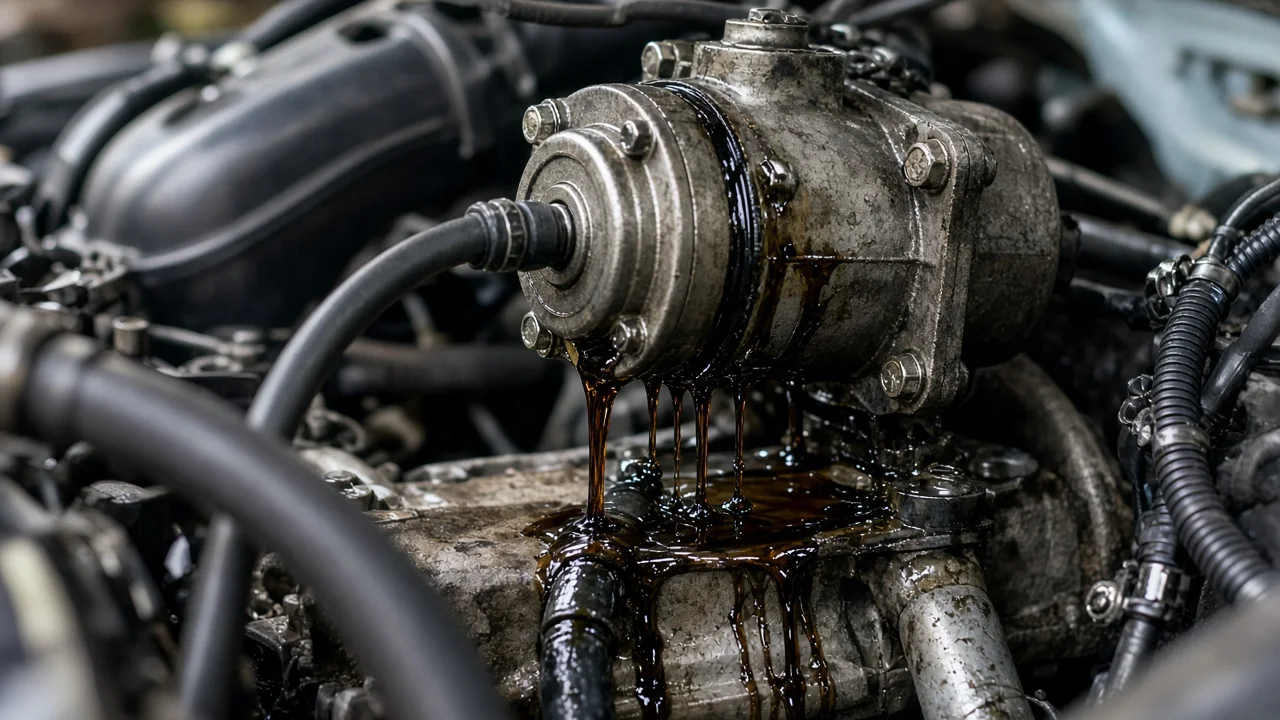
A brake vacuum pump leaking oil is a common complaint on diesel engines and many direct-injection gasoline engines, where the pump supplies vacuum for the brake booster instead of the intake manifold. Oil around the pump does not always mean the pump is at fault, and a failing pump can also push oil into the booster line where you cannot see it. This guide covers how to record the symptoms, separate likely sources and decide what to do next.
Establish the symptoms
Start by writing down what you actually see and when. Note whether oil appears as a wet film on the pump body, drips on the ground under the front of the engine, or smoke and a burning smell after a drive. Check whether the engine oil level has dropped between changes and by roughly how much, using the dipstick or the oil level display rather than guesswork. Record whether the leak shows up only after highway driving, after a cold start, or all the time, since temperature and crankcase pressure affect how seals weep.
Brake feel matters just as much. A pedal that has become harder to push, needs more effort at low speed, or feels different right after starting suggests the vacuum supply may be affected, not just the seal. Listen for hissing near the pump or the booster with the engine idling. Finally, list recent work: an oil change with a possible overfill, a timing belt or camshaft job, a valve cover gasket replacement, or a new pump. Recent disturbance near the cylinder head often points directly to the source.
Distinguish plausible causes
On most engines that use one, the mechanical vacuum pump bolts to the cylinder head or block and is driven by the camshaft or, on some engines, another rotating shaft. Engine oil lubricates its internal vanes, so the joint between pump and engine is sealed with an O-ring or gasket, and some designs also have an external oil feed line. A hardened or flattened seal, loose mounting bolts, or a leaking feed line fitting will leave oil concentrated around the pump flange. Electric vacuum pumps, fitted to some hybrids and newer vehicles, are not fed engine oil, so oil on or near one almost certainly comes from somewhere else.
Oil runs downhill and spreads with airflow, so neighboring leaks often get blamed on the pump. Valve cover gaskets, camshaft seals, camshaft position sensor O-rings, the oil filler cap, crankcase breather hoses and turbocharger oil lines can all wet the same area. If the head is wet above the pump, the pump is less likely to be the origin. A different case is oil inside the vacuum hose to the brake booster: internal wear or a failing check valve can let the pump push oil toward the booster, which can harm the booster diaphragm over time. Also rule out brake fluid. The master cylinder sits on the booster, and brake fluid is thinner than engine oil and can lift paint where it has run.
Checks in a useful order
Begin with checks any owner can do safely with the engine cold and switched off. Compare the engine oil level and the brake fluid reservoir level against their marks. Clean the pump area with a rag or an engine-safe degreaser, drive normally, then inspect again with a flashlight to see where fresh oil appears first. A basic booster check is also safe: with the engine off, press the brake pedal several times until it feels firm, then hold light pressure and start the engine. The pedal should sink slightly as vacuum builds. If it does not, the vacuum supply or booster needs attention.
Further tests need tools, service information or a qualified technician. Disconnecting the booster hose at the pump or check valve shows whether oil is being carried toward the booster. A vacuum gauge on the pump circuit measures how much vacuum the pump produces and how quickly, but the reading only means something when compared with the manufacturer's specification for that engine. UV dye added to the engine oil helps trace slow leaks. Removing the pump, renewing seals and tightening the mounting bolts should follow the vehicle-specific procedure, because the pump drive must engage correctly and the bolts have specified torque values.
Interpret the findings
Fresh oil appearing first at the pump flange, with a dry area above it, supports a failed pump seal or loose mounting. That often calls for a seal or gasket kit rather than a complete pump, provided the pump still meets its vacuum specification. Oil wetting the flange from above, or tracking along hoses from higher up, shifts suspicion to the valve cover, camshaft area or breather system, and replacing the pump would not fix it. A wet external feed line points to the line or its sealing washers.
Oil found inside the booster hose is more significant. It indicates internal pump wear or a check valve problem, and the booster itself should be inspected because oil can degrade its diaphragm. A low or slow vacuum reading, a pedal that stays hard after the engine starts, or a stored vacuum pump fault code supports pump or booster failure, but a split hose or faulty check valve can produce similar results, so test those parts before buying a pump. If the brake fluid level has dropped or the wet area on the booster is brake fluid, the problem lies in the hydraulic system and needs separate diagnosis at the master cylinder, lines or calipers.
Urgency and next action
Stop driving and arrange professional service if the brake pedal becomes hard to press, stopping distances increase, a brake warning light comes on, the brake fluid level is falling, or oil is dripping onto the exhaust or turbocharger, which creates a fire risk. A low oil pressure or oil level warning also means the engine should not keep running. A slow external weep with a stable oil level and normal braking is less urgent, but it still needs inspection soon, because seals tend to worsen and there is no reliable way to predict how long a leak will stay minor.
When booking the repair, give the shop the year, make, model, engine code and VIN so the correct pump, seal kit and booster parts can be confirmed for vehicle fitment. Share your notes: where oil appeared after cleaning, how fast the oil level dropped, any oil found in the booster hose, the result of the pedal test and any warning messages or stored fault codes. Ask the technician to confirm vacuum output against specification and check the booster before replacing the pump, so the repair targets the actual source.