Brake Rotor Resurfacing Equipment: Choosing a Brake Lathe
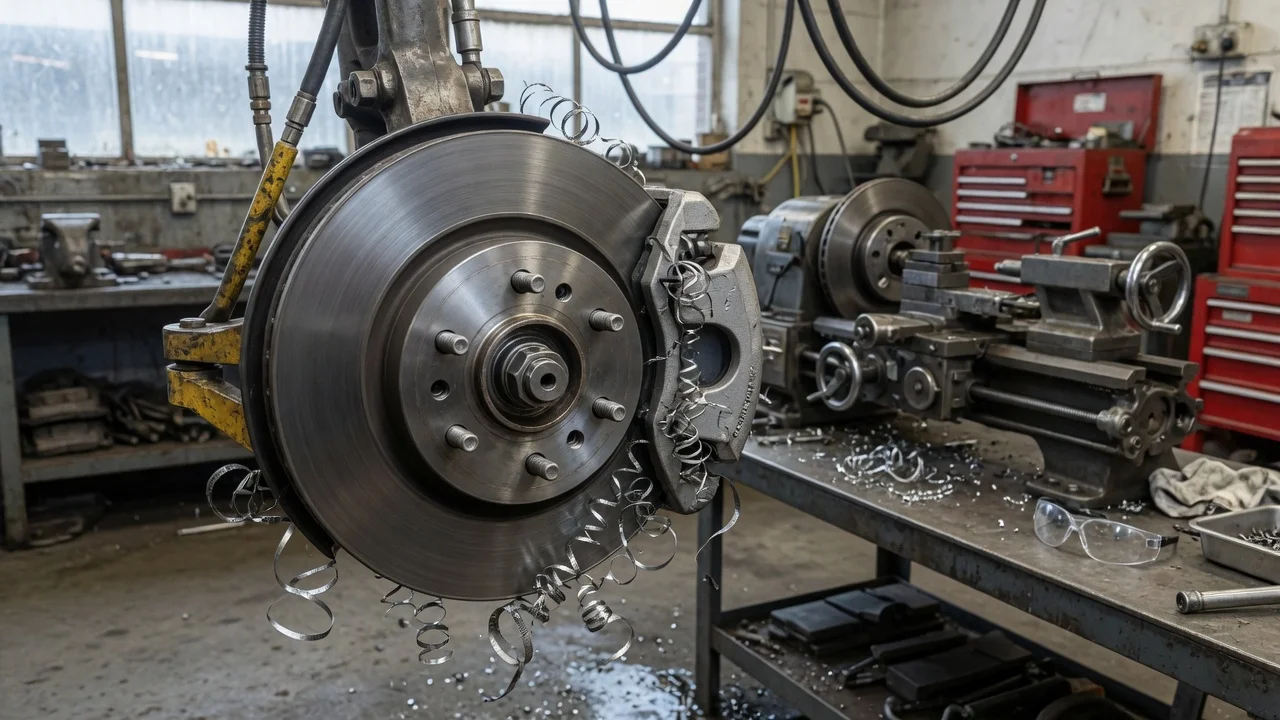
What a brake rotor resurfacing machine does
A brake rotor resurfacing machine, commonly called a brake lathe, cuts a thin layer from the friction surfaces of a brake rotor to restore a smooth, flat finish. The goal is to remove minor grooving, hard spots, rust ridges and uneven wear so the new brake pads bed evenly. The machine holds the rotor or the assembled hub and uses cutting bits to machine both friction faces in a controlled pass.
The immediate answer: start with rotor thickness and use
For most owners and small shops, the practical decision is not whether the machine works, but whether the rotor should be machined at all. Brake rotors must remain above the minimum thickness stamped or cast into the rotor, or listed by the vehicle manufacturer. If machining would take the rotor below that limit, resurfacing is not safe and replacement is required. The same applies if a rotor has deep cracks, severe heat checking, heavy pitting or thickness variation beyond the specification for the vehicle.
If the rotor has enough remaining thickness and the damage is limited to light grooving or uneven pad deposits, a suitable brake lathe can restore the friction surface. The machine choice then depends on whether you work on loose rotors alone or need to correct runout with the rotor mounted on the vehicle.
Types of brake rotor resurfacing equipment
Brake lathes fall into two broad groups: bench lathes and on-car lathes. Each fits a different workflow, and many professional shops use both.
Bench brake lathe: The rotor is removed from the vehicle and mounted on an arbor. The lathe machines both faces on a common axis. This is the traditional shop setup and is suitable for high-volume rotor work. On-car brake lathe: The lathe mounts in place of the caliper and machines the rotor while it is still attached to the hub. This corrects runout that may already be present in the hub, bearing or mounting surface. Combination or portable units: Some equipment can be used as a bench unit or adapted for rotor matching and light truck work, but portability usually involves compromises in rigidity or capacity.
What to check before committing to a purchase
Before shortlisting a machine, confirm the rotor size range it can handle. Compare the machine's minimum and maximum rotor diameter, maximum rotor width and maximum swing against the vehicles you intend to service. A lathe sized for passenger cars may not accept large truck rotors or some performance brake packages.
Look carefully at what is included at the advertised price. Some brake lathes are sold as a bare machine without adapters, cones, spacers, cutting bits or a bench. Adapters for hubless rotors, composite rotors and different pilot diameters can add materially to the cost. Establish whether the price includes a usable set of tooling for your intended rotor range, and separate advertised list prices from completed equipped purchases.
Power and mounting are also decision points. A bench lathe needs a stable, level surface and appropriate electrical supply. Check the motor voltage, phase and amperage against the workspace. On-car lathes need clearance around the wheel opening and access to the hub, which can be limited by suspension design, axle configuration or aftermarket wheels.
Choosing between a bench lathe and an on-car lathe
A bench lathe is usually the better fit when you machine many rotors per day, work with loose replacement rotors, or need to cut rotors before installation. It offers consistent setup and can handle thicker cuts efficiently, but it cannot compensate for runout caused by a worn hub or bearing once the rotor is installed.
An on-car lathe is the stronger choice for correcting pedal pulsation and lateral runout without disturbing the hub. Because it machines the rotor in its true installed position, it can produce the straightest final surface on vehicles where hub runout is the source of the problem. The trade-off is slower setup per wheel, more limited vehicle access and generally higher cost for a quality unit.
For a mixed or diagnosis-driven workload, many shops use a bench lathe for bulk rotor preparation and an on-car lathe for specific runout corrections. If only one machine is possible, the decision should follow the dominant job type: high-volume bench work or vehicle-mounted runout correction.
Condition and ownership costs
Used brake lathes can be economical, but condition changes the value. Check for wear in the arbor bearings, spindle runout, scored ways, damaged drive belts and missing or bent adapters. A machine that has been stored in a damp environment may also have corrosion on machined surfaces that affects accuracy.
Ongoing costs include replaceable cutting bits or inserts, adapter sets for uncommon rotors, calibration and occasional bearing or belt service. A low purchase price can be offset quickly if the machine needs a full adapter kit or frequent bit replacement. Verify that consumables and common spare parts are still available for the specific model before buying.
Setting up and validating the cut
Before machining, measure the rotor for thickness, runout and parallelism using a micrometer and dial indicator. Clean the mounting surfaces thoroughly. A small amount of rust or debris between the rotor and hub can create the same runout symptoms that resurfacing is meant to correct.
After a first light cut, recheck the surface and thickness. Finish passes should leave a consistent non-directional surface without deep chatter marks. If the rotor is near the minimum thickness after cleanup, replace it rather than attempting to save it.
Abrasive rotor refinishing tools
Abrasive brake rotor resurfacing tools are sometimes marketed as a simpler alternative to cutting lathes. These tools condition the friction surface to remove glaze and old pad deposits. They are useful for surface preparation when a rotor is already flat and above specification, but they are not a substitute for a lathe when the rotor needs metal removed to correct grooves, thickness variation or runout.
Summary of the purchase decision
Measure rotor thickness and check the vehicle minimum before deciding to machine. Match the lathe to rotor diameter, width and swing for the vehicles you service. Include adapters, cutting bits, electrical supply and mounting space in the total cost. Choose a bench lathe for high-volume loose-rotor work; choose an on-car lathe for installed runout correction. Inspect used machines for spindle wear, scored ways and missing tooling. Use abrasive rotor refinishing only for flat rotors that need conditioning, not metal removal.
The available brief does not supply current market prices, completed transaction data or a dated regional price range for brake lathes. Treat any price comparisons as a gap to verify with current local quotes, and confirm the included tooling and accessories before comparing equipment on purchase price alone.