Brake Pedal Stop Pad Replacement
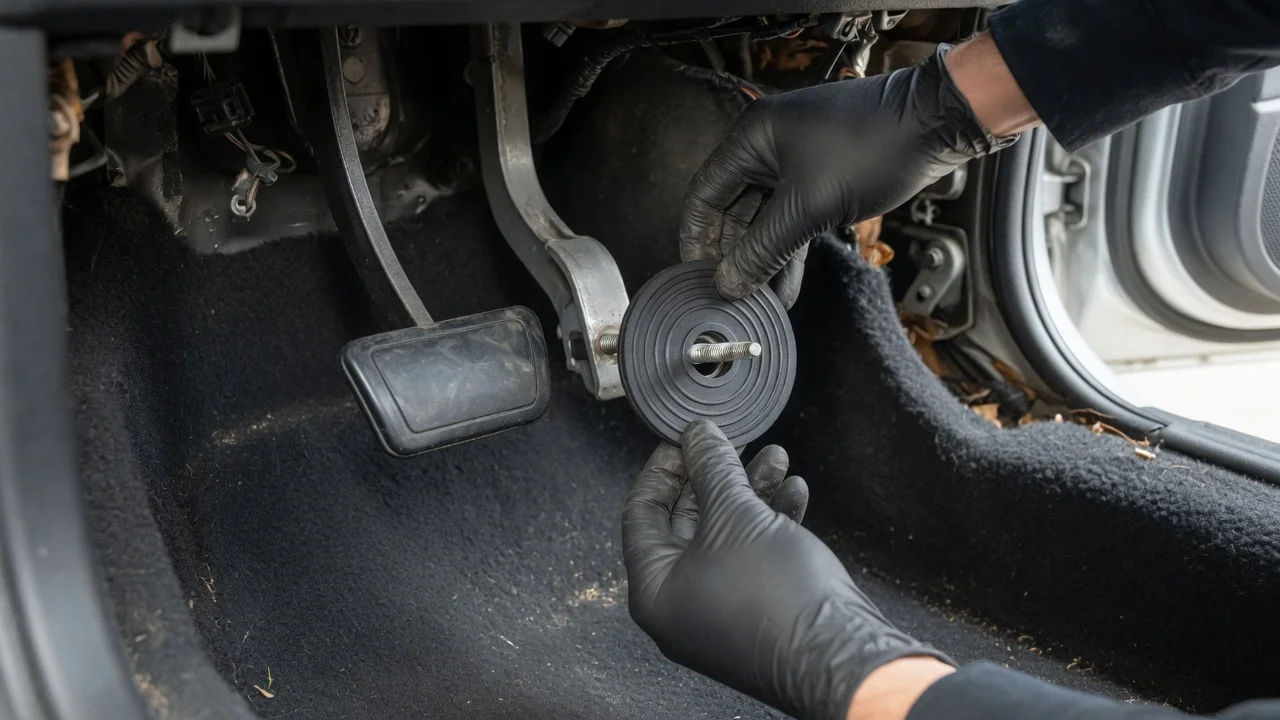
What is a brake pedal stop pad?
A brake pedal stop pad is a small cushioning component mounted near the brake pedal assembly. Its main job is to limit pedal travel and create a consistent stop point when the pedal is released. On many vehicles it is a rubber or plastic pad that contacts the brake light switch or the pedal stop bracket. The exact design varies by model year, generation, body style and trim, so the replacement part must match the vehicle rather than being treated as a universal piece.
Why the stop pad matters
The stop pad affects more than pedal feel. On vehicles where the brake light switch is positioned against the pedal, a missing or broken pad can prevent the switch plunger from being depressed correctly. That may leave the brake lights on, cause them to stay off, or interfere with shift interlock and cruise control operation on systems that use the brake signal.
Signs the pad may be missing or worn
Brake lights remain illuminated after the pedal is released; Brake lights do not come on when the pedal is pressed; The pedal makes a firmer or noisier contact at the top of its travel; Small fragments of rubber or plastic are found on the driver-side floor; Cruise control will not cancel or the shift interlock behaves abnormally
Checking the condition
The check is usually done from the driver footwell with the engine off. Look up at the brake pedal arm near its pivot and identify the pad or the hole where one would sit. Confirm whether the pad is cracked, flattened, missing, or no longer staying in place. If the brake light switch is nearby, note how its plunger rests against the pedal and whether that contact point is damaged.
Replacement approach
Replacement generally involves removing any broken pad remnants and pressing the new pad into its mounting hole or bracket. Work carefully around the brake light switch so its plunger and wiring are not bent or pulled. Because some pads are shaped to a specific side or orientation, compare the old part with the new one before installation when the old pad is still intact enough to use as a reference.
After installation
After fitting the pad, press and release the brake pedal several times with the ignition in the appropriate position and confirm that the brake lights turn on and off correctly. Also check any functions that depend on the brake signal, such as cruise control cancellation and shift interlock release. If the brake lights still behave incorrectly, the switch, its adjustment, or the related wiring may need attention rather than the pad alone.
Part selection and fitment
Use the vehicle's specific year, make, model and trim to identify the correct pad. The component is often inexpensive, but the wrong shape or thickness can prevent proper pedal return or switch engagement. For some applications the pad is sold only as part of a switch or pedal assembly repair kit. The available evidence does not cover every vehicle application, so part availability and exact installation placement should be verified for the individual model.