Brake Pad Lifespan: When to Plan Replacement
The Short Answer
Brake pads wear gradually because they convert the vehicle's motion into heat through friction. How long they last depends on vehicle weight, driving conditions, and the friction material used. Everyday commuting with moderate braking can yield longer pad life, while repeated hard stops, heavy loads, towing, and mountainous driving can shorten it substantially.
Because pad compounds and vehicle applications vary, there is no single fixed mileage that applies to every car or truck. The practical approach is to treat the manufacturer's inspection intervals as the baseline and adjust them based on how and where the vehicle is driven.
Why Pad Life Is a Range, Not a Number
Friction material wears away each time the brakes are applied. Harder or more aggressive stops create more heat and remove material faster. Lighter, slower stops generate less heat, so the pads last longer. This is why two vehicles with the same mileage can need pads at very different times.
Vehicle design also matters. A heavier truck or SUV places more demand on the front brakes than a small sedan does. Performance-oriented pads may trade quicker initial bite or higher temperature tolerance for faster wear, while some long-life compounds prioritize durability over maximum stopping feel.
Conditions That Shorten Brake Pad Life
Several recurring conditions tend to increase pad wear. Drivers who recognize these can choose whether to inspect earlier or adjust their checkup schedule.
Frequent stop-and-go traffic; Mountain or steep-gradient driving; Heavy loads and towing; Repeated high-speed braking; Aggressive or late braking habits; Wet or heavily salted conditions that encourage corrosion on hardware
Corrosion does not wear away the friction material directly, but it can cause pads to move unevenly or drag. Uneven wear can make one pad reach its wear limit while the other still has usable thickness.
Warning Signs That Pads Are Worn
Many pad designs include a small metal wear indicator that contacts the rotor as the friction material gets thin. This produces a high-pitched squeal that may change or stop when the brakes are applied. Not every pad uses the same design, but a new or persistent metal-on-metal sound deserves prompt inspection.
Squealing or squeaking from the wheel area; Grinding that suggests metal-to-metal contact; A brake pedal that pulses or vibrates; Longer stopping distance or changed pedal feel; The vehicle pulling to one side under braking
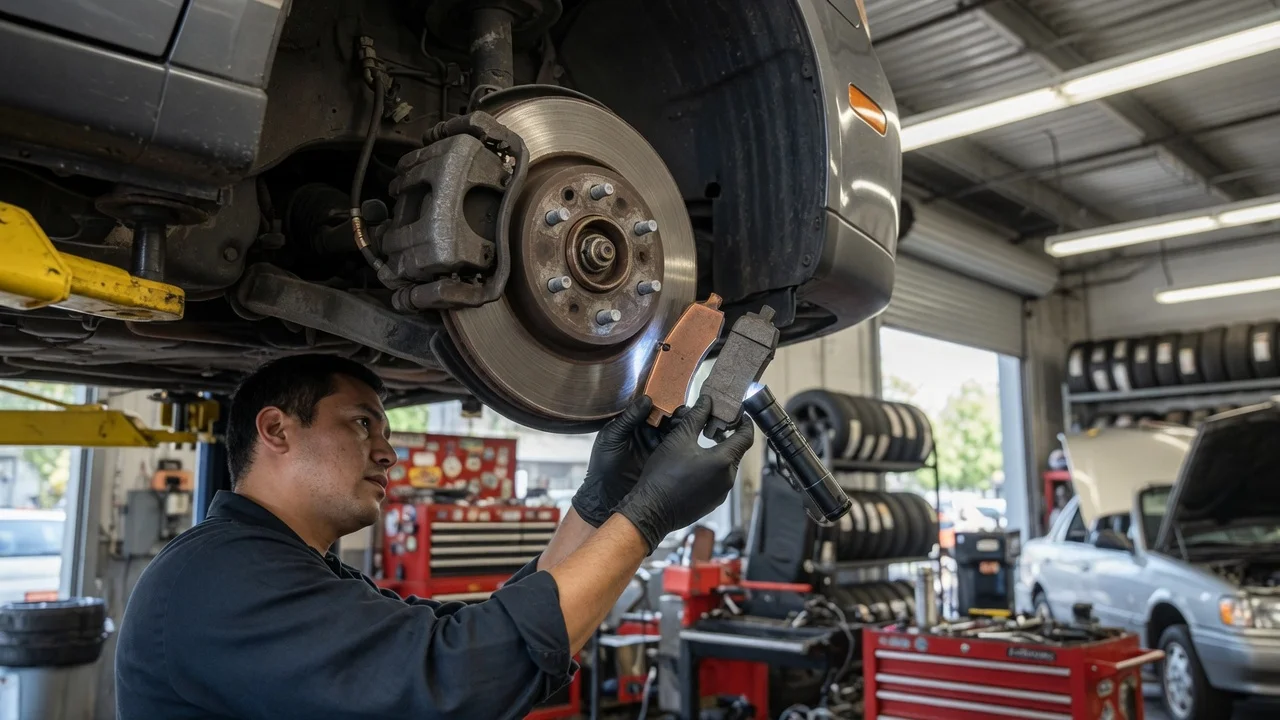
A visible check is also useful when the wheel design allows it. The friction material can be seen through some wheel openings, but an accurate measurement requires removing the wheel. Brake wear sensors, where fitted, can display a warning before the pad reaches its service limit.
Setting a Practical Replacement Schedule
Regular inspection is more reliable than waiting for a fixed mileage. A common practice is to inspect pads at every tire rotation or oil change, which makes the check part of an existing service visit. Drivers in demanding conditions may request an inspection more often.
When the friction material reaches the thickness specified by the vehicle or pad manufacturer, replacement is due. Rotors should also be checked for scoring, rust, or uneven wear at the same time because new pads need a compatible surface to bed in correctly.
What the Data Does Not Cover
No supplied evidence here provides a universal mileage range, pad compound ratings, or model-specific service limits. Manufacturer guidance for a specific year, trim, and powertrain remains the most accurate reference. Any exact lifespan claim would depend on data not included in the available source material, so a general inspection-based approach is the appropriate recommendation.