Brake Master Cylinder Replacement Cost: What Shapes Your Quote
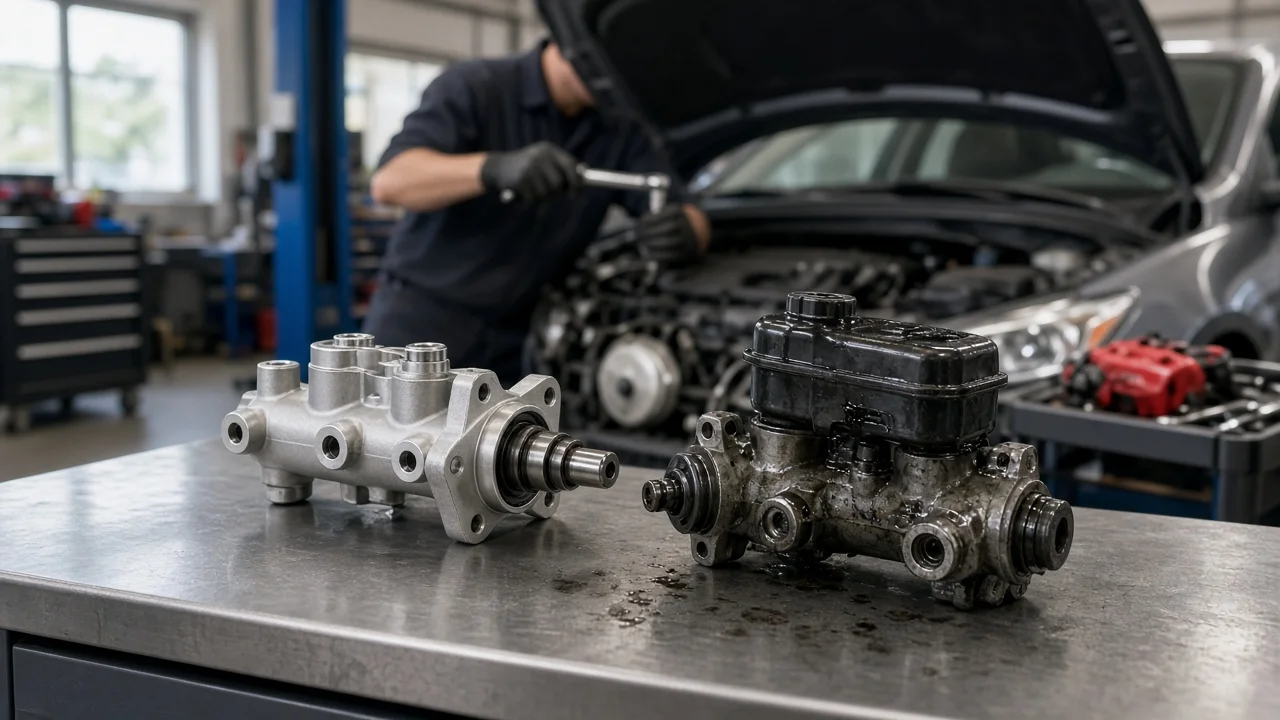
The brake master cylinder turns pedal force into hydraulic pressure for every wheel, so a failing unit is a safety repair, not one to postpone. The cost to replace a brake master cylinder depends less on the price of the part than on what the job covers: confirming the fault, installing the correct unit, refilling with the right brake fluid and bleeding the system properly. This guide explains how to read an estimate, what moves the total and how to compare offers on equal terms.
What the estimate includes
A complete estimate for brake master cylinder replacement should cover the whole job, not just the part. That normally means confirming the diagnosis, supplying a cylinder that matches your vehicle, bench bleeding it before installation, transferring or replacing the reservoir and fluid level sensor where needed, reconnecting the brake lines, filling with the fluid grade the manufacturer specifies, bleeding the system and road testing the car. Some quotes list only the part and a labor figure, so bleeding, fluid or electronic procedures appear later as extras. When you compare numbers, make sure you are comparing totals for the same finished repair, not a full total against a partial quote.
It also helps to know what the master cylinder job does not include. The brake booster, the clutch master cylinder on manual-transmission vehicles, calipers and wheel cylinders are separate components with separate costs. A soft or low pedal can come from air in the lines, a leaking caliper or worn brake pads. A pedal that slowly sinks under steady pressure with no visible external leak often points to internal seal bypass in the master cylinder. Correct diagnosis matters because replacing the wrong part means paying twice. If the pedal sinks toward the floor, the brake warning light stays on or the fluid level keeps dropping, stop driving and have the vehicle towed or inspected before further use.
What changes the cost
Vehicle configuration is the biggest variable. Master cylinders are specific to make, model, year and often brake package, so vehicle fitment should be confirmed by VIN, not by a general description. Access differs widely. On some vehicles the cylinder sits in plain view on the booster, and on others surrounding components must come off first. Vehicles with anti-lock brakes or stability control may need a scan-tool bleed procedure that cycles the ABS valves, which adds time and requires suitable equipment. Some hybrids and electric vehicles use integrated brake units that combine the master cylinder, booster and pressure modulator in one assembly, which changes the scope and price of the repair considerably.
Parts and labor make up the rest. A new original-equipment unit, a new aftermarket unit and a remanufactured unit carry different prices and warranties, and remanufactured parts often include a refundable core charge. Some cylinders are sold with the reservoir, others without. Labor is usually the shop's hourly rate multiplied by the time allowed for your vehicle, sometimes plus a diagnostic fee. Rates vary by region and by whether you use a dealer, an independent shop or a mobile mechanic. Condition can expand the job: seized line fittings, corroded brake lines or contaminated fluid all add work. If the system was filled with the wrong fluid or petroleum products, rubber seals throughout the system can swell, and the repair may extend well beyond the master cylinder.
Compare like-for-like options
Most shops replace the cylinder with a new or remanufactured unit instead of rebuilding it, because bore wear or pitting, especially in aluminum bodies, can make a seal kit unreliable. When comparing offers, line up the same part grade, the same included steps and the same warranty on parts and labor. A cheaper quote built on a remanufactured unit with a short warranty is not equivalent to one using a new unit with longer coverage. Doing the job yourself can lower the outlay, but it requires bench bleeding, correct fitting torque, the proper bleed sequence and, on many vehicles, ABS bleed capability. Trapped air or a poorly seated line leaves you with an unsafe pedal.
Some associated work belongs in the job and some does not. Bleeding the system and replacing the fluid are part of the repair, so a separate brake fluid flush on the same invoice may duplicate labor you are already paying for. Brake pads, brake rotors and calipers are different. They should be added only when inspection shows a problem, such as a leaking caliper, or friction material or rotor thickness at or beyond the manufacturer's wear limits. Ask for the measured values and the specification they were compared against, so you can judge whether extra items are needed now or simply suggested.
Read an itemized quote
An itemized quote shows where the money goes and makes it easier to compare the cost of a brake master cylinder replacement between shops. Look for the vehicle identification used to confirm fitment. Check the part brand, number and type, and whether it is new or remanufactured, and whether the reservoir and level sensor are included. Look for any core charge and how it is refunded, the labor hours and hourly rate, and the brake fluid specification and quantity. The quote should also say whether an ABS bleed procedure is included, what the diagnostic fee is and whether it is credited toward the repair, and what shop supplies, disposal fees and taxes apply.
Then check what the quote leaves out. Wording such as additional parts as needed, or a note that brake lines, the booster or towing are excluded, can turn an attractive figure into a larger bill. Ask the shop to agree that any extra work will be explained and authorized by you in writing before it starts. Get the warranty terms in writing too. They should cover duration and mileage, whether labor is covered as well as parts, and whether the warranty can be honored at another location if you are away from home.
Decide the next step
Before you accept any estimate, work through a short checklist. Confirm the diagnosis and ask how the shop ruled out the booster, calipers and air in the lines. Provide your VIN so the part matches your vehicle. Request at least two itemized quotes covering the same scope and part grade. Check that bleeding, fluid and any ABS procedure are included. Compare written warranties, and agree on how additional findings will be approved. With those details in place, the brake master cylinder replacement cost you are quoted reflects the complete, finished repair.
Avoid shortcuts that hide the problem instead of fixing it. Topping off fluid to keep up with a leak, adding stop-leak products, mixing fluid types, installing a cylinder without bench bleeding or ordering the cheapest part without confirming fitment can all leave the brakes unreliable. A failing master cylinder affects every wheel at once, so treat it as a priority repair. Follow the vehicle-specific service information, and have the result road tested before relying on the car again.